Difference Between Faucet and Bidet: A Practical Guide for Homeowners
Explore the difference between faucet and bidet, including definitions, installation considerations, usage scenarios, and maintenance tips to help homeowners choose the right fixture.


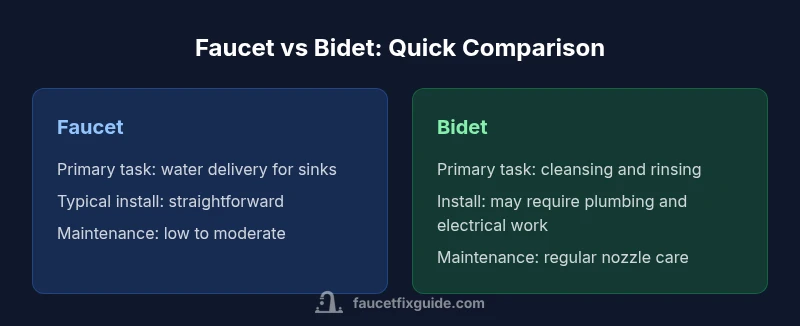
According to Faucet Fix Guide, the difference between faucet and bidet hinges on function and plumbing. A faucet is a plumbing fixture that delivers water to a sink or basin, enabling tasks like handwashing, dish cleaning, and face washing. A bidet is a specialized fixture or toilet accessory that provides a cleansing rinse for intimate areas. The difference between faucet and bidet matters because their plumbing feeds, installation requirements, and user expectations differ substantially. In many homes, you will encounter a standard faucet with flexible supply lines and a single cold and hot supply, while a bidet might appear as a separate unit or integrated into a toilet seat. Understanding how these fixtures fit into your bathroom layout helps prevent mismatches and costly renovations. This article uses the core distinctions to guide DIYers and homeowners through practical decisions about upgrades, replacements, and everyday use.
What is a faucet and what is a bidet? Core concepts
According to Faucet Fix Guide, the difference between faucet and bidet hinges on function and plumbing. A faucet is a plumbing fixture that delivers water to a sink or basin, enabling tasks like handwashing, dish cleaning, and face washing. A bidet is a specialized fixture or toilet accessory that provides a cleansing rinse for intimate areas. The difference between faucet and bidet matters because their plumbing feeds, installation requirements, and user expectations differ substantially. In many homes, you will encounter a standard faucet with flexible supply lines and a single hot and cold supply, while a bidet might appear as a separate unit or integrated into a toilet seat. Understanding how these fixtures fit into your bathroom layout helps prevent mismatches and costly renovations. This guide uses the core distinctions to guide DIYers and homeowners through practical decisions about upgrades, replacements, and everyday use.
Historical context and common bathroom configurations
Faucets evolved as basic water-control devices in kitchens and bathrooms, while bidets emerged as personal hygiene fixtures in many European homes and later gained popularity worldwide. The typical modern bathroom features a sink faucet with hot and cold lines, and a separate toilet equipped with a bidet seat or a standalone bidet bowl. In some layouts, builders combine a bidet function into a toilet seat with integrated spray jets. These configurations influence how homeowners plan remodels, because the two fixtures occupy different spaces, require different supply lines, and interact with different drainage and electrical considerations. When evaluating the difference between faucet and bidet, space planning and plumbing compatibility become central questions for layout optimization and future-proofing your bathroom.
Primary functions and performance considerations
Faucets are about delivering controlled water flow for washing tasks. They require precise aeration, temperature control, and reliable shut-off. Bidets focus on cleansing, comfort, and water spray patterns; heated seats and adjustable nozzle positions are common features in many models. In practice, this means selecting fixtures based on expected use: high-traffic family bathrooms tend to prioritize durable faucets; master baths with for personal care may benefit from bidet seats or standalone units. The difference between faucet and bidet extends to water efficiency: many modern taps minimize waste, while bidets can reduce toilet paper consumption and the need for wipes over the long term. For DIYers, consider whether you want rapid handwashing and dish cleanup, or a more thorough cleansing experience that may require additional outlets and wiring.
Plumbing requirements and installation steps
Installing a faucet is usually straightforward, requiring only a supply line, mounting hardware, and basin access. Bidets, by contrast, can involve more complex plumbing: dedicated water lines, drainage considerations, and in many cases electrical outlets for heated seats or instant water heating. If installing a bidet seat on an existing toilet, you typically need a cold-water feed, a drainage path for the waste water, and a power outlet within reach. When planning, map out access behind cabinets or under sinks to minimize remodeling. The difference between faucet and bidet here is not only about tools; it is about code compliance and long-term reliability. Always check local codes, and consider professional help for nonstandard layouts.
Space planning and compatibility in bathrooms
Faucets require counter or sink space and robust mounting options, while bidets demand space around the toilet area for nozzle movement, user access, and, in some cases, lighting and seating features. In small powder rooms, a compact faucet can optimize performance without crowding, but adding a bidet seat may reduce available space or complicate clearance. In larger baths, both fixtures can be integrated into a unified design with matching finishes and concealed plumbing. The difference between faucet and bidet becomes a design question: which fixture more strongly supports your hygiene goals and daily routines? Consider future-proofing by planning flexible supply lines and ensuring wall outlets and circuits align with any heated-seat features.
Maintenance and cleaning guidelines
Maintenance for faucets focuses on mineral buildup, aerator cleanliness, and cartridge or valve replacements over time. Regular cleaning of faucet aerators improves water flow and prevents staining. Bidets require attention to spray nozzles and seals, as well as periodic descaling in areas with hard water. If you install a bidet seat, a routine inspection of wiring and seals helps prevent leaks and electrical issues. The difference between faucet and bidet here rests on maintenance cycles: faucets are typically low-maintenance, while bidets may require a more involved upkeep plan, especially in regions with hard water or corrosive mineral content.
Cost, value, and lifecycle considerations
A quick look at installation costs shows that basic faucets are relatively affordable and widely available, especially for standard sinks. Bidet options vary more widely in price and complexity, from basic seats to integrated toilet systems with advanced spray patterns and heated water. Based on Faucet Fix Guide analysis, the long-term value of a bidet can include reduced toilet paper usage and improved hygiene comfort, but cost and power requirements should be weighed against household needs. When budgeting, consider not only purchase price but also potential remodeling, plumbing changes, and necessary outlets. In many homes, a compromise solution—adding a bidet seat to an existing toilet—offers a practical balance of features and affordability.
Step-by-step decision framework for homeowners
To decide effectively, start by listing your priorities: everyday function vs personal hygiene, space, and budget. Next, check your bathroom layout for plumbing feasibility and access to electrical outlets if you are considering heated bidet features. Then compare models using a simple decision tree: if you want basic water delivery and durability, a faucet wins; if you want cleansing capabilities and potential paper-use reductions, a bidet option is worth exploring. Finally, consult local codes and schedules, and plan a phased upgrade if needed. This framework helps you avoid overbuying or installing mismatched fixtures.
Common misconceptions and practical tips
Many homeowners assume a bidet automatically replaces the toilet paper habit; in practice, most users still wipe before rinsing with a bidet seat. Another misconception is that all bidets require electrical outlets; some models are manual. The difference between faucet and bidet also extends to maintenance needs and cleaning routines, so plan for appropriate schedules. Practical tips include choosing a durable faucet with a standard aerator, selecting a bidet with nozzle protection, and ensuring the bathroom layout supports both fixtures. The Faucet Fix Guide team notes that thoughtful planning reduces the risk of mismatches and unnecessary renovations. The Faucet Fix Guide analysis also highlights how durable fixtures and accessible maintenance schedules contribute to long-term satisfaction.
Comparison
| Feature | Faucet | Bidet |
|---|---|---|
| Primary purpose | Delivers water for sinks | Cleanses and rinses personal areas |
| Typical space required | Counter or sink setup | Toilet area or dedicated space for bidet seat |
| Installation complexity | Low to moderate (existing plumbing) | Moderate to high (possible electrical and drainage considerations) |
| Water usage | Depends on faucet usage and aerator efficiency | Depends on bidet model and spray cycle |
| Cost range | $50-$250 (basic faucet) | $300-$1200 (bidet options) |
| Best for | Everyday sink tasks and durability | Personal hygiene and comfort in bathrooms |
The Good
- Faucets are inexpensive and quick to install
- Bidets offer enhanced hygiene and comfort
- Bidets can reduce toilet paper use over time
- Faucets support universal sink tasks with broad compatibility
What's Bad
- Bidets may require extra space and plumbing changes
- Some models need an electrical outlet for heated features
- Not every home already has bidet-ready plumbing
Faucet serves essential sink needs; bidet is an optional upgrade for hygiene.
Choose a faucet for core bathroom functionality. Add a bidet if you value cleansing comfort, reduced paper use, and your space allows for the required plumbing and electrical considerations.
Frequently Asked Questions
What is the key difference between faucet and bidet?
The faucet controls water delivery for sinks, while a bidet focuses on cleansing through a spray or stream. They serve different hygiene and washing purposes and have distinct installation needs.
The faucet provides water to a sink, and a bidet provides a cleansing spray. They serve different tasks and require different plumbing and, in some cases, electrical setups.
Can I substitute a faucet with a bidet in my bathroom?
No; a bidet does not replace a faucet for sink use. Some homes use a bidet seat on a toilet, which supplements but does not remove the need for a sink faucet for washing hands or dishes.
A bidet can't replace a sink faucet. They serve different purposes and both may be needed in a bathroom depending on layout.
Do bidets require electrical outlets?
Many bidet seats require a nearby electrical outlet, especially heated models. Some non-heated options do not, but always verify local code requirements.
Most heated bidet seats need an outlet near the toilet; check your local codes before installing.
Are bidets easy to use for beginners?
Yes, most bidets are straightforward, with simple nozzle spray options and controls. Start with a basic model to learn the mechanism before trying advanced features.
Most bidets are simple to use. Start with a basic model and learn the spray settings before upgrading.
What should I consider before choosing between a faucet and a bidet?
Evaluate space, plumbing, electrical capacity, and how you value hygiene, energy use, and long-term maintenance. A balanced plan often combines both fixtures in appropriate layouts.
Think about space, plumbing, and how much you’ll value hygiene and energy use before deciding.
Top Takeaways
- Define your priorities before shopping for fixtures
- Assess plumbing and space before choosing between faucet and bidet
- Consider long-term maintenance and energy needs
- Balance upfront cost with potential long-term savings
- Consult local codes before installation