Faucet vs Toilet Supply Lines: A Practical Guide for DIYers
Explore the differences between faucet supply lines and toilet supply lines, covering sizing, fittings, materials, installation tips, and maintenance to prevent leaks. This guide from Faucet Fix Guide helps homeowners and DIYers choose the right parts and avoid common mistakes.


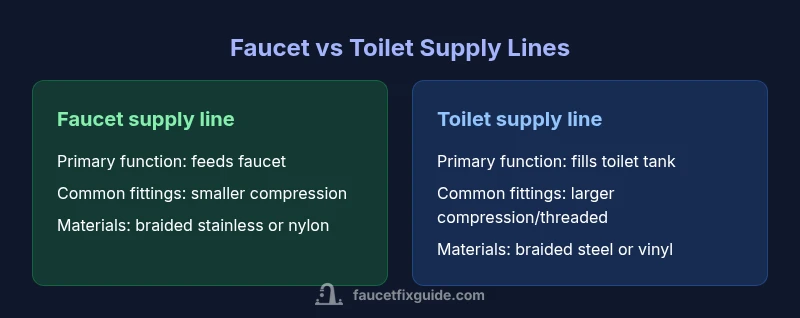
The difference between faucet and toilet supply line lies in function, size, and fittings: faucet lines deliver small, frequent bursts of water to sinks, while toilet lines provide a steadier supply to the tank with larger connectors. For DIYers, choosing the correct line—based on fixture type, connector size, and material—prevents leaks and simplifies maintenance. This quick comparison sets the stage for a deeper dive into installation and upkeep.
What counts as a supply line and why it matters
Water supply lines are short connectors that bring potable water from your home's shut-off valve to a fixture. There are two common types we encounter when updating a bathroom or kitchen: faucet supply lines and toilet supply lines. Understanding the difference between faucet and toilet supply line is essential for proper installation, leak prevention, and long-term reliability. The Faucet Fix Guide team notes that mismatching lines or choosing the wrong length can create stress on fittings, leading to drips, ruptures, or premature wear. In this section we define each line and explain why sizing, fittings, and material choice matter for DIYers and professionals alike.
By recognizing where each line connects and how it behaves under pressure, homeowners can plan maintenance, repairs, and upgrades without scrambling for parts. We'll cover the primary differences, common materials, and practical tips for selecting the right lines for your fixture.
According to Faucet Fix Guide, understanding these distinctions helps prevent leaks, save time, and ensure reliable water delivery across fixtures.
Primary functional differences
Faucet supply lines and toilet supply lines exist to fulfill different needs in a home. Faucet lines feed water to sinks, vanity faucets, and laundry sinks, handling rapid on/off cycles and varying flow rates. Toilet supply lines feed the toilet tank, delivering water during flush cycles and refilling after each use. Because of these distinct duties, each line is designed with different tolerances, fittings, and connector styles. The Faucet Fix Guide Team emphasizes that matching a line to the fixture reduces stress on the connection, minimizes leaks, and simplifies future replacements. Homeowners should treat these lines as fixture-specific components rather than interchangeable parts.
In practice, this means you should verify the fixture type before buying, confirm that the fittings align with your shut-off valves, and choose a line with the appropriate length to reach comfortably without kinking. When in doubt, bring the old line to the hardware store or measure the valve type and the fixture inlet to ensure a proper match.
Sizing, fittings, and connections
Sizing and fittings are the most common sources of mismatch between faucet and toilet supply lines. Faucet lines typically use smaller diameter connectors and compression fittings, designed for high-frequency, low-volume flow. Toilet lines use larger connectors to accommodate the tank fill process and longer service life. In addition to diameter, consider the connector type: compression fittings where the nut tightens onto a ferrule, or threaded fittings that screw onto a valve or inlet on the fixture.
Always measure from the shut-off valve outlet to the fixture inlet, account for existing bends, and avoid overly tight turns that can kink hoses. The wrong length can put stress on fittings and cause leaks or wear over time. When replacing, choose a line whose fittings match your valve hardware and the fixture inlet, and verify whether a flexible braided line or a rigid connector best suits your space and maintenance routine.
Materials and durability
Supply lines come in several materials, with braided stainless steel being the most common for faucet lines due to durability and corrosion resistance. Other options include braided nylon, reinforced vinyl, and copper-backed lines. Toilet supply lines are frequently braided as well, offering robust performance, though some residential setups still use rigid copper or plastic tubing with compression ends. Durability depends on material quality, the integrity of the fittings, and how well the line is secured. In harsh plumbing environments, the stainless-steel braided options tend to resist kinking and bursting better than plain vinyl.
For homeowners, selecting a line with a corrosion-resistant inner core and strong outer braid reduces the likelihood of leaks at the nut connections. Keep in mind that flexible lines can wear at connection points if tightened too aggressively, while rigid lines need careful alignment to avoid stress at fittings.
Installation considerations and tips
Installing new supply lines is usually straightforward, but small mistakes can lead to leaks. Start by turning off the local shut-off valve and relieving pressure. Remove the old line, inspect the valve seat for damage, and clean the inlet area. When installing the new line, hand-tighten the compression nut first, then snug with a wrench—enough to seal but not overtighten. Check both ends for seating and run water briefly to test.
Avoid bending lines sharply or stretching them tautly across sharp corners. If you encounter a stubborn valve thread, use thread seal tape or a compatible washer as appropriate, but never use plumber’s glue on compression fittings. If you’re replacing a toilet supply line, ensure the line can reach the toilet trunk without pulling on the fixture. Label or color-code lines if you’re performing multiple replacements to reduce confusion during future maintenance.
Maintenance and common failure modes
Regular inspection of supply lines helps catch issues before they become leaks. Look for corroded nuts, worn washers, bulges in the hose, or mineral buildup around fittings. Leaks most often occur at the connection points where the line meets the valve or the fixture inlet. Tightening too much can strip threads, while under-tightening leads to dripping. Periodic flushing and cleaning around valve nuts can prevent mineral deposits that compromise seals. If a line shows signs of wear, replace it promptly with a matched line to avoid water damage.
In summary, practice proactive maintenance by inspecting connections at least twice a year, replacing lines that show visible wear, and keeping spare lines on hand for quick repairs.
Shut-off valves compatibility and layout
Shut-off valve compatibility is essential to ensure a reliable, leak-free setup. Most faucet lines connect to small angle-stop valves under sinks, while toilet lines connect to larger angle stops near the toilet. When planning a replacement, verify the thread type and valve size so the line fits securely without cross-threading. If you have older or hard-to-reach valves, you may need adaptable fittings or longer lines to maintain a clean, accessible layout. A tidy arrangement reduces stress on both the valve body and the line and makes future maintenance easier.
If you’re unsure about valve compatibility, consult a pro or bring a photo of the valve and fixture inlet to the hardware store. The goal is a snug fit that allows easy shut-off without requiring excessive force.
Cost considerations and budgeting for replacements
Costs for faucet and toilet supply lines vary by material, length, and brand, but most standard lines fall into a modest budget range. Braided stainless lines typically cost more than vinyl or nylon options, reflecting durability and corrosion resistance. Budget for a few extra inches of length to accommodate future layout changes in kitchens and baths. If you’re replacing multiple lines, it can be cost-effective to purchase a generic kit that fits standard valve sizes rather than buying specialty lines for each fixture. For DIYers, plan for a small toolset and possibly thread seal tape or washers to ensure a secure seal. Overall, expect a practical price range that balances reliability and affordability.
Practical homeowner guidance and best practices
For DIYers tackling faucet and toilet line replacements, start with a quick plan: identify fixture types, measure available space, and stock up on two or three common line diameters to cover most projects. Label lines to keep track of which valve serves which fixture, and keep spare washers and nuts accessible. When securing lines, always hand-tighten first and then snug with a wrench to avoid overtightening. Finally, test for leaks after restoration and monitor fittings for signs of wear in the weeks that follow. Adopting a proactive approach saves time and reduces water damage risk in the long run.
Comparison
| Feature | Faucet supply line | Toilet supply line |
|---|---|---|
| Primary function | Delivers water to a faucet for sinks and similar fixtures | Delivers water to a toilet tank for flushing |
| Typical diameter / fittings | Smaller-diameter connectors; common compression fittings | Larger-diameter connectors; commonly compression or threaded fittings |
| Common materials | Braided stainless steel, braided nylon, reinforced vinyl | Braided stainless steel or reinforced vinyl; some use copper variants |
| Durability vs flexibility | High flexibility; good for tight spaces but susceptible to wear at joints | Robust and longer-length options; less flex but reliable at connections |
| Typical installation ease | Generally quick for DIYers; easy to align with existing valves | Also quick, but longer lines may require more space and planning |
| Price range (typical kits) | $5-$25 for standard faucet lines | $10-$40 for premium or longer toilet lines |
| Best use case | Kitchen/bathroom faucet upgrades and quick repairs | Toilet refits, replacements, and reliability improvements |
The Good
- Clear guidance on fixture-specific lines improves accuracy
- Helps prevent leaks by matching fittings and sizes
- Supports safer installations with correct materials
What's Bad
- Some terminology remains technical for beginners
- Prices vary with length and material choices
- Misreading valve types can lead to fit issues
Faucet lines and toilet lines serve different purposes and require fixture-specific fittings.
Match line types to the fixture, verify fittings and lengths, and choose durable materials to minimize leaks. When in doubt, plan for a flexible line for faucets and a robust line for toilets to maximize reliability.
Frequently Asked Questions
What is the main difference between faucet supply lines and toilet supply lines?
The main difference is in purpose and sizing: faucet lines feed small, frequent flows to sinks, while toilet lines handle larger, less frequent fills to the tank. Each line uses different fittings and lengths tailored to the fixture. Understanding this distinction helps prevent leaks and ensures compatible connections.
Faucet lines are for sinks and handle quick, small flows; toilet lines feed the tank for flushing. They use different fittings and lengths, so choose the right type for each fixture to avoid leaks.
What sizes do faucet and toilet supply lines typically use?
Faucet supply lines generally use smaller diameter fittings with compression ends, while toilet supply lines use larger connections designed for tank fill. Always verify the exact valve type and fixture inlet before purchasing.
Faucet lines are smaller with compression fittings, while toilet lines are larger; always check your valve and fixture before buying.
Can I reuse old supply lines?
Reusing old supply lines is not recommended if there are signs of wear, corrosion, or leakage. Replacing worn lines with new, compatible lines reduces the risk of leaks and water damage.
It's best not to reuse old lines if they show wear or leaks. Replace them with new, compatible lines to stay safe.
What tools do I need to replace supply lines?
Basic tools include a adjustable wrench, possibly pliers, and thread seal tape or washers when required. Most faucet and toilet line replacements are straightforward for DIYers with these tools on hand.
You’ll typically need a wrench and perhaps some washers or tape. Most replacements are simple for DIYers.
Are flexible supply lines better than rigid ones?
Flexible lines are easier to install in tight spaces and reduce the risk of pipe bending, while rigid lines can be more durable in certain layouts. Choose based on space, fixture, and ease of future maintenance.
Flexible lines are handy in tight spaces, rigid lines can be tougher to install but may last longer in open layouts.
Do both types require shut-off valves?
Yes. Both faucet and toilet supply lines normally connect to shut-off valves for easy maintenance and leak control. Ensure the valve type matches the line fittings and that there is clearance to operate the valve.
Both lines use shut-off valves. Make sure the valve fits the line and you can access it easily.
Top Takeaways
- Measure before buying to avoid fit issues
- Confirm fixture type and valve compatibility
- Choose braided lines for durability and reliability
- Inspect fittings regularly to prevent leaks
- Keep spare lines and washers on hand