How to Install and Maintain a Faucet with Water Filter
Learn how to choose, install, and maintain a faucet with water filter to improve taste, reduce contaminants, and protect your family. A practical DIY guide for homeowners and DIY enthusiasts.


Upgrade your tap with a faucet that includes a built-in water filter or install a compatible filter faucet to improve taste and reduce contaminants. You’ll verify certifications (NSF/ANSI), choose cartridge types, and follow safe installation steps. According to Faucet Fix Guide, expect a straightforward DIY project for many sinks, with affordable options and clear safety practices.
Why a faucet with water filter is a smart upgrade
A faucet with water filter delivers purified water directly at the tap, offering convenience over pitchers and countertop filtration. For homeowners, renters, and DIY enthusiasts, this setup reduces plastic waste and helps you cook and drink with greater confidence. According to Faucet Fix Guide, a built-in filtration faucet can address common concerns like chlorine taste, sediment, and trace contaminants, without the clutter of extra appliances on your counter. When you plan your project, consider how the unit will fit your sink, what cartridges it uses, and how replacement parts will be sourced. In this section, we’ll explore practical benefits, outline expectations for performance, and set the stage for a smooth installation path. By the end, you’ll understand how a faucet with water filter can improve daily routines, from coffee rituals to kid-approved drinking water.
How water filtration in faucets works
Most residential faucet filtration uses a replaceable cartridge that blends physical filtration with chemical adsorption. The most common mechanism is activated carbon, which reduces chlorine taste and odors and traps organic compounds. Some systems include additional stages such as sediment filtration or ion exchange to tackle minerals and metals. It's important to look for certifications (NSF/ANSI) that verify reduction claims and material safety, especially for drinking water. In practice, a filtered faucet will pass tap water through the cartridge before it reaches the aerator, so you’ll get cleaner flavor with every pour. Remember, higher filtration stages generally reduce flow slightly, so you’ll want to balance filtration strength with your household’s water needs. If your goal is lead reduction, confirm that the cartridge design is certified for lead and works with your water supply.
Key features to look for in a filtered faucet
When selecting a faucet with water filter, prioritize filtration performance, certification, and compatibility with your sink. Key features include:
- Certifications: NSF/ANSI standards for contaminant reduction; verify the specific claims (e.g., chlorine reduction, lead, particulates).
- Filtration type and cartridge life: activated carbon plus any pretreatment; check replacement frequency and estimated gallons.
- Flow rate and compatibility: ensure the faucet maintains adequate flow without a noticeable drop; check thread size (common are 3/8 inch or 1/2 inch) and mounting style.
- Materials and build: lead-free, durable finishes, and a robust connection to the supply line.
- Installation options: some models replace your existing faucet; others mount inline adapters under the sink.
- Warranty and service: longer warranties and accessible customer support help reduce long-term risk.
In short, pick a system with reputable certifications, a practical cartridge life, and a design that matches your sink configuration.
Installation considerations: planning and compatibility
Plan before buying. Decide whether you want a dedicated filtered faucet or an inline solution that attaches to your existing faucet. Evaluate your sink setup: whether you have space under the cabinet for extra hardware, the availability of shut-off valves, and the layout of your supply lines. Common setups use a dedicated faucet installed in the sink deck, with a separate filtered line connected to the cold-water supply via a T-fitting. Inline filters may be easier for renters or small kitchens but can require adapters and longer hoses. Measure clearance behind the sink and under the countertop to ensure the new faucet fits your cabinet doors and drawers. Ensure you have the correct thread sizes (often 1/2" or 3/8" compression fittings) and that the angle of the faucet spout provides convenient reach over your sink. Finally, check for lead-free materials and warranty coverage. A smooth install minimizes leaks and reduces the risk of damaging existing supply lines. If you’re uncertain, consult a plumber or follow the manufacturer’s detailed instructions to avoid mistakes.
Maintenance and cartridge replacement
Maintenance is straightforward but critical to performance. Keep a spare cartridge compatible with your model on hand, and set a reminder for routine checks. Periodically inspect for leaks around the cartridge housing and tighten fittings carefully—not over-tighten, which can crack fittings. When the water flow slows, or taste changes, replace the cartridge following the manufacturer’s instructions. After installing a new cartridge, flush the system with cold water for several minutes to clear any loose carbon fines. Some filters include a built-in flush step; others require manual flushing. Regular maintenance will extend the life of the faucet, protect water quality, and preserve flow. Finally, dispose of used cartridges responsibly according to local guidelines; many manufacturers offer recycling programs or mail-in options.
Budgeting: built-in vs add-on, and cost considerations
Costs vary by design and filtration level. Built-in filtered faucets generally sit in a mid-range price band, with upfront purchase plus replacement cartridges over time. Add-on inline filters are typically cheaper upfront but may require more ongoing maintenance and space planning under the sink. When budgeting, include the initial faucet or adapter cost, replacement cartridge expenses, and potential plumbing adapters if your sink isn’t a perfect match. Consider also water quality needs: if your water supply contains specific contaminants, you may pay a premium for cartridges that target those substances. While prices can fluctuate, most DIY-friendly options offer a reasonable balance of reliability, ease of installation, and long-term savings compared with bottled water or pitchers.
Safety and water quality considerations
Safety begins with choosing a certified system. Look for NSF/ANSI marks that cover the contaminants you want to reduce, and ensure the system uses lead-free materials in the fittings and faucet body. Follow the manufacturer’s maintenance schedule to avoid degraded filtration that could underperform or introduce fines into the water stream. After installation, test water quality, taste, and odor to confirm the filter is functioning. If you notice persistent tastes, stains, or if the water tests show anomalies, consult a professional and verify whether the system is correctly installed and compatible with your local water supply. Remember that some areas have higher mineral content or chlorine levels, which may require a different filtration strategy or a higher-grade cartridge.
Quick-start checklist for DIY installation
- Confirm you have a dedicated filtered faucet or inline adapter that matches your supply lines.
- Gather essential tools: adjustable wrench, plumber’s tape, tubing cutter, and towels.
- Shut off cold-water supply, relieve pressure, and disconnect the existing faucet if replacing it.
- Install the new faucet or inline filter per the manufacturer’s instructions and tighten fittings by hand then with a wrench.
- Connect the cartridge, attach hoses, and verify there are no leaks.
- Turn the water back on and flush the system for several minutes before use.
- Run water to clear carbon fines and check taste and odor.
Common mistakes to avoid
- Choosing a model without proper certification or incompatible thread size.
- Skipping the flush step after cartridge replacement.
- Over-tightening fittings or using excessive plumber’s tape.
- Neglecting to shut off the water supply before starting.
- Ignoring the need for regular cartridge replacement and maintenance.
Tools & Materials
- Filter cartridge (compatible with model)(Have an extra cartridge on hand; suitable for your water quality and cartridge type.)
- 3/8 inch compression fittings(Ensure correct size for supply lines and faucet connections.)
- PTFE plumber's tape (Teflon)(Wrap 2-3 turns clockwise on threads.)
- Adjustable wrench(Used to tighten fittings; avoid overtightening.)
- Basin wrench(Helpful in tight under-sink spaces.)
- Screwdriver set(For mounting hardware on some models.)
- Bucket or towels(Contain water during disconnect and cleanup.)
- Optional sealant or plumber's tape(Extra sealing materials if needed by model.)
Steps
Estimated time: 60-90 minutes
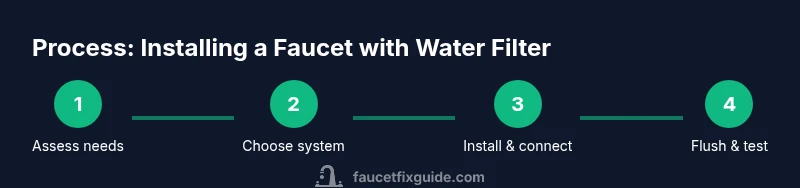
- 1
Assess needs and choose a system
Evaluate your water quality and decide between a dedicated filtered faucet or an inline adapter. Check your sink’s space, potential drain constraints, and whether you prefer higher filtration or easier installation. This helps prevent buying the wrong type and reduces rework later.
Tip: Measure clearance under the sink before purchasing to avoid fit issues. - 2
Shut off water and relieve pressure
Turn off the cold-water supply valve and open the existing faucet to relieve pressure. This minimizes water spray and makes connections easier. Having towels ready reduces mess.
Tip: Keep a small container handy for catching drips. - 3
Prepare the sink area and disconnect lines
If replacing the faucet, remove the old unit following the manufacturer’s instructions. For inline adapters, locate the cold supply line and prepare to attach the filter’s inlet hose. Clean any debris from threads before reassembly.
Tip: Take a photo of your existing setup before disconnecting so you can reference it later. - 4
Install faucet or inline filter and mount hardware
Securely install the new filtered faucet into the sink deck or attach the inline adapter according to the product manual. Hand-tighten connections first, then snug with a wrench. Ensure the faucet is level and aligned with the sink.
Tip: Avoid using sealants that could contaminate drinking water unless the manufacturer approves. - 5
Connect cartridge and hoses
Insert the replacement cartridge into the housing as directed, then attach inlet and outlet hoses. Use PTFE tape on threaded joints and check all fittings for tightness without overtightening.
Tip: Double-check the label on the cartridge to ensure correct orientation. - 6
Test for leaks and flush the system
Restore the water supply and run cold water through the faucet for several minutes to flush carbon fines and prime the system. Check all connections for leaks and adjust as needed. Finally, assess taste and odor to verify improvement.
Tip: Keep a towel handy to catch any initial splashes during testing.
Frequently Asked Questions
Do I need a dedicated filtered faucet or can I attach a filter to my existing faucet?
You can do either. A dedicated filtered faucet is usually easier to install and keeps filtration separate from your main faucet, but inline adapters can work well for renters or tight spaces. Check compatibility with your sink and ensure the chosen method offers secure connections.
You can choose a dedicated filtered faucet for simplicity, or use an inline adapter if space is tight. Check compatibility and secure connections for best results.
Is NSF/ANSI certification necessary for a faucet water filter?
Certification is important to verify contaminant reduction claims and material safety. Look for NSF/ANSI marks that match the contaminants you want to reduce and ensure lead-free construction.
Yes. Look for NSF/ANSI certification to verify performance and safety, and ensure the unit uses lead-free materials.
How often should I replace the filter cartridge in a faucet water filter?
Replacement frequency depends on usage and water quality. Replace when taste or flow changes, or per the manufacturer's recommendation; keep a spare on hand to avoid gaps in filtration.
Replace the cartridge when performance drops or per the manufacturer’s guidance, and keep a spare handy.
Will installing a faucet filter affect water pressure or flow?
Filtration can slightly reduce flow, especially with multiple stages. Choose a model that balances filtration strength with your household’s water demand and keep expectations realistic.
Filtration may slightly reduce flow; pick a model that balances filtration with your daily water use.
Can a faucet water filter be installed on any sink?
Most sinks can accommodate a filtered faucet or inline filter, but verify thread sizes, space, and shut-off valve availability before purchasing. Some configurations may require adapters.
Most sinks work, but always check thread sizes and space to ensure compatibility.
Are there safety concerns with filtered faucets?
Follow manufacturer instructions, use certified components, and avoid altering filtration chemistry. Regularly inspect for leaks and replace cartridges as needed to maintain safety.
Stick to certified parts, follow directions, and inspect regularly to keep your water safe.
Watch Video
Top Takeaways
- Choose between a dedicated faucet or inline filter based on space and preference.
- Select a certified cartridge and compatible fittings to ensure safety.
- Flush the system after cartridge changes to maintain water quality.
- Budget for both upfront cost and ongoing cartridge replacements.