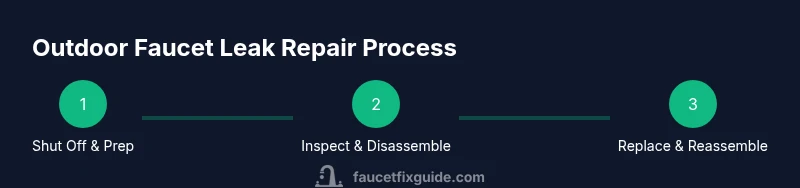
How to Fix an Outdoor Faucet Leak: A DIY Guide for Homeowners
Learn to fix an outdoor faucet leak with a practical DIY approach. Diagnose sources, safely shut off water, replace worn washers, and prevent future drips with expert tips from Faucet Fix Guide.


This guide teaches you how to fix an outdoor faucet leak by locating the source, safely shutting off water, and replacing worn washers or seals. You’ll learn common leak points, how to prepare your workspace with essential tools, and a clear step-by-step repair plan that saves water and prevents further damage.
What causes an outdoor faucet leak?
Outdoor faucet leaks happen for several reasons, often at the packing nut, stem, or washer. If you’re wondering how to fix outdoor faucet leak, the first step is understanding the source. According to Faucet Fix Guide, common culprits include worn washers, corroded seats, a loose packing nut, or a cracked spigot due to freezing. Seasonal changes, ground movement, and weather exposure can loosen fittings over time. By identifying the origin—handle, stem, packing nut, or body—you can choose the right repair path and avoid unnecessary replacements. This foundation empowers you to decide whether a simple washer swap will stop the drip or if a replacement faucet is more cost-effective in the long run.
Signs and diagnosing a leak
Leaks present in distinct ways: a steady drip, a puddle beneath the faucet, or water running even when the handle is off. If the drip only appears with a hose attached, the issue might be the hose bib or packing washer rather than the valve itself. Use a flashlight to inspect threads for corrosion and a magnifying glass to spot hairline cracks. Testing by opening the faucet slightly can reveal whether the leak originates at the packing nut, stem, or spout. Accurate diagnosis guides whether you should replace a washer, reseat a seat, or replace the entire faucet.
Safety and preparation before you start
Repair work near outdoor water lines requires careful safety steps. Begin by shutting off the water supply to the outdoor faucet; if there isn’t a local shutoff, turn off the main house valve. Open the faucet to relieve pressure and drain residual water in the line. Gather your tools, spare parts, and a towel to catch drips. Wear safety glasses and gloves to protect against splashes. Taking these precautions minimizes damage to surrounding areas and reduces the risk of personal injury during disassembly.
Tools and materials you’ll need (summary)
A well-prepared toolbox makes the job smoother. You’ll typically use an adjustable wrench, a screwdriver (flat and Phillips), pliers, Teflon tape, replacement washers, and a spare stem seat if needed. A clean rag, small tray for parts, and penetrating oil help with stubborn fasteners. For frost-proof outdoor faucets, you might need longer screws or additional seals. Label parts as you remove them to ensure correct reassembly. This prep step keeps you organized and reduces rework.
How to identify the correct repair path
When you’ve powered down and opened the faucet, determine whether the leak is at the handle, packing nut, stem, or faucet body. A handle leak usually points to a worn packing washer or loose screw. A persistent drip with no hose attached often indicates a worn washer inside the stem. Cracks in the faucet body or a damaged seat call for more involved repairs or a full faucet replacement. Understanding the symptom helps you choose the simplest, most durable fix and whether you should repair or replace.
Common repair options you can perform
If the stem and washer are accessible, replacing the washer and seat is often the easiest fix. Remove the handle screws, lift off the handle, and inspect the packing nut and stem. Replace the washer with a correctly matched size, reassemble, and test. If the leak persists, tighten the packing nut in small increments and re-test. For older or corroded units, replacing the entire spigot may be the most reliable long-term solution. Always verify that threads are clean and dry before reassembly to ensure a proper seal.
When to call a professional and what to expect
Not every leak is a DIY win. If the faucet is frost-damaged, shows significant corrosion, or leaks recur after a seal replacement, a licensed plumber is a wise choice. A professional can assess whether the line is frozen, identify hidden leaks, and advise on frost-proof bib replacement options. Scheduling a pro can save time and prevent water damage, especially in winter and in tight crawlspaces where access is limited.
Preventing future leaks and maintenance tips
Regular maintenance reduces the risk of leaks. Check outdoor faucets before winter and after heavy use seasons. Apply a thin layer of plumber’s grease to the stem seat and replace worn washers promptly. Consider installing modern frost-proof faucets with proper insulation and a protective cover. Winterize by draining lines and covering the bib with an insulating cap. These preventive steps extend faucet life, conserve water, and minimize nuisance drips.
Tools & Materials
- Adjustable wrench(Choose 6–10 inch range; fit for 1/4 to 1 inch hardware.)
- Screwdriver set (flathead & Phillips)(Use for handle screws; keep spare bits.)
- Pliers(Needle-nose for grip on small parts.)
- Replacement washers(Match size to your faucet model; bring old washer for comparison.)
- Packing nut wrench (if available)(Helpful for stubborn packing nuts; not always included with household tools.)
- Teflon tape (plumber’s tape)(Wrap threads to seal metal-to-plastic connections.)
- Rag or absorbent towel(Catches drips during disassembly and cleanup.)
- Penetrating oil(Helps loosen corroded components; apply sparingly.)
- Bucket or tray(Contain small parts and water overflow.)
Steps
Estimated time: 30-60 minutes
- 1
Shut off the water supply
Locate the outdoor shutoff valve near the faucet. If there isn’t a local valve, turn off the main house valve. Open the faucet to relieve pressure and drain the line so you won’t flood the area when you disassemble.
Tip: Take a photo of valve positions before you toggle any handles. - 2
Assess the leak source
Inspect the handle, packing nut, stem, and spout area for signs of wear or corrosion. Use a flashlight to check threads and a mirror to view hard-to-see spots. This step determines whether you’ll replace a washer, reseat a seat, or swap the faucet.
Tip: Note symptoms in a small notebook to track what was replaced. - 3
Remove the handle
Use the screwdriver to remove the handle screws, lift off the handle, and set it aside. Inspect the packing nut beneath the handle; if loose, you may need to tighten with the appropriate wrench. Handle removal exposes the stem and washer for replacement.
Tip: Keep track of screw length to avoid reassembly mismatches. - 4
Replace the washer or seal
Disassemble the stem nut and remove the worn washer. Install a correctly sized replacement washer, then reassemble the stem and packing nut. Ensure the washer sits flat and that the stem moves smoothly without resistance.
Tip: Carry a washer sample to the hardware store to ensure exact fit. - 5
Tighten packing nut and fittings
Carefully tighten the packing nut and any fittings by small increments. Avoid overtightening, which can strip threads or crack the faucet body. Recheck all connections for tightness and alignment.
Tip: Tighten in quarter-turn steps and test between adjustments. - 6
Reassemble and test
Reinstall the handle, reattach screws, and restore water supply gradually. Observe the faucet for any signs of dripping. If a leak persists, re-check washer seating or consider replacing the faucet.
Tip: Place a cloth under the spout during the first test to catch any leakage. - 7
Winterize and preventive care
If you face freezing temperatures, install a frost-proof faucet or insulating cover and drain lines. Regularly inspect for corrosion and replace worn parts before the next season. Proper winterization reduces the chance of future leaks.
Tip: Schedule seasonal checks to ensure your outdoor faucet stays drip-free.
Frequently Asked Questions
What causes an outdoor faucet to leak?
Leaks usually come from worn washers, a damaged valve stem, or a loose packing nut. Corrosion and freezing can also crack the faucet body. Inspecting these parts helps you choose the right fix.
Most outdoor faucet leaks come from worn washers, a damaged stem, or a loose packing nut. Check these parts first to decide if you should replace a washer or the faucet.
Can I fix a leaking outdoor faucet myself?
Many leaks can be repaired with basic tools and replacement washers. However, significant corrosion or frost-damaged faucets may require professional service or replacement.
Yes, many leaks can be fixed with basic tools, but severe corrosion or frost damage may need a professional replacement.
Do I need to replace the whole faucet?
Not always. If the body shows little corrosion and the leak is from a worn washer or packing, a repair is often sufficient. Replacement is wise for aged or heavily corroded units.
Usually you can repair the washer or packing, but replace the faucet if the body is corroded or badly damaged.
Why does a drip continue after replacing the washer?
Residual water or incorrect washer size can cause continued dripping. Ensure the washer matches the stem and seating surfaces precisely and test after reassembly.
If drips persist, double-check washer size and seating and re-test after reassembly.
How can I prevent outdoor faucet leaks in winter?
Winterize by draining lines, insulating the bib, and using frost-proof faucets where possible. Regular checks before winter can prevent leaks from freeze-thaw cycles.
Prevent leaks by draining lines, insulating the bib, and using frost-proof faucets where possible.
Watch Video
Top Takeaways
- Identify the leak source first, then plan the repair.
- Shut off water before touching any fittings.
- Match washer size precisely for a reliable seal.
- Avoid overtightening; precision matters.
- Winterize and maintain to prevent future leaks.