Dripping Faucet Troubleshooting: Quick DIY Fix Guide
Learn how to diagnose and fix a dripping faucet quickly. This guide covers common causes, easy DIY steps, safety tips, and when to call a professional.


Most drips come from a worn washer or O-ring, especially on compression faucets. The quickest fix is to shut off the water, remove the handle, and replace the washer or cartridge. If the drip continues, inspect the valve seat or damaged stems. According to Faucet Fix Guide, addressing these parts typically stops the leak and saves water.
Common Causes of a Dripping Faucet
A dripping faucet is more than a nuisance; it wastes water and can indicate wear inside the fixture. For most homes, the culprit is a worn washer or O-ring, especially on compression faucets. Over time these parts lose their grip, allowing a slow drip to persist even when the handle sits off. The Faucet Fix Guide analysis notes that many drips originate from simple, replaceable components rather than dramatic plumbing failures. Mineral buildup from hard water can also corrode the valve seat, reducing sealing strength. When you understand which part is failing, you can choose the right repair approach without guessing. Regular checks on faucet components help catch wear early and keep water waste to a minimum. Ignoring a dripping faucet can escalate into a bigger leak or increased water bills, so address it promptly.
How a Washer, Seat, or O-Ring Fails
Inside most faucets, the washer compresses against the valve seat to stop flow. A worn or torn washer lets the seat leak, producing a drip even with the handle closed. The O-ring behind the stem can degrade and lose resiliency, causing a similar leak at the base of the handle. Valve seats can corrode from mineral deposits over time, becoming pitted and unable to seal completely. In cartridge-style faucets, the cartridge itself may crack or wear, letting water flow past the seals. Identifying which component is failing informs whether a quick washer swap or a full cartridge replacement is needed. If you replace the wrong part, you may still see a drip, so take time to inspect carefully before reassembly.
Basic Fixes You Can Try Before Replacing Parts
Many dripping faucets respond to a simple swap of wear parts. Start by shutting off the supply under the sink or at the wall, then relieve the pressure by opening the faucet. Remove the handle to expose the stem and inspect for obvious wear. If you see a damaged washer or O-ring, replace with a matching size. For cartridge faucets, you may need to pull the cartridge and install a new one. Apply plumber’s tape to threaded connections if leaks occur at the fixtures, and re-tighten any loose nuts. After reassembly, turn the water back on slowly and test for a drip. If the faucet still leaks, move to the next component or contact a professional.
How Water Pressure and Supply Lines Affect Drips
Water pressure and the condition of supply lines influence drip behavior. Excessively high pressure can worsen leaks that would otherwise be minor, while very low pressure can reveal worn parts that were masked by a strong flow. Check the supply hoses for cracks or loose connections, and ensure the shutoff valves operate smoothly. If a faucet drips after reassembly, inspect the aerator screen for mineral buildup or loose fitting. Cleaning or replacing the aerator can stop some drips without touching the valve components. If the drip persists after addressing the above, the problem may lie deeper in the fixture or plumbing.
Diagnostic Considerations: Drip Rate and Noise
Pay attention to how fast the drip falls and whether you hear a distinct tick or hiss when tightening the handle. A steady stream from the spout most often points to a worn washer or valve seat, while a drip from the base or handle often indicates a loose nut or O-ring. A rapid drip that changes with water pressure may signal a pressure-related issue or a failing cartridge. Use a timer to measure drip rate over an hour and compare to typical expectations. Document the symptoms before disassembling so you don’t lose track of which parts were inspected.
Safety First: Tools, Materials, and Handling
Before you begin, gather the right tools and safety gear. You’ll typically need a screwdriver, adjustable wrench, pliers, replacement washers or O-rings, a new cartridge if required, plumber’s tape, a small bucket, and towels. Wear safety glasses to protect eyes from splashes, and work in a well-lit area. Disconnect power to nearby electronics if the faucet is near a sink that powers devices. Place a bucket under the sink to catch any water, and never force stuck parts with excessive torque. If you encounter stubborn corrosion or suspect internal plumbing damage, stop and seek professional help.
Step-By-Step Conceptual Repair Plan
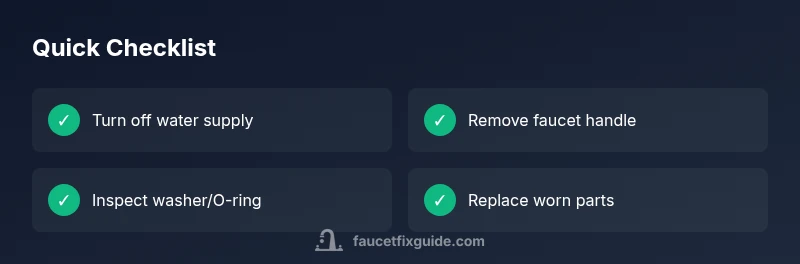
Note: This block provides a high-level plan to approach a dripping faucet repair safely and efficiently. First, identify faucet type (compression, cartridge, or ceramic disk) and gather compatible replacement parts. Next, shut off both the valve and the main supply if needed, then drain and dry components. Inspect washers, O-rings, and seats for wear; replace as needed. Reassemble carefully, test the faucet, and observe for any remaining drip.
Maintenance Habits to Prevent Future Drips
Create a simple maintenance routine to extend faucet life. Regularly inspect handles for looseness, clean aerators to prevent mineral buildup, and replace worn seals before leaks appear. Use filtered or softened water if mineral buildup is persistent in your area. Keep an eye on supply lines for signs of wear, corrosion, or leaks near joints. Document repairs and replacements so you know when components were last serviced.
Money-Saving Tips: When to DIY vs Hire a Pro
Most drips can be stopped with DIY part replacements, which saves money on labor. If you have a ball, cartridge, or ceramic-disk faucet and the leak persists after part replacement, it’s wise to call a professional. Complex fixtures with hidden corrosion or multi-faucet systems benefit from a licensed plumber to ensure safety and code compliance. Always weigh the cost of parts and potential damage against a pro’s expertise.
Steps
Estimated time: 30-60 minutes
- 1
Turn off water supply
Shut off the faucet’s shut-off valve under the sink or at the main supply. Open the faucet to relieve pressure and drain remaining water.
Tip: Have a bucket ready to catch residual water. - 2
Remove faucet handle
Use the screwdriver to remove the handle retaining screw and lift the handle away from the stem to access internal parts.
Tip: Keep screws in a labeled container to avoid loss. - 3
Inspect washer and O-ring
Look for cracks, tears, or deformities on the washer and O-ring. Replace if worn to restore a proper seal.
Tip: Take a photo of the part before removal for reference. - 4
Replace worn parts
Install a new washer or O-ring that matches the old part. If you have a cartridge faucet, replace the cartridge per the manufacturer’s instructions.
Tip: Lubricate seals lightly with faucet-safe grease if required. - 5
Check valve seat or cartridge
Inspect the valve seat for corrosion or grooves. Replace or file as needed, or swap the cartridge if applicable.
Tip: Handle with care; cartridges can be fragile. - 6
Reassemble faucet
Place components back in order and tighten nuts securely without over-tightening to avoid damage.
Tip: Use a thread sealant only if recommended by the part manufacturer. - 7
Restore water and test
Turn the water back on slowly and run the faucet for several minutes to check for drips at various flow rates.
Tip: Test at both full and reduced flow to ensure reliability. - 8
Evaluate and decide
If drips persist, identify the next component to inspect or consider professional service.
Tip: Document repairs with notes and photos for future reference.
Diagnosis: Dripping faucet
Possible Causes
- highWorn or damaged faucet washer (compression faucet)
- highDamaged O-ring behind the handle
- mediumWorn valve seat or mineral buildup
- lowLoose or corroded faucet parts
Fixes
- easyShut off outlet and remove handle to inspect/replace washer or cartridge
- easyReplace the O-ring if worn or damaged
- mediumReseat or replace valve seat if corroded or pitted
- easyTighten or replace worn components and apply plumber’s tape as needed
Frequently Asked Questions
What causes a dripping faucet?
A dripping faucet is usually caused by worn washers or O-rings, mineral buildup in valve seats, or loose components. Cartridge faucets can drip if the cartridge wears. Inspect each part to identify the failing component and decide the fix.
Worn washers or O-rings, mineral buildup, or loose parts usually cause drips; inspect each part to identify the failing component.
How long does a faucet repair take?
Most DIY fixes take about 30 to 60 minutes, depending on faucet type and part availability. More complex issues or difficult-to-access parts may take longer or require a professional.
Most fixes take about half an hour to an hour, depending on the faucet and parts.
Can I fix a dripping faucet myself?
Yes, many drips are fixable with basic tools by replacing washers, O-rings, or cartridges. If you’re unsure about valve seats or cartridges, seek guidance or hire a pro.
Yes, many drips can be fixed with basic tools and parts; if unsure, ask a pro.
What tools do I need for a drip repair?
Common tools include a screwdriver, adjustable wrench, pliers, replacement washers/O-rings, a new cartridge if needed, plumber’s tape, a bucket, and towels.
You’ll likely need a screwdriver, wrench, pliers, washers or a cartridge, plumber’s tape, a bucket, and towels.
When should I replace the faucet instead of repairing it?
If the faucet is old, corroded, or repeatedly leaking after multiple repairs, replacement may be more cost-effective and reliable.
If repairs keep failing or the faucet is very old, replacement might be best.
Is a dripping faucet a sign of water waste or a high bill?
Yes. A dripping faucet wastes water and can raise your bill over time. Fixing it promptly reduces waste and saves money.
Yes, leaks waste water and can raise your bill; fix promptly to save water and money.
Watch Video
Top Takeaways
- Identify faucet type before disassembly
- Worn washer or O-ring are common causes
- Test after reassembly to confirm the fix
- Save water with prompt, proper repairs per Faucet Fix Guide