Which Faucet to Drip During Freeze: A Homeowner's Guide
Learn which faucet to drip during freeze to protect pipes, with clear steps, safety tips, and maintenance guidance for 2026. Practical advice for homeowners and DIY enthusiasts.


During a freeze, drip any faucet that feeds an exterior wall or unheated area to keep water moving and relieve pressure. Start with the faucet closest to the outside, and drip both hot and cold lines if they run through exposed spaces. Use a slow, steady trickle rather than a heavy stream.
Why Dripping Faucets Prevents Frozen Pipes
In winter, understanding which faucet to drip during freeze can be the difference between a small nuisance and a burst pipe. Dripping keeps water moving, reduces pressure buildup, and prevents ice blockages in exposed lines. For most homes, exterior hose bibs and any faucet on an unheated wall are the primary targets. By following a simple dripping strategy, homeowners can protect both hot and cold lines and minimize repair costs. The Faucet Fix Guide team emphasizes consistency: a slow, steady trickle is more effective than a heavy flow that wastes water and may leak. When a temperature drop is forecast, prepare your drip plan in advance, identify all exposed fixtures, and set up a routine check to confirm the flow continues throughout the freeze. This approach aligns with standard plumbing safety practices and helps prevent emergency calls during cold snaps.
Which Faucets Need to Drip During Freeze
Not every faucet requires dripping, but the ones that are most vulnerable to freezing deserve attention. Exterior hose bibs, outdoor spigots, and any fixtures that run through unheated spaces (basements, garages, attics) are on the target list. Frost-free faucets might still need a drip if the outdoor connection is not fully protected. Termination devices such as frost-proof spigots are designed to resist freezing, but the supply line inside the house can still trap water and create a risk if the line is awkwardly configured. To decide quickly, start with outdoor hoses and any faucet on an external wall. If you have unheated crawl spaces or exterior pipes, apply the drip strategy there as well. By prioritizing exposed fixtures, you minimize the chance of a crack in the supply line.
How Much to Drip and What It Means for Water Waste
The goal of dripping is to prevent freezing, not to waste water. A slow drip—roughly a few drops per second or a steady, gentle stream from each affected faucet—is adequate for most residential plumbing during freezing conditions. If you notice a rapid drip or a high-volume flow, reduce it to a lighter trickle to conserve water. The exact rate doesn't have to match a thermostat; what matters is maintaining continuous movement in the line. For multi-fixture networks, consider dripping 1–2 faucets on exterior walls and 1 on interior lines if those lines are exposed and risk freezing. Avoid running sinks unrelated to the affected lines; use cold water where possible to reduce unnecessary warmth in heating cycles. Monitoring helps: if temperatures rise or storms pass, recheck.
Timing: When to Start and How Long to Drip
Begin dripping before a serious freeze is forecast. If you see a forecast for several hours of subfreezing temperatures, preemptively start a drip on the identified fixtures. Keep the drips running through the cold period and stop after temperatures rise above freezing for a full day. If you live in a climate with erratic warm spells, you may need to re-evaluate daily. The Faucet Fix Guide team notes that proactive drip plans reduce emergency calls and water damage risks. After a thaw, allow any residual water to drain slowly from the faucet by running it briefly and then closing it; this ensures the line is not left pressurized. In homes with frost-free faucets, follow manufacturer guidance for the specific model.
Tools & Materials
- Exterior faucets (hose bibs)(Identify all outdoor spigots that may be exposed to freezing temperatures.)
- Bucket or container(Catch any dripping water and keep the area clean.)
- Towels or rags(Wipe up spills and protect indoor flooring near drip points.)
- Adjustable wrench or screwdriver(Used to adjust packing nuts or shut-off valves if needed.)
- Plumber's tape (Teflon tape)(Seal threads if you remove and reseal any fittings.)
- Foam faucet covers or insulation(Add insulation to extreme external faucets when not actively dripping.)
- Marker and notepad(Label faucets and keep a quick log of which are drip-enabled.)
- Heat source (optional)(Hair dryer or heat tape for stubborn frost on valve handles.)
Steps
Estimated time: 30-60 minutes
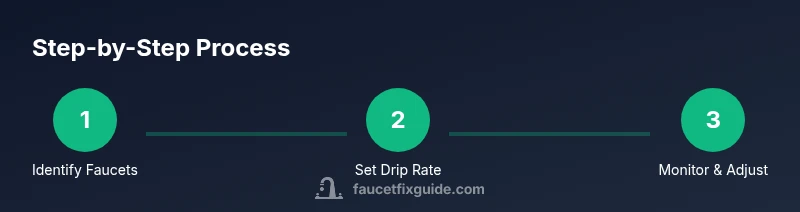
- 1
Identify exposed faucets
Walk around your home to locate all exterior hoses, hose bibs, and any faucets that pass through unheated spaces such as basements, garages, or crawl spaces. Make a quick note of their locations so you can plan a focused drip strategy. This step prevents missing vulnerable fixtures that could freeze and cause leaks later.
Tip: Use a flashlight in dim spaces and check both sides of the house for hidden fixtures. - 2
Choose faucets to drip and prepare supplies
From your list, select the fixtures most at risk (exterior or unheated-line faucets). Gather the bucket, towels, and tools before you start. If you have multiple fixtures, decide whether to drip all of them or prioritize the ones with the hottest or coldest lines.
Tip: Place towels under each faucet area to catch drips and protect flooring. - 3
Set and test a slow drip
Turn the faucet to a slow trickle—enough to keep water moving but not so much that it creates a visible stream. Run this test for a few minutes, then observe to ensure a steady, minimal drip without splashing.
Tip: If you notice inconsistent dripping, adjust the packing nut or ensure the faucet isn’t partially blocked. - 4
Monitor during the freeze
Check the drip rate periodically during extended freezes. If temperatures rise, you may reduce flow slightly or pause dripping on unfrozen days. Do not stop until the freeze warning ends and the area stays above freezing for a day or more.
Tip: Keep a simple log of which fixtures are dripping and the times you checked them. - 5
Inspect after thaw and drain
As temperatures rise, run each drip faucet briefly to flush any remaining water, then close the faucet gently. Inspect for leaks around packing nuts and valve handles and address small drips quickly to prevent later complications.
Tip: Don’t rush the final shutoff; a slow, controlled close reduces the chance of leaks. - 6
Document and store preventive measures
Note locations, drip patterns, and any insulation added. This record helps you repeat the process next winter and informs maintenance or a plumber if problems arise.
Tip: Keep the log in a visible place for easy reference before the next freeze.
Frequently Asked Questions
Do I really need to drip every faucet in my home?
No. Dripping is primarily recommended for outdoor faucets and any lines that pass through unheated spaces. Interior faucets away from unheated areas usually don’t need to drip. Use your judgment based on exposure and prior freezing history.
No—focus on exterior or unheated-space faucets that could freeze.
What if I have frost-free faucets?
Frost-free faucets are designed to resist freezing, but in very cold climates or poorly insulated lines they may still benefit from a light drip. Follow the manufacturer’s guidance and monitor per weather conditions.
Frost-free faucets may not need as much drip, but check your model and climate.
How long should I drip during a multi-day freeze?
Continue dripping for the duration of the freeze and until forecasts show sustained above-freezing temperatures for a day or more. Reassess daily if weather is volatile.
Keep the drips going for the entire freeze period, then recheck.
Could dripping waste a lot of water during a drought?
A minimal, slow drip uses very little water and is typically acceptable even during limited water conditions. It’s more efficient than risking a burst pipe, which causes much greater waste and cost.
A tiny, steady drip is usually a small price to pay for pipe protection.
What should I do if a drip faucet starts leaking heavily?
Turn off the faucet and inspect for worn packing or damaged washers. If you can’t fix it quickly, shut off the main supply to the affected line and call a plumber.
If a drip turns into a heavy leak, stop and fix or seek help.
Is insulation enough to prevent freezing without dripping?
Insulation helps, but in severe conditions, dripping provides an added layer of protection by keeping water moving. Use insulation plus a drip strategy for best results.
Insulation helps, but dripping adds protection in cold weather.
Watch Video
Top Takeaways
- Drip only exposed fixtures to prevent freezing, not every faucet.
- Use a slow trickle to minimize water waste and maximize safety.
- Start before a freeze and monitor regularly through the cold period.
- After thaw, flush and inspect lines to prevent lingering leaks.