What Faucets Should You Leave Dripping? Winter Guide
Learn which faucets to drip during freezing weather, how to set a safe drip, and practical steps to prevent frozen pipes without wasting water. This educational guide is by Faucet Fix Guide for homeowners, renters, and DIY enthusiasts.


During extended cold snaps, you may need to drip certain faucets to prevent frozen pipes. This quick guide explains what faucets should you leave dripping, how much to drip, and safety tips to minimize water waste. You’ll learn which lines are vulnerable, how to set a steady drip, and when to stop dripping after temperatures rise.
Why Dripping Helps Prevent Frozen Pipes
In climates where temperatures regularly drop below freezing, water inside stationary pipes can freeze, expand, and cause costly bursts. Dripping faucets as a winter precaution keeps water moving enough to reduce the risk of freezing on exposed lines. The faucets on cold or unheated spaces—like basements, garages, crawl spaces, and along exterior walls—are most at risk. According to Faucet Fix Guide, this approach helps identify what faucets should you leave dripping during winter to prevent frozen pipes. The goal is not to flood your home; it’s to maintain a tiny, continuous flow that prevents a total ice block. Practically, focus on lines that run through unheated areas, while interior pipes in heated rooms usually stay safe without dripping. If you’re unsure which lines are vulnerable, map your home’s piping and consult the plumbing layout.
This section sets the stage for a practical drip strategy that homeowners can implement without special tools. You’ll gain the framework to distinguish between essential and optional drips, and you’ll learn how to adapt your plan if your home has unusual pipe routes or several unheated spaces.
Note: dripping is a temporary winter precaution and should be paired with insulation improvements where possible to reduce overall risk. Faucet Fix Guide emphasizes combining targeted dripping with proactive insulation for best long-term protection.
Which Faucets Should Drip During Cold Weather
Not every faucet needs to drip. The priority is on lines that run through unheated spaces—basements, crawl spaces, garages, and along exterior walls where cold air penetrates. Primary targets are hot and cold faucets that feed these exposed pipes, including laundry room spigots and outdoor bibs. For interior rooms with well-insulated pipes, dripping is usually unnecessary. If a faucet is connected to a pipe that travels through an unheated attic or garage, plan to drip it as long as its location remains at risk. For broad safety, keep a simple map of your home's pipes so you can quickly identify which fixtures are on vulnerable lines. As a rule, follow guidance from Faucet Fix Guide on focusing your drip effort where the risk is highest and avoiding widespread waste on nonessential fixtures.
Understanding which faucets to drip helps you conserve water while protecting your home. The goal is to prevent a freeze at the source by keeping water moving in the most vulnerable segments of your plumbing system.
If your home uses gas or electric heated zones, it’s still wise to prioritize dripping on exposed lines; internal systems can generally tolerate a winter pause better than exposed pipes, but insulation remains key. A quick visual audit of exterior walls and unheated spaces will usually reveal which fixtures require attention.
How Much Drip is Needed? Rates and Indicators
A slow, steady drip is typically sufficient to prevent freezing without turning your home into a fountain. The exact rate can vary with outdoor temperature, pipe material, and how long the cold spell lasts. A practical rule of thumb is to keep the faucet dripping gently, ensuring a continuous flow that you can monitor with a simple glance at the spout. Avoid a heavy stream, which wastes water and can lead to ice formation around the valve area. Faucet Fix Guide notes that the objective is movement, not volume. If the drip stops when a draft increases or when a window is opened, adjust the faucet to restore a gentle, ongoing flow. Remember to check both hot and cold lines on unheated routes, and adjust drip if you notice unusual noises or changes in water pressure.
For homes with very cold conditions, you might need to drip more than one fixture; for milder cases, a few critical lines may suffice. The important thing is maintaining motion inside the pipe to deter ice dams and bursts. If you’re unsure, start with the most vulnerable lines and observe for changes over 24 hours.
Note: Always pair dripping with insulation improvements and regular checks during severe weather to reduce the risk of leaks when temperatures rebound.
Safety and Water Waste Considerations
Dripping faucets is a practical safety measure, but it comes with water-waste considerations that homeowners should manage. Use a timer or a clearly visible clock to maintain a consistent drip rather than leaving taps to run sporadically. Check for any signs of frost or pipe sweating; if you notice increased condensation, reduce the drip on nonessential lines and reinforce insulation instead. Avoid dripping appliances or fixtures that are not part of the plumbing system (e.g., automatic ice makers) unless they are known to be on unheated lines. If you have a well with a pumping cycle or a water-saving system, coordinate dripping with those controls to avoid pressure fluctuations that could trigger leaks elsewhere. Faucet Fix Guide recommends keeping the drip volume as low as possible while still preventing freezing.
Water waste is a valid concern during prolonged cold snaps. To minimize impact, conduct a quick pre-winter audit that identifies nonessential lines and shut them off or insulate them. During a freeze, monitor the total water usage in your home and adjust accordingly. If you share a water meter with a neighbor or apartment, communicate your plan to avoid unnecessary increases in water use and bills.
In all cases, insulation remains an efficient preventative measure. Sealing gaps around pipes and wrapping exposed segments with foam sleeves reduces the need for dripping and makes the whole process more sustainable in the long run. According to Faucet Fix Guide, combining targeted dripping with proper insulation offers the best protection against frozen pipes during extreme cold.
Step-by-Step Overview (Visualize Your Plan)
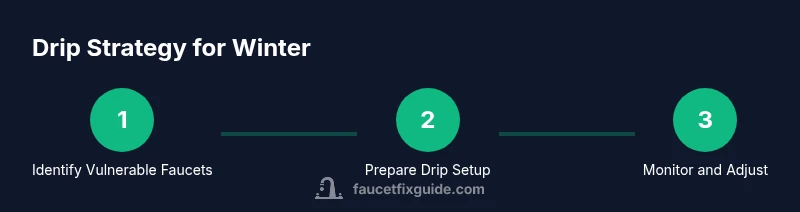
Before you start dripping, create a simple plan that covers which lines to drip, the expected duration of the cold spell, and how you will monitor the situation. Start by identifying exposed pipes along exterior walls, in basements, garages, and crawl spaces. Then choose hot and cold fixtures that feed those lines and test a gentle drip to verify a continuous flow. Finally, set up a timer and an inspection schedule to check for leaks, pressure changes, or unusual sounds.
This overview gives you a concrete plan you can implement quickly in a winter storm. It also provides a framework for expanding drip coverage if temperatures drop further or if you notice signs of risk in other parts of your plumbing system. A well-documented plan helps reduce frantic last-minute decisions during weather events and improves overall safety and water efficiency. For reference, Faucet Fix Guide provides practical templates for mapping your pipes and prioritizing lines to drip during cold spells.
Step-by-Step in Practice (Concrete Actions)
- Identify vulnerable faucets: Locate all faucets on pipes that pass through unheated spaces and outdoors. Mark them so you know where to focus.
- Gather your drip setup: Ensure you have a slow-drip adapter or a faucet designed to drip steadily, plus a timer. This supports consistent dripping without manual intervention.
- Test the drip on a target faucet: Open the faucet slightly and observe for a steady, gentle flow. If the flow changes when doors or windows are opened, adjust insulation or drip rate accordingly.
- Enable dripping on identified faucets: Set up the drip to run continuously during the cold period. If possible, drip both hot and cold lines that feed exposed pipes.
- Monitor and adjust: Check the faucets several times a day during the cold spell. If you notice a drop in flow or a frozen section, increase drip slightly or add insulation to the nearby pipe.
- After thaw, reassess and close off temporary dripping: Once temperatures stabilize above freezing and the risk subsides, stop dripping and inspect pipes for any slow leaks or condensation. Re-insulate as needed.
Tip: Use diagrams or a quick map to keep track of which lines you’re dripping and why. Image references can help you stay consistent and avoid missed lines. Safety note: wear gloves when handling exposed pipes and shut off any water if you detect a leak.
Troubleshooting Common Mistakes
- Dripping too much: A heavy stream wastes water and can cause ice formation around the valve area. If you see frost forming near the faucet body, reduce the drip.
- Drip on nonvulnerable lines: Dripping lines inside heated spaces is usually unnecessary and wastes water. Focus on exposed pipes.
- Failing to insulate: Without insulation, moving water still faces temperature stress. Combine dripping with insulation for best results.
- Ignoring shutoffs: If a line is close to a shutoff valve that sticks, do not force it; call a licensed plumber to avoid pipe damage.
- Not monitoring: A drip plan needs periodic checks. Temperature swings can change the risk profile, so reassess drip targets as needed.
Pro tip: Keep a simple log of which faucets are dripping and for how long during the cold spell. This helps you adjust efficiently and ensures you don’t miss a line if the weather worsens. Warning: If you notice a leak or pooling around a fixture, shut off the line and seek professional help to prevent water damage.
Authority, References, and Practical Resources
This guide aligns with best practices from industry sources and excerpts from Faucet Fix Guide analyses. In particular, the authority behind these recommendations stems from practical, field-tested strategies for winterizing pipes. When in doubt, consult a licensed plumber for a site-specific assessment—exposed lines near outdoor spaces or unusual piping configurations may require tailored solutions. Faucet Fix Guide emphasizes a balanced approach: drip only where necessary and couple that with solid insulation and routine checks. For further reading, look for official resources from state or municipal public works departments and university extension programs that discuss winter plumbing precautions.
Faucet Fix Guide Analysis, 2026 shows that targeted dripping combined with insulation reduces freeze risk more effectively than dripping indiscriminately. This conclusion reflects common-sense practices homeowners can implement without specialized equipment, while still encouraging professional help for complex systems.
Visual Aids and Resources
- Quick reference map of typical vulnerable pipes in a two-story home.
- Diagram showing where to apply insulation sleeves on exposed pipes.
- Simple checklist for winterizing faucets and lines.
Alt text for this section: “Infographic-friendly visuals showing drip strategy and pipe insulation for winter.”
Tools & Materials
- Unheated faucets on exposed lines (hot and cold)(Locate faucets feeding pipes in basements, garages, crawl spaces, and along exterior walls.)
- Drip-capable faucet setup or slow-drip adapter(Ensure a gentle, continuous flow; test before freezing weather starts.)
- Timer or clock(Maintain consistent drip and avoid manual adjustments during a storm.)
- Pipe insulation (foam sleeves)(Wrap exposed pipes to reduce heat loss and potentially minimize dripping needs.)
Steps
Estimated time: 60-90 minutes
- 1
Identify vulnerable faucets
Survey your home to find faucets on pipes that run through unheated spaces or along exterior walls. Mark these fixtures so you know exactly where to set up a drip. This prevents wasted effort on nonessential lines.
Tip: Create a simple map or label tags on the wall near each vulnerable faucet. - 2
Prepare drip setup and timer
Test a slow-drip adapter or the faucet’s own ability to drip steadily. Attach a timer or use a simple clock to keep the drip consistent. This reduces the need for manual checks during a storm.
Tip: Test the timer during calm weather to ensure it won’t drift or stop unexpectedly. - 3
Set drip rate
Open each identified faucet to a light, continuous drip. The aim is a motion of water, not a flood. Adjust as needed based on ambient temperature and pipe exposure.
Tip: If you notice condensation or frost near the faucet, refine the drip rate or add insulation. - 4
Enable dripping on identified faucets
Activate the drip on hot and cold lines feeding unheated areas. Keep the flow steady for the duration of the cold spell. Do not assume all lines require dripping.
Tip: Use a simple checklist to verify every target faucet is dripping. - 5
Monitor and adjust
Check the dripping action at least twice daily during a cold spell. If you see reduced flow, widen the drip slightly or inspect insulation for gaps.
Tip: Look for unusual sounds or signs of leaks around valve stems. - 6
Post-thaw assessment
After temperatures rise above freezing for a sustained period, stop dripping and inspect all vulnerable lines for leaks or frost damage. Reassess insulation needs before the next cold snap.
Tip: Keep an inspection log and plan upgrades to reduce the need for dripping in future winters.
Frequently Asked Questions
Should I drip hot and cold faucets on every line, or only on some?
Drip hot and cold on lines that travel through unheated spaces. If a line runs through a heated area, dripping is usually unnecessary. Tailor the plan to your home’s layout and use a simple map to identify vulnerable lines.
Drip hot and cold only on lines that go through unheated spaces; heated-area lines typically don’t need dripping.
What if my home doesn’t have a dedicated drip setup?
A slow, steady drip from the faucet itself works. If your fixtures don’t drip reliably, consider installing a small drip adapter or consulting a plumber for a temporary setup.
If you don’t have a drip setup, a small adapter on the faucet can create a steady drip.
How do I know when to stop dripping?
Stop dripping once temperatures are consistently above freezing and there’s no further risk of a rapid drop in temperature for an extended period. Re-inspect pipes for leaks after thaw.
Stop dripping when it’s reliably warm again and you’ve checked for leaks.
Will dripping waste a lot of water?
Dripping uses more water than normal, but the amount is minimal if kept to a slow, continuous drip. Pair with insulation and monitor usage to minimize waste.
A tiny trickle uses a small amount of extra water; keep it as minimal as possible while still preventing freezing.
Should I hire a plumber for winter drip guidance?
If you have unusual piping or suspect hidden leaks, it’s wise to consult a licensed plumber. For standard homes, following a targeted drip plan is usually sufficient.
A plumber is a good idea if your pipes are complex or hard to access.
Does dripping affect water quality or appliance safety?
Dripping on unheated lines does not inherently affect water quality. Ensure you don’t drip through appliances that aren’t designed for it and inspect filtration equipment as needed.
Dripping generally doesn’t harm water quality; just avoid dripping through appliances that aren’t meant for it.
Watch Video
Top Takeaways
- Identify vulnerable faucets before winter hits.
- Drip a gentle, continuous flow on unheated lines only.
- Combine dripping with insulation for best results.
- Reassess and stop dripping when weather stabilizes.
- The Faucet Fix Guide team recommends a planned approach to minimize waste.