How to Stop a Faucet from Dripping: A DIY Guide
Learn how to stop a faucet from dripping with a clear, step-by-step DIY approach. Identify the cause, choose the right parts, and fix leaks fast with tips from Faucet Fix Guide.


You can stop a faucet from dripping by diagnosing whether the drip comes from a worn washer, cartridge, or seat. Gather basic tools, turn off the water supply, and follow a step-by-step repair guide to replace faulty components and seal fittings. This approach works for most kitchen and bathroom faucets and can help prevent waste and higher utility bills.
Why Faucets Drip and What It Costs
If you’re wondering how to stop a faucet from dripping, you’ll often find that the drip stems from a worn washer, a failing cartridge, or a damaged valve seat. Even small leaks waste water and can raise your utility bills over time. The Faucet Fix Guide team emphasizes that addressing the problem promptly preserves water pressure, reduces wear on your plumbing, and minimizes mold risk under sinks. In many cases, a simple swap of a worn component restores a drip-free faucet and saves money without professional help. Understanding the faucet’s type is the first step toward an effective fix, since compression, cartridge, ball, and ceramic-disk valves each wear differently and require distinct parts and tools.
Common Causes: Wear, Dirt, and Pressure
A drip usually indicates a seal somewhere along the valve stem has degraded. The most common culprits are worn washers in compression faucets and worn cartridges in cartridge-style fixtures. Sediment buildup from hard water can also abrade seals, while excessive water pressure can aggravate leaks around the valve seat. Some drips occur when the faucet is shut off but the supply lines remain partially pressurized, so it’s important to verify that the shut-off valves under the sink are fully closed before inspecting components. By understanding these causes, you can target the right replacement parts and avoid unnecessary disassembly.
Essential Tools and Replacement Parts
To confidently stop a faucet from dripping, you’ll need a small set of dependable tools and the correct replacement parts. For most repairs, an adjustable wrench, screwdrivers (flathead and Phillips), and a replacement washer or cartridge kit are essential. A seat washer kit, O-rings, thread seal tape, and a small container for old parts are also helpful. The exact parts you’ll need depend on faucet type (compression, cartridge, ball, or ceramic-disk). Before you start, confirm your faucet model to select the precise components. Having a well-lit workspace and towels to catch drips will make the process smoother and cleaner.
The Repair Mindset: Approach and Safety
Before disassembly, set expectations: many drips are straightforward fixes, but some require careful handling of valve stems. Start by turning off the water supply at both the sink shut-off valves and the main line if needed, then relieve residual pressure by running the faucet briefly. Disconnect the supply lines to prevent water from spraying when you remove the handle. Use a magnet or label small parts to keep track of screws and washers. If your faucet has a ceramic cartridge, avoid prying; cartridges can be delicate and are typically replaced as a unit. Always wear eye protection and work in a well-ventilated area.
How to Identify Your Faucet Type
Not all drips are created equal. Compression faucets use washers that wear out over time; cartridge faucets rely on a central cartridge that can be replaced; ball faucets operate with moving parts inside a ball-and-socket assembly; ceramic-disk faucets use ceramic disks. Inspect the handle assembly to determine which type you have. If you’re unsure, remove the handle and examine the stem—look for a washer behind a threaded nut (compression) or a cartridge seated in a cylindrical body (cartridge). Knowing your faucet type guides you to the correct replacement parts and procedure.
Maintaining Your Faucet to Prevent Drips
Prevention is easier than repair. Regularly inspect handles for looseness, tighten slowly to avoid over-torquing, and replace worn parts at the first sign of leakage. Clean aerators and faucet cartridges periodically to remove mineral buildup. If your home has hard water, consider a water-softening solution or routine descaling to extend seal life. Using the correct size washers and applying small amounts of plumber’s grease to seals can improve performance and prolong the life of your faucet. Finally, keep a simple parts kit on hand for quick DIY fixes.
Tools & Materials
- Adjustable wrench(Use to loosen nuts on supply lines and faucet fittings)
- Screwdrivers (flathead and Phillips)(Needed for handle screws and escutcheon plates)
- Replacement washer(s)(Size depends on faucet type; have a few common sizes on hand)
- Replacement cartridge kit(Required for cartridge-type faucets; choose exact model)
- Seat washer(Used for some compression valves—capture order by faucet type)
- O-ring kit(Essential to reseal stems and connectors)
- Teflon tape (thread seal tape)(Wrap threads to prevent leaks at connections)
- Pliers (channel-lock)(Helpful for gripping stubborn fittings)
- Towels and small bucket(Catch leaks and keep workspace clean)
- Latex-safe penetrating oil(Loosens stuck screws safely)
Steps
Estimated time: 60-90 minutes
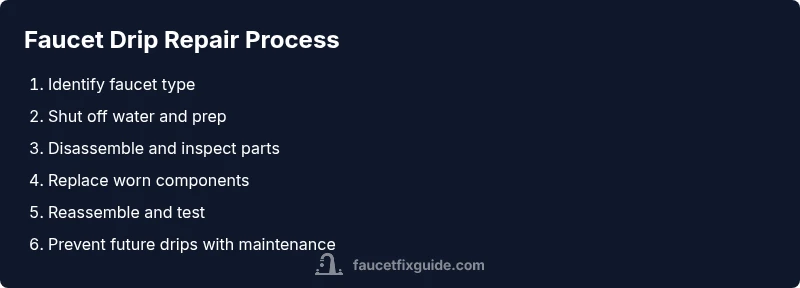
- 1
Shut off water and prep workspace
Turn off both the under-sink shut-off valves and the main water supply if needed. Open the faucet to relieve pressure and drain remaining water into a bucket. Lay towels to protect the cabinet and keep parts organized.
Tip: Label lines if you remove multiple hoses to avoid confusion during reassembly. - 2
Identify faucet type
Inspect the handle and stem to determine whether you have a compression, cartridge, ball, or ceramic-disk faucet. This guides which parts to replace and the disassembly sequence.
Tip: If you’re unsure, take a quick photo of the valve before disassembly for reference. - 3
Remove the handle and bonnet nut
Use the screwdriver to remove the handle screw, then lift off the handle. Use an adjustable wrench to loosen the bonnet nut or retaining nut that holds the cartridge or stem in place.
Tip: Do not force parts; if a nut is stubborn, apply gentle penetrating oil and wait a few minutes. - 4
Inspect and remove worn components
Carefully pull out the cartridge or stem to inspect the washer, O-rings, and seat. If the washer is worn or the cartridge shows wear, replace with the correct size part.
Tip: Keep track of orientation to ensure proper reassembly. - 5
Install new parts
Insert the new washer or cartridge as directed by the manufacturer. Re-seat the seat and O-rings, and reassemble the bonnet nut without over-tightening.
Tip: Lightly lubricate O-rings with plumber’s grease to improve seal life. - 6
Reconnect supply lines and test for leaks
Reconnect hoses, tighten fittings by hand then with a wrench until snug. Turn the water back on and slowly open the faucet to check for leaks. If there’s a leak, re-tighten within gentle limits.
Tip: Test at both hot and cold to ensure even sealing. - 7
Reassemble and clean up
Replace the handle, escutcheon, and any decorative trim. Wipe away any putty or mineral buildup. Run the faucet for several minutes to confirm a drip-free operation.
Tip: Keep a spare part bag for future quick fixes. - 8
Evaluate performance and preventive steps
Observe the faucet for a few days. If leaks recur, consider replacing multiple seals or consulting a professional for persistent issues. Regular maintenance reduces future leaks.
Tip: Consider installing an aerator to reduce mineral buildup and improve flow.
Frequently Asked Questions
What is the most common cause of a dripping faucet?
The most common cause is a worn washer in compression faucets or a worn cartridge in cartridge-type faucets. Replacing the faulty part usually stops the drip.
The most common cause is a worn washer or cartridge, which is typically fixed by replacing the faulty part.
Can I stop a dripping faucet without replacing parts?
Sometimes you can stop a drip by tightening fittings or reseating a cartridge, but most persistent drips require part replacement for a lasting fix.
Sometimes you can fix it by reseating parts, but typically you’ll need to replace the worn component.
How long does a faucet repair take?
A typical repair takes about 30 to 90 minutes, depending on faucet type and accessibility. More complex fixtures may take longer.
Most fixes take about half an hour to an hour and a half, depending on the faucet.
Is it safe to DIY fix a faucet?
Yes, with basic tools and care. Shut off water supply, work in a dry area, and follow manufacturer instructions for your faucet type.
Yes, DIY is generally safe if you turn off water and follow steps carefully.
When should I call a plumber?
Call a plumber if leaks persist after replacement, you notice corroded pipes, or water pressure issues accompany the drip.
Call a plumber if leaks continue after repairs or you notice other plumbing problems.
What tools will help most for a drip repair?
An adjustable wrench, screwdrivers, replacement washers/cartridges, and Teflon tape are the most helpful tools for most drip repairs.
A wrench, screwdrivers, and the right replacement parts are your main tools.
Watch Video
Top Takeaways
- Identify the faucet type before disassembly
- Replace worn washers or cartridges rather than jury-rigging
- Test leaks at hot and cold after reassembly
- Keep tools organized to prevent losing small parts
- Regular maintenance reduces future drips