How to Know If an Outside Faucet Is Frozen: Troubleshooting and Fixes
Learn how to tell if your outdoor faucet is frozen, plus safe thawing steps and prevention tips to avoid winter damage. A practical, homeowner-friendly guide from Faucet Fix Guide.


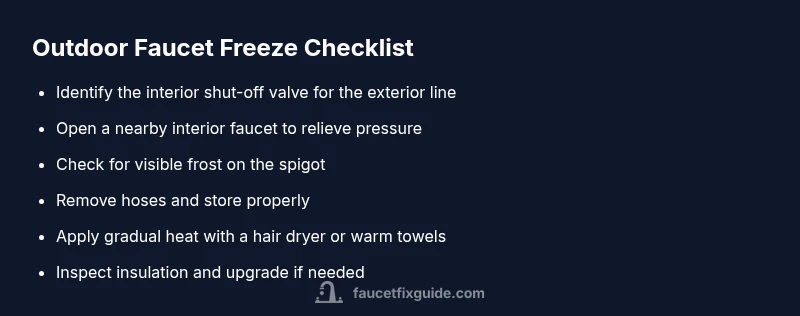
Most outdoor faucets freeze when water inside the line stops moving in subfreezing weather. Start by locating the interior shut-off valve, then gently thaw the faucet with a hair dryer or warm towels around the spigot while you let the line thaw gradually. If you hear hissing or suspect a burst, shut off interior supply and call a plumber.
Recognizing a Frozen Outdoor Faucet
A frozen outdoor faucet is usually signaled by little to no water coming out, a stiff or jammed handle, frost on the faucet body, or a draft from the spout when you try to run water. In many homes, the first signal is a sudden halt in water flow after a cold snap. The key is to act calmly and follow a safe, methodical thaw plan. According to Faucet Fix Guide, frost is a common winter challenge for homeowners, but quick, controlled thawing and proper insulation can prevent repeated issues. Understanding where the water travels—from the interior shut-off valve to the outdoor spigot—helps you pinpoint the freeze and avoid unnecessary damage to pipes.
Immediate Safety: Shut Off and Drain
Safety first. If you suspect a frozen faucet, locate the interior shut-off valve for the exterior line and close it fully. Open a nearby interior faucet to relieve pressure and drain any standing water in the line. This step minimizes the risk of a burst pipe if pressure builds during thawing. Do not use high heat or open flame on exterior pipes. If you must thaw, do so gradually and keep a bucket handy for draining condensate. Faucet Fix Guide emphasizes slow, controlled thawing as the safest approach, especially when your lines run through unheated spaces.
Common Causes and Risk Factors
Cold temperatures, wind chill, and extended periods of freezing weather are the primary culprits. Other contributors include leaving hoses attached to the spigot, which can trap water in the hose and create a secondary frozen barrier, inadequate insulation around pipes and frost-free sillcocks, and long, unheated wall cavities that let the frost creep in. If you notice repeated freezing, it may be a sign that your home’s plumbing runs through uninsulated areas. The Faucet Fix Guide team notes that addressing insulation and proper shut-off valves dramatically reduces freeze risk over time.
Quick Home Checks You Can Do Now
Begin with the interior shut-off valve location and operation. Inspect the outdoor faucet knob and spout for frost buildup. Check that hoses are removed and stored, and that any exterior frost-free spigots are fully closed. Look for signs of moisture or frost around the pipe where it enters the wall. If you can safely do so, gently feel the pipe for ice pockets (do not squeeze hard or damage the pipe). This blend of quick checks helps you differentiate a simple freeze from a deeper plumbing issue.
Safe Thawing Techniques and Procedures
Thawing should be gradual to protect pipes. Start with the interior valve closed, then apply passive heat to the faucet area—use a hair dryer on a low heat setting held several inches away. You can also wrap the spigot with towels soaked in warm water, replacing them as they cool. Avoid open flames, heat guns, or boiling water, which can damage pipes or plastic components. If the faucet begins to drip or water returns slowly, pause and recheck insulation and valve positions. The goal is controlled thawing without forcing water through a frozen segment.
When to Call a Professional
If thaw efforts fail after 60-90 minutes, or you hear cracking, hissing, or suspect a burst line, stop and contact a licensed plumber. Frozen outdoor lines can hide more extensive damage, including cracked pipes or failed fittings. A pro can perform a pressure test, replace compromised components, and install preventive measures like smarter shut-off valves or frost-proof sillcocks. Early professional help can save a bigger, costlier repair down the road.
Preventing Future Freezes (Winterization Tips)
Prevention is simpler than repair. Disconnect hoses each fall, install insulated spouts or vented covers, and consider upgrading to a frost-free sillcock where feasible. Insulate exposed pipes in unheated spaces and seal gaps where cold air can reach the lines. Keep interior heat steady on cold nights and let a slow trickle of water run through the line during extreme cold to avoid complete immobilization of water in the pipe. Regular maintenance checks help keep outdoor plumbing unfrozen through multiple winters.
Steps
Estimated time: 30-60 minutes
- 1
Locate the interior shut-off valve
Find the valve that feeds the exterior line, usually in the basement or crawlspace. Ensure you can reach it safely and fully close it to stop water flow when needed.
Tip: Label this valve for winter relief to avoid guessing later. - 2
Open a nearby interior faucet
Open a bathroom or kitchen faucet on the same level to relieve pressure and drain water from the exterior line. This reduces the risk of a burst pipe if thawing causes pressure changes.
Tip: Keep the interior faucet open during thaw until the exterior line is clear. - 3
Check the exterior faucet for frost
Inspect the outdoor spigot and handle for visible frost. If frost is present, prepare for thawing with non-flammable heat methods.
Tip: Do not use propane or open flame near plastic hoses. - 4
Begin gradual thawing
Use a hair dryer on a low setting, or wrap the faucet with warm towels. Move heat slowly from the handle outward toward the spout.
Tip: Keep the heat source at a safe distance to avoid damage. - 5
Test water flow and reseal
As water returns, monitor flow. Once steady, close interior faucets and reopen the exterior shut-off slowly. Reattach hoses only after water is flowing again.
Tip: Do not rush the process; rushing can re-freeze water. - 6
Prevent future freezes
Install insulation on exposed pipes, remove and store hoses, and consider frost-proof upgrades if freezes recur.
Tip: Set up seasonal reminders to winterize before temperatures drop.
Diagnosis: Outdoor faucet freezes or stops delivering water during cold weather
Possible Causes
- highFrost in the line or at the faucet itself
- highFrozen interior supply line just inside the wall
- mediumHose left attached or hose water trapped in the line
- mediumInsufficient insulation around pipes or frost-free valve
- lowOld or damaged shut-off valve causing partial shutdown
Fixes
- easyClose interior shut-off valve; drain standing water from the line via an interior faucet
- easyGently thaw the faucet from inside using a hair dryer and warm towels around the bib
- mediumRemove hoses, insulate exposed pipes, and install frost covers or frost-free valves
- hardIf thawing fails or you hear cracking/hissing, call a licensed plumber for a pressure test and repairs
Frequently Asked Questions
How can I tell if the outdoor faucet is frozen?
Look for frost on the faucet or pipe, a lack of water flow, or a cold sensation when touching the faucet. If the interior valve is shut, you may still see no flow until the line thaws.
Check for frost on the spigot, absence of water, and a cold-to-the-touch faucet. If unsure, follow our step-by-step thaw guide.
What should I do first if I discover a frozen faucet?
First shut off the interior supply valve and open a nearby indoor faucet to relieve pressure, then begin a safe, gradual thaw from the outside using a hair dryer or warm towels.
Shut the interior valve, drain the line, and thaw gradually with safe heat sources.
Can a frozen faucet cause pipes to burst?
Yes. A frozen segment can crack or burst if pressure builds. Always shut off the interior valve and thaw carefully to minimize risk.
Yes, frozen pipes can crack; shut off water and thaw slowly to prevent breaking.
Is it safe to thaw with a hair dryer or electric heater?
Yes, at a safe distance and low heat. Do not use open flames or high-temperature tools, and avoid direct contact with hoses or plastic components.
Yes, but keep heat source away from plastics and don’t use flames.
How can I prevent outdoor faucets from freezing in the future?
Install frost-proof valves, disconnect hoses in fall, insulate exposed pipes, and maintain a consistent indoor temperature near exterior walls.
Use frost-proof valves, insulate pipes, and winterize yearly.
Watch Video
Top Takeaways
- Identify the interior shut-off valve early.
- Thaw slowly with safe methods like a hair dryer.
- Inspect and insulate exterior pipes and hoses.
- Call a plumber if thaw attempts fail or you hear unusual sounds.
- Winterize regularly to prevent repeated freezes.