Adjust Faucet Handle Stops: A Step-by-Step DIY Guide
Learn how to adjust faucet handle stops to regain smooth operation, stop leaks, and extend faucet life. This educational, homeowner-friendly guide covers tools, step-by-step actions, safety tips, and maintenance reminders.


This guide will help you adjust faucet handle stops to improve grip, stop leaks, and restore smooth operation. You’ll learn the essential tools, safety notes, and the exact steps to locate, adjust, or replace the stops on common single-handle faucets. No special equipment beyond basic household tools is required. This overview primes you for the detailed steps below.
Understanding why adjusting faucet handle stops matters
If you’re asking how to adjust faucet handle stops, you’re likely chasing a smoother feel, a firmer seal, or relief from a persistent drip. The stops are tiny, often overlooked components inside a single-handle faucet that limit travel and set the tension against the valve seat. When they wear, shift, or become corroded, the handle can feel “lost” at the end of its range or fail to shut off water completely. Proper adjustment helps you regain control, reduce cartridge wear, and prevent leaks at the seal. According to Faucet Fix Guide, many common complaints—loose handles, sudden changes in temperature, or a leak after turning off the water—trace back to misaligned stops rather than a faulty cartridge. The good news is that in most cases you can diagnose and correct the issue with basic tools and careful inspection. This section explains what stops are, how they work, and why a precise adjustment matters for durability, water savings, and daily comfort. With the right approach, you’ll restore smooth operation and extend the life of your faucet.
Stop designs and how they influence adjustment
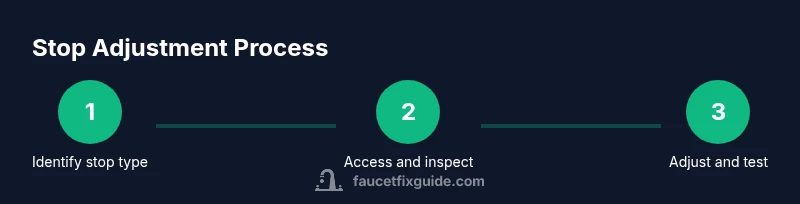
Faucet handle stops come in several designs, including screw-driven stops, clip-down stops, and integrated cartridge stops found in modern valves. Each design has a distinct adjustment point, so your first step is to identify which type you have. In general, screw-driven stops offer a straightforward inch-turn adjustment, while clip-based stops require repositioning or replacing a small retainer. Understanding the type helps you apply the correct technique and avoid damaging delicate parts. If you’re unsure, consult your faucet’s manual or search by model name. The takeaway: a precise stop position ensures that the handle travels the correct distance and that the shutoff is clean and complete.
Safety and workspace preparation
Before you touch any plumbing parts, shut off the water supply to both hot and cold lines. Open the faucet to release remaining pressure. Place towels in the sink to catch drips and protect the finish, and have a small container handy for screws and small parts. Working in a well-lit area makes it easier to locate the tiny screws, clips, and stops. If you notice corrosion or mineral buildup, a brief soak with vinegar-safe cleaner can help, but avoid harsh chemicals that could damage seals. Safety comes first; never work on live electrical outlets near the sink.
Accessing the stops: removing the handle and escutcheon
Start by locating the set screw at the base of the handle. Use the appropriate screwdriver to remove the set screw and lift the handle away from the valve stem. If a decorative bonnet or escutcheon covers the stop area, remove it gently to expose the stop screw or clip. Shine a light into the valve body to confirm the exact stop position and to verify whether you’re dealing with a screw, a clip, or an integrated stop inside the cartridge. Keep track of all small parts so nothing gets lost during reassembly.
Adjusting the stops: screws vs clips (and when to replace)
If you’re dealing with a screw-driven stop, turn the stop clockwise to reduce travel or counterclockwise to increase it in small increments (about quarter-turn). Test the handle range after each adjustment. If the design uses a clip or retainer, slide or reposition the stop slowly to a new position and secure it. If wear or corrosion is evident, consider replacing the stop or the entire cartridge, especially on older fixtures. Avoid overtightening, which can crack the stem or strip threads. When in doubt, start with a conservative adjustment and recheck.
Reassembly and post-adjustment testing
Reinstall the stop, escutcheon, and handle, then tighten the set screw securely. Restore water and slowly test the faucet’s range from full cold to full hot, noting any sticking, hard stops, or leaks around the valve. If drip persists after adjustment, recheck the stop position and the integrity of seals and gaskets. A final wipe-down and a quick cycle of hot and cold confirms even performance across the temperature range. Patience matters here—the right tune may take a couple of iterations.
Troubleshooting common issues and when to call a pro
Common issues after adjustment include residual drip, a stiff lever, or a sudden shift in temperature response. If you still see leaks around the base, the cartridge or O-rings may need replacement. Mineral buildup can mimic wear on the stops; a gentle cleaning with a brush helps in many cases. If you’re uncomfortable working behind the sink, or if the faucet is under warranty, contacting a licensed plumber is recommended to avoid voiding coverage.
Tools & Materials
- Adjustable wrench(Used to loosen nuts behind the handle assembly)
- Flathead screwdriver(Access set screws on some stop designs)
- Phillips screwdriver(For Phillips-style screws on handle or escutcheon)
- Needle-nose pliers(Helpful for removing small clips or prying components gently)
- Allen wrench / hex key set(Some stops use hex screws; have a set handy)
- Towels or small bucket(Catches water and keeps the workspace dry)
- Flashlight or smartphone light(Improves visibility inside the valve body)
- Replacement stop washers/clips(Only if wear is evident or parts are missing)
- Labeling tape or small container(Organize screws and parts during disassembly)
Steps
Estimated time: 25-40 minutes
- 1
Identify stop type and location
Inspect the faucet to determine whether you have a screw-driven stop, a clip-based stop, or an integrated cartridge stop. Use a flashlight to locate the stop screw or clip near the valve stem. This step avoids unnecessary disassembly and guides the correct adjustment method.
Tip: Take a quick photo of the stop before removal to help reassembly. - 2
Shut off water and relieve pressure
Close the shut-off valves under the sink for both hot and cold lines. Open the faucet halfway to relieve pressure and drain residual water. This prevents sprays and spills when you access the stem.
Tip: Have towels ready; even a small drip can get messy. - 3
Remove handle and access the stop
Loosen the set screw at the base of the handle and lift the handle away. Remove any escutcheon or bonnet to expose the stop area. Confirm whether you’re adjusting a screw, clip, or cartridge stop.
Tip: Keep track of removed parts; a small container helps avoid loss. - 4
Adjust the stop mechanism
If a screw is present, turn clockwise to reduce travel or counterclockwise to increase it in small 1/4-turn increments. If a clip is used, reposition it gently to the desired location. Avoid forcing parts; minor tweaks often yield desired results.
Tip: Test after each small adjustment with the handle in place. - 5
Reassemble the faucet
Reinstall the stop, escutcheon, and handle. Tighten the set screw securely but avoid overtightening. Ensure the handle sits evenly and moves smoothly without resistance.
Tip: If you had to replace parts, ensure compartments are clean and aligned. - 6
Test for leaks and proper range
Turn the water back on and cycle through hot and cold to verify full travel and a leak-free seal. If leaks appear, recheck the stop position and repeat adjustments in small increments.
Tip: Run the faucet for at least 60 seconds to confirm stability. - 7
Document and store components
Record what you adjusted and where you placed stops or clips for future reference. Store any spare parts in a labeled container.
Tip: A quick note can save time if you service the faucet again later.
Frequently Asked Questions
Do all single-handle faucets have adjustable stops?
Most have some form of stop mechanism, but the exact design varies by model. Some newer cartridges integrate stops internally. Always consult the model’s manual or manufacturer support if you’re unsure.
Most single-handle faucets include some kind of stop, but designs vary. Check your model’s manual if you’re unsure.
What does a faucet handle stop do?
A stop limits the travel of the handle and sets the shutoff pressure against the valve seat. Proper adjustment ensures a firm seal and smooth operation.
Stops control how far the handle moves and how the valve seats, giving you a smooth, leak-free operation when correctly set.
Can I adjust stops without turning off the water?
No. Always shut off hot and cold supplies and relieve pressure before touching faucet internals to avoid leaks and splashes.
No—the safest approach is to turn off the water first and relieve pressure.
How tight should the stop screw be?
Tighten just enough to hold the stop in place and achieve the desired travel. If you feel resistance or hear creaking, back off a quarter turn and retest.
Tighten enough to secure the stop without forcing the screw; a small turn and test is best.
What if leaks persist after adjustment?
If leaks persist, inspect O-rings and the cartridge. Worn gaskets or deposits may require replacement or a full cartridge swap for a lasting fix.
If it still leaks, check gaskets or the cartridge; replacement may be needed.
Are there safety risks in adjusting stops?
Risks are minimal if you follow steps and avoid applying force beyond recommended limits. Keep water off and avoid electricity near the sink.
Few safety risks as long as you follow steps and keep water off.
Watch Video
Top Takeaways
- Identify stop type before disassembly.
- Shut off water and relieve pressure.
- Adjust in small increments and test.
- Reassemble carefully and verify leak-free operation.