How to Replace a Faucet Cartridge: Step-by-Step Guide
Learn how to replace a faucet cartridge with a clear, step-by-step approach. This guide covers cartridge identification, essential tools, safety, and tests to ensure a leak-free faucet after replacement.


This guide teaches you how to replace a faucet cartridge—a common fix for drips and stiff handles. You’ll identify your cartridge type, shut off water, remove the handle, extract the old cartridge, install a new one with fresh seals, reassemble, and test for leaks. Basic tools and patience are all you need to get a lasting seal.
What is a faucet cartridge and why replace it?
A faucet cartridge is the replaceable valve assembly inside a single-handle faucet that blends hot and cold water to achieve your desired temperature. Over time, cartridges wear out: seals crack, O-rings dry, and the valve can leak or become stiff. Replacing the cartridge is often more reliable and cost-effective than replacing the entire faucet. If you notice a persistent drip after closing the faucet slowly, reduced water flow, or difficulty turning the handle, a cartridge replacement is a good first fix. This approach aligns with the core idea of how replace faucet cartridge and helps homeowners regain control of water flow without a full faucet overhaul. According to Faucet Fix Guide analysis, most cartridge-related leaks stem from worn seals rather than broken stems, making replacement the most practical repair for many common models.
When you replace the cartridge, you’re not just swapping a part—you’re renewing the faucet’s sealing surfaces. Fresh seals improve shutoff efficiency and reduce mineral buildup that can degrade performance over time. Before purchasing a cartridge, confirm the faucet brand and model so you pick the correct size and type. If you have a two-handle faucet, you’ll typically replace the cartridge in the handle side only, while a single-handle cartridge replacement covers both temperature and flow controls.
Cartridge types and how to identify yours
Faucet cartridges come in several varieties, with ceramic disc and cartridge-based valves being the most common in modern fixtures. In single-handle faucets, the cartridge is the central valve controlling hot and cold mixing; in two-handle designs, each handle generally controls its own supply through separate seats and seals.
Identifying your cartridge type helps you buy the right replacement. Look under the faucet handle for a model tag or stamp, remove the handle’s decorative cap, and inspect the cartridge body visually. Ceramic discs are usually a flat, round disk with small ports, while plastic or metal cartridges look like a small rectangular or cylindrical block with a top screw or clip. If you’re unsure, photograph the cartridge and search for the brand’s service guide or take the fixture to a local hardware store. Faucet Fix Guide notes that matching the cartridge to the faucet’s brand and model minimizes guessing and reduces the chance of buying the wrong part.
For many common brands like Moen and Delta, replacement kits include both the cartridge and associated seals. Having the exact model helps ensure a proper fit and a longer-lasting seal. If you’re replacing a two-handle faucet, verify whether both handles require cartridge-style replacements or if only one valve needs service.
Safety first: prepare your workspace
Work in a clean, dry area with good lighting. Clear the sink cabinet and surrounding surfaces so you have room to maneuver tools. Place a soft towel or mat in the sink to protect delicate parts from scratches. Turn off the water supply to both hot and cold lines and open the faucet to relieve residual pressure. Collect any water in a small bucket; you’ll catch drips as you disconnect lines. Wearing eye protection is advisable in case of splashes. According to Faucet Fix Guide’s general safety guidance, preparing your workspace reduces the chance of losing screws or components down the drain and helps you stay organized throughout the process.
Handling a stuck cartridge: tips to avoid damage
If the cartridge is difficult to remove, apply a small amount of penetrating oil and wait a couple of minutes before trying again. Use the correct-sized screwdriver and a basin wrench to avoid stripping screws or twisting fittings. Do not force a stuck cartridge; excessive force can shear the stem or damage the valve housing. Keep track of screws and springs by placing them in labeled containers or on a magnetic mat. Gentle, methodical pressure is usually enough to free a tight cartridge without causing damage.
The removal process: handle, cap, and cartridge access
First, remove the decorative cap or escutcheon to access the handle screw. Use the appropriate screwdriver to loosen and remove the set screw, then lift the handle away. Some faucets require a retaining clip or nut to secure the cartridge; remove that component carefully and set it aside. With the handle removed, you should see the brass or plastic cartridge held in place by a retaining nut or clip. Take a photo of the arrangement before removal so you can replicate it precisely when installing the new cartridge. Carry the cartridge out gently to avoid damaging the valve seat.
If you encounter mineral buildup, soak the cartridge area with a mild vinegar solution for a few minutes to loosen deposits before removal.
Installing the new cartridge and seals
Install the new cartridge into the valve housing in the same orientation as the old one. Re-seat any O-rings or seals and apply a light coat of plumber’s grease on the O-rings to ensure a smooth seal. Reattach the retaining clip or nut, then reinstall the handle. Replace the decorative cap or escutcheon to restore the faucet’s finished look. If your replacement kit includes a new cartridge retainer, use it to ensure a snug fit and reduce the risk of leakage around the valve stem. After installation, do a quick visual check to confirm the cartridge sits evenly and the stem moves smoothly with the handle.
Reassemble, test, and maintain
Turn the water back on and slowly operate the faucet to test the new cartridge. Check for leaks around the handle, under-sink connections, and at the spout. If you notice a drip, re-tighten connections and reseat the cartridge if necessary. Wipe away any mineral buildup from the surrounding surfaces, then run both hot and cold water to ensure consistent performance. Regular maintenance, such as cleaning aerators and inspecting seals every 6–12 months, helps prevent future cartridge wear and keeps your faucet running smoothly.
Tools & Materials
- Adjustable wrench(Useful for loosening faucet nuts under the sink)
- Basin wrench(Ideal for tight under-sink spaces)
- Phillips screwdriver(Remove handle screws)
- Flat-head screwdriver(Helpful for prying decorative caps)
- Allen wrench set(Some fixtures use hex screws)
- Replacement cartridge(Match your faucet brand/model)
- O-rings/seal kit(Fresh seals improve leaks prevention)
- Plumber’s grease(Lubricate O-rings for a better seal)
- Towel or rag(Protect surfaces and catch drips)
- Bucket(Catch water when disconnecting lines)
- Penetrating oil(Loosen corroded components if needed)
- Magnetic tray or small containers(Keep screws organized)
Steps
Estimated time: 60-90 minutes
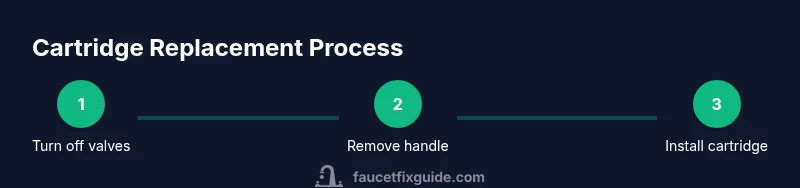
- 1
Turn off water supply
Close both the hot and cold shutoff valves under the sink. Open the faucet to relieve pressure and drain residual water. This prevents spills and protects you from unexpected sprays when you begin disassembly.
Tip: Place a towel under the area to catch drips and prevent slipping. - 2
Remove faucet handle
Use the appropriate screwdriver to loosen the handle set screw. Lift the handle off and inspect for any visible screws or caps that may conceal the cartridge. Removing the handle exposes the cartridge and retaining mechanism.
Tip: If the set screw is difficult to reach, use a flashlight and mirror to spot it. - 3
Access the cartridge
Remove decorative caps or escutcheon plates to reveal the retaining clip or nut. Take note of the order and orientation of parts as you remove them. A photo helps you reassemble accurately.
Tip: Use a small container to hold screws and small parts to prevent misplacement. - 4
Remove the old cartridge
Loosen and remove the retaining clip or nut, then pull the cartridge straight out. If it binds, apply a little penetrating oil and wait a few minutes before retrying. Do not twist or force the cartridge, which could damage the valve body.
Tip: If the cartridge is stubborn, gently wiggle back and forth rather than applying force. - 5
Inspect seats and seals
Examine the valve seat for pitting or wear. Replace O-rings or seals if they show cracks or stiffness. Clean any mineral buildup from the housing with a mild solution and a soft brush.
Tip: Ensure the seat is clean and dry before installing the new cartridge to prevent leaks. - 6
Install the new cartridge
Align the new cartridge with the valve body so ports line up as designed. Re-seat any O-rings with a touch of plumber’s grease. Secure the cartridge with the retaining clip or nut, then verify it moves smoothly by turning the stem gently.
Tip: Always install in the correct orientation; most cartridges have a notch or label that indicates alignment. - 7
Reassemble the faucet
Reattach the escutcheon and handle, ensuring screws and caps are snug but not overtightened. Reinstall any decorative caps and ensure the handle sits flush against the base. Confirm the lever or knob moves without binding.
Tip: Double-check that the temperature markings on the handle point toward hot/cold correctly after reassembly. - 8
Test for leaks
Turn the water back on and run both hot and cold water to test. Check under the sink for leaks, as well as at the spout and handle. If a drip appears, tighten connections or reseat the cartridge as needed.
Tip: Run the faucet at several settings (hot, cold, mid) to ensure no slow leaks develop over time. - 9
Finish and tidy up
Wipe down surfaces and store tools. If your kit includes a new retainer, replace it for added security. Consider creating a small maintenance routine to inspect the faucet every 6–12 months.
Tip: Document the replacement date so you can plan future maintenance.
Frequently Asked Questions
Do I need to shut off both hot and cold water before starting the cartridge replacement?
Yes. Close both the hot and cold supply valves and open the faucet to relieve pressure. This ensures a clean, drip-free start and protects you from splashes while you work.
Yes—shut off both hot and cold valves and relieve pressure by opening the faucet. This keeps you safe and prevents unexpected drips.
How do I identify the correct cartridge for my faucet?
Check the faucet brand and model, then consult the manufacturer’s guide or a replacement kit. If you can’t find documentation, photograph the existing cartridge and compare it to images from reputable sources or bring it to a hardware store for matching.
Identify the brand and model, then look up the corresponding cartridge in the manufacturer’s guide or a replacement kit.
What tools do I actually need for this job?
Common tools include an adjustable wrench, basin wrench, screwdrivers, and a replacement cartridge with seals. Depending on your faucet, you may need an Allen wrench or pliers. Having a bucket and towels helps manage water drips.
You’ll typically use an adjustable wrench, basin wrench, screwdrivers, and the replacement cartridge kit. A bucket helps catching water.
What if the faucet still leaks after replacement?
First, recheck the cartridge orientation and seals. Re-seat the cartridge and ensure all O-rings are seated correctly. If leaks persist, inspect the valve seat for damage or consider replacing the entire faucet.
If leaks persist, recheck alignment and seals, then inspect the valve seat; if needed, consider upgrading the fixture.
Can I replace a cartridge if I have little DIY experience?
Yes, with care. Follow the manufacturer’s instructions and take your time. If you feel unsure at any point, pause and consult a professional to avoid plumbing damage.
You can, but take it slow and follow instructions. If in doubt, hire a pro.
Should I replace the o-rings every time?
Inspect O-rings and seals during every cartridge replacement. Replace worn or cracked seals to prevent leaks and extend the life of the faucet.
Yes—check and replace worn seals to prevent future leaks.
Watch Video
Top Takeaways
- Identify cartridge type before buying the replacement.
- Shut off both hot and cold water to avoid leaks during work.
- Use fresh seals and light lubrication for a reliable seal.
- Handle parts gently to prevent valve-body damage.
- Test thoroughly and maintain on a schedule to prevent future leaks.