How to Install a Faucet Cartridge: A DIY Guide
Clear, step-by-step instructions for installing a faucet cartridge, plus tools, safety, and troubleshooting to stop leaks.


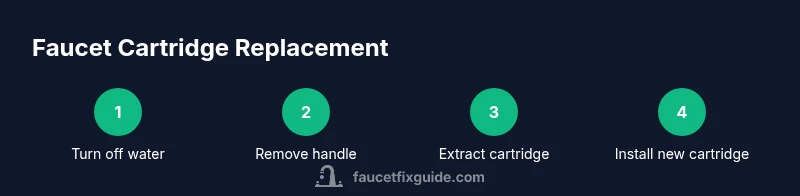
If you’re wondering how to install faucet cartridge, this guide walks you through each step to fix drips and restore smooth operation. You’ll identify cartridge types, shut off water, remove the handle, extract the old cartridge, install a compatible replacement, and test for leaks. The process uses common tools and clear, patient instructions.
Understanding faucet cartridge types and why replacements matter
According to Faucet Fix Guide, most modern single-handle faucets rely on a replaceable cartridge to control both water flow and temperature. Cartridges can be ceramic disc, plastic, or metal designs, with ceramic discs offering long-term durability but requiring precise alignment. When a faucet drips or becomes finicky, a worn cartridge is often the root cause. Replacing the cartridge restores smooth operation and can dramatically reduce water waste. Before you buy, note your faucet brand and model, because cartridges are not universal. While many aftermarket cartridges claim compatibility, the safest path is to match the exact model to avoid leaks or misalignment. If the old cartridge is available, take it with you to compare size and fit. This preparation saves time and reduces return trips.
Safety and prep before you begin
Turn off the water supply to the sink and relieve any remaining pressure by opening the faucet. Place a bucket and towels under the faucet to catch drips. Have a flashlight ready to inspect the valve body, and keep your workspace organized. Safety glasses protect your eyes from splashes, and avoid bending or twisting components aggressively to prevent damage. Read the faucet’s manual or model number online to confirm cartridge compatibility before you start. Faucet Fix Guide analysis shows that taking time to prep reduces surprises and speeds up the repair.
Compatibility and selecting cartridges
Not every cartridge fits every faucet. Verify the model number on the faucet or the cartridge you remove. If you cannot locate the exact model, bring the old cartridge to a hardware store or browse the manufacturer’s site for the correct replacement. If your faucet uses a universal cartridge, check the installation instructions carefully for alignment tips and seal placement. Always purchase from reputable brands and confirm warranty terms.
Accessing the cartridge: removing handle and retaining clip
Begin by removing the decorative cap to reveal the handle screw, then unscrew the handle using the appropriate screwdriver. Remove any retaining clip, spring, or nut that holds the cartridge in place. Use needle-nose pliers if needed, but avoid bending delicate tabs. Take a quick photo of the assembly to help with reassembly. Wipe the valve seat clean to avoid dirt interfering with the new cartridge.
Installing the new cartridge and reassembly
Carefully align the cartridge with the cartridge guide or notches; ensure the tabs or flats seat into their corresponding slots. Reinsert any springs, seals, or O-rings in the correct order. Press the cartridge firmly until it seats fully, then replace the retaining clip or nut. Reattach the handle and decorative cap, tighten securely but avoid over-tightening. Apply a small amount of plumber’s grease to O-rings if specified by the manufacturer and keep alignment consistent with the old cartridge.
Testing, maintenance, and troubleshooting afterwards
Turn the water back on and gently run both hot and cold water to check for leaks and smooth operation. If you notice drips, reseat the cartridge or reseal O-rings. Clean the aerator and check that water pressure remains consistent. Document model numbers for future replacements and consider periodic maintenance to prevent future leaks. Regular inspections help catch wear before leaks appear.
Tools & Materials
- Safety glasses(Protect eyes from splashes)
- Bucket and towels(Catch drips and keep area dry)
- Adjustable wrench(Loosen nuts on the faucet body)
- Screwdrivers (flathead and Phillips)(Remove handles and screws)
- Needle-nose pliers(Gently release retaining clips)
- Replacement faucet cartridge(Compatible with faucet model)
- O-rings and seal kit(Ensure proper seals for leak-free fit)
- Plumber’s grease(Lubricate O-rings as directed)
- Towel or rag(Keep working surface clean)
Steps
Estimated time: 75-120 minutes
- 1
Shut off water supply and relieve pressure
Locate the shut-off valves under the sink and turn them clockwise until closed. Open the faucet to relieve trapped pressure and confirm no water flows. This prevents spills when you remove components.
Tip: Step slowly to avoid surprise leaks. - 2
Remove decorative cap and handle
Gently pry off the decorative cap, then remove the handle screw. Lift the handle away, exposing the cartridge retaining mechanism.
Tip: Keep small screws in a labeled container. - 3
Remove the retaining clip or nut
Use needle-nose pliers or a small screwdriver to detach the clip or nut. Keep clip in a safe place; you’ll reuse or replace it with the new cartridge seals.
Tip: If the clip is stubborn, apply a drop of penetrating oil and wait a minute. - 4
Pull out the old cartridge
Carefully pull the cartridge straight out along its guide. Note orientation and any washers or O-rings present.
Tip: Take a photo before removal for reference. - 5
Clean the valve seat and inspect components
Wipe the valve seat with a clean cloth to remove mineral buildup. Inspect the seat for grooves or damage; replace if needed.
Tip: A damaged seat causes leaks even with a new cartridge. - 6
Install the new cartridge
Align the cartridge with its notches and slide it in. Ensure seals are seated evenly and that the cartridge sits flush.
Tip: Do not force; if it doesn’t slide in, check alignment. - 7
Reassemble and test for leaks
Reinstall any springs, O-rings, and clips in the correct order. Reattach the handle, cap, and escutcheon, then turn the water back on to test.
Tip: Run both hot and cold water to verify smooth operation.
Frequently Asked Questions
What is a faucet cartridge and what does it do?
A faucet cartridge controls water flow and temperature in most single-handle faucets by moving past seals. With wear, it can drip or become stiff. Replacing it restores proper control.
A faucet cartridge controls flow and temperature; wear causes drips. Replacing it fixes the issue.
Can I replace a cartridge without shutting off the water?
No. Always shut off the water at the under-sink valves and relieve pressure before removing components to avoid floods.
Always shut off water first to prevent leaks.
How do I know which cartridge to buy?
Match the faucet’s model and brand. If in doubt, bring the removed cartridge or take photos to compare dimensions and seals.
Match the model and brand; bring the old cartridge for comparison.
What if the cartridge won’t come out?
Use penetrating oil and gentle rocking with pliers. Avoid forcing, which can damage the valve stem or seats.
Don’t force it; try oil and careful rocking.
Is cartridge replacement a DIY-friendly task?
Yes for many common single-handle faucets. Follow steps closely, use the correct cartridge, and consult manufacturer guidelines if available.
This is doable for many DIY enthusiasts with care.
How long does installation typically take?
Most installations take about 60-90 minutes depending on faucet type and accessibility. Plan for down time and have tools ready.
Usually under two hours with the right preparation.
Watch Video
Top Takeaways
- Identify faucet type and cartridge compatibility before purchasing.
- Shut off water and relieve pressure before work.
- Align cartridge tabs and seals accurately during install.
- Test thoroughly for leaks after reassembly.
- Keep parts organized to simplify reassembly.