How to Fix Cold Water from a Faucet: Troubleshooting Guide
Urgent guide to diagnose and fix a faucet that only delivers cold water. Learn safe checks, diagnostic flow, and when to replace cartridges or call a pro.


If your faucet never delivers hot water, the most likely cause is a faulty mixing valve or a stuck hot-water cartridge. Start by ensuring the hot water shut-off valve is fully open and the supply line isn’t blocked. If cold water persists, power down the water heater and inspect the faucet cartridge. If this doesn’t fix it, contact a licensed plumber.
Why cold faucet water happens: the big picture
Across most homes, when hot water never arrives at a faucet, it’s not a mystery of temperature alone but a chain of components failing to transfer heat. According to Faucet Fix Guide, cold-water symptoms at a faucet usually point to a faulty mixing valve or a worn cartridge rather than a simple valve misadjustment. The core idea is simple: hot and cold streams meet in the faucet, and heat from the hot stream must be transferred without mixing or delays. When heat transfer fails, you’ll experience cold water even when you turn toward hot. In many cases, the fix is straightforward: verify supply valves, test the cartridge, and inspect the water heater settings. Persistent issues merit a methodical approach that avoids guesswork and reduces the risk of scalding or leaks.
Quick checks you can perform safely
Start with the easiest, least invasive checks. Inspect visible handles for loose connections and confirm the hot-water shut-off valve is fully open. Feel the hot-water supply line (carefully) for warmth near the valve; a cold line suggests it isn’t delivering heat. If you have a mixer faucet, feel the two handles or look for a single lever; a misadjusted cartridge can keep heat from reaching the outlet. Turn off the faucet, remove the handles if comfortable, and look for mineral buildup or corrosion around the cartridge. Remember to keep water heater power off if you’re about to test heat transfer inside the faucet. If you’re unsure, skip to the professional path, because mistakes can cause scalding or leaks.
Checking the hot water supply and valves
Next, confirm the hot supply path is unobstructed. Open any nearby shut-off valves fully and check for kinks or sediment in the hoses. If you’re on a multi-story home, pressure differences can cause momentary cold bouts; bleed the lines at the faucet or a purge valve if your system includes one. Also verify the mixing valve on the faucet—if it’s a thermostatic model, a stuck setting can block heat. If hot water starts to flow after valve adjustment, keep monitoring the thermometer for stability. If not, move to the faucet cartridge inspection in the next section.
Inspecting the faucet cartridge or mixing valve
Modern faucets use cartridges or mixing valves to combine hot and cold water. A worn or clogged cartridge won’t pass heat properly, leaving cold water at the outlet. Disassemble per manufacturer instructions: remove handle(s), expose the cartridge, and inspect for mineral deposits or scratches. Soak or gently scrub components with vinegar solution if mineral buildup is present, and replace worn o-rings. Reassemble and test at increasing hot settings. If you still get cold water, the problem may be upstream (heater or cross-connection) and you should continue with the diagnostic flow.
Water heater settings and cross-connections
Sometimes the issue isn’t the faucet at all but how heat is produced. Check your water heater thermostat; many households set it too low, especially in warm climates. If you have a recirculation loop, ensure it’s functioning correctly and not cooling the output. Look for cross-connections where a cold line could be bleeding into the hot side at the fixture, a sign of incorrect piping or valve misplacement. If you identify a cross-connection, isolate the line and consult a professional to avoid scalding or contamination.
How to test water temperature at the faucet
Use a digital thermometer to test water at the nozzle. Run hot water for a full minute, then measure the outlet water temperature; compare it to your heater setting. If temperatures fail to approach your intended hot-water value, the cartridge or valve is likely defective. Log the readings over several minutes to detect inconsistent temperatures, which can indicate a failing thermostat in the heater or a partially closed valve. Document results before taking further action; this data helps you decide whether to replace parts or call a pro.
Diagnostic flow: a practical decision tree
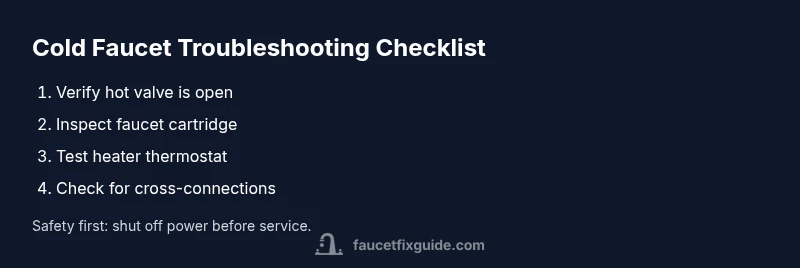
Symptom: faucet delivers cold water only. Diagnosis: test hot-line valves and cartridge. If hot line is closed, open it and re-test. If hot line is open but water remains cold, test the cartridge or mixing valve. If heat still doesn’t reach the outlet, inspect the water heater thermostat. If all else fails, determine if there is a cross-connection. Follow fixes in order and avoid jumping ahead.
Step-by-step fix for the most common cause
Most often, a faulty faucet cartridge causes cold water. Step 1: shut off the hot and cold supply valves under the sink and the water heater power. Step 2: remove the faucet handle and access the cartridge. Step 3: pull the cartridge out, inspect for wear, and replace if needed. Step 4: reassemble and turn on the water supply. Step 5: test hot water flow; confirm no leaks. Tip: use a cartridge that matches your faucet model and avoid overtightening the nut that holds the cartridge.
Prevention tips to keep faucet water consistently warm
Regular maintenance helps prevent cold-water puzzles. Soak cartridges every few years, replace o-rings when you notice wear, and keep mineral buildup at bay with a mild vinegar flush. Use a water heater timer if you’re away often to prevent marginal heat loss. Always check the hot water valve for leakage and keep a spare cartridge on hand. If you’re unsure, schedule a professional inspection to catch issues before they become leaks.
Steps
Estimated time: 60-90 minutes
- 1
Check hot water supply valves
Carefully inspect the hot water shut-off valve under the sink and the main heater valve. Ensure both are fully open and free of leaks. If you find any obstruction or a valve that sticks, address before testing heat again.
Tip: Take photos of valve positions before changing anything. - 2
Test faucet with hot and cold
With the faucet off, disconnect the supply lines if you can access them safely and look for debris. Reconnect and run hot water to see if heat arrives. Document any temperature changes.
Tip: Use a thermometer for precise readings. - 3
Inspect the faucet cartridge
Remove the handle and expose the cartridge. Look for deposits, wear, or scratches. If you see buildup, clean gently or replace if worn.
Tip: Contain small parts in a tray to avoid losing them. - 4
Replace the cartridge
Install a new cartridge that matches your faucet model. Reapply seals and ensure a snug fit but avoid overtightening.
Tip: Lubricate O-rings with a tiny amount of silicone grease. - 5
Check the water heater thermostat
Access the thermostat and verify it is set to a safe, higher temperature (not too high). If you must adjust, do so in small increments and re-test after stabilization.
Tip: Allow the heater to recover for 15–30 minutes before re-testing. - 6
Check for cross-connections
Inspect nearby fixtures and piping for improper cross-connection. If you suspect, shut off one line at the valve and re-test.
Tip: When in doubt, call a pro to avoid piping mistakes. - 7
Run final test and check for leaks
Turn on the water and power, run hot water at the faucet for several minutes, and verify hot temperatures and no leaks.
Tip: Keep a log of temperatures for several days if needed.
Diagnosis: Faucet water is cold or never reaches a hot temperature
Possible Causes
- highHot water supply valve is closed or blocked
- highWorn or clogged faucet cartridge/mixing valve
- mediumWater heater thermostat set too low or heater malfunction
- lowCross-connection between hot and cold lines at the faucet or plumbing
- lowSediment buildup in hot water line or cartridge
Fixes
- easyOpen the hot water shut-off valve fully and remove any blockages
- mediumReplace or service the faucet cartridge/mixing valve
- easyIncrease the water heater temperature setting and/or service heater
- mediumInspect for and correct cross-connections; consult a plumber if found
- easyFlush hot-water lines or replace affected fixtures
Frequently Asked Questions
Why is my faucet not getting hot water at all?
There are several possibilities including a heater issue, a closed hot-water valve, or a faulty faucet cartridge. Start by confirming the heater is on, then check the hot supply valves and the cartridge for wear.
Possible heater or valve issue. Check the hot supply valve and cartridge first.
Can a faulty faucet cartridge cause cold water?
Yes. The cartridge regulates the mix of hot and cold water. A worn or clogged cartridge can prevent heat from reaching the outlet and result in cold water.
Yes, a worn cartridge can cause cold water.
Should I adjust the water heater thermostat myself?
Only if you are comfortable. Improper adjustments can cause scalding or energy waste. If in doubt, call a professional.
Adjusting a thermostat can be risky; consult a pro if unsure.
Is a cross-connection possible at a faucet?
Yes, a cross-connection between hot and cold lines can push cold water to the hot side. A plumber can diagnose and correct piping or valve misplacements.
A cross-connection can cause cold water at the hot tap; a pro can fix it.
What safety precautions should I take when working on a faucet?
Turn off power and shut-off valves, drain lines if needed, and wear eye protection. Use a thermometer to verify temperatures.
Turn off power and valves, and verify temps with a thermometer.
When should I replace the faucet vs the cartridge?
If corrosion or leaks persist after cartridge replacement, consider replacing the entire faucet. If the issue is isolated to the cartridge, replacement is usually sufficient.
If leaks persist after cartridge swap, replace the faucet.
Watch Video
Top Takeaways
- Identify hot-water supply issues first
- Cartridge or mixing valve is the common culprit
- Test after each fix to avoid guesswork
- Call a pro if you suspect cross-connection or heater malfunctions