Which Faucet Is Hot: Urgent Troubleshooting Guide
Learn how to quickly identify which faucet is hot and safely shut it off. This Faucet Fix Guide troubleshooting overview covers simple checks, temperature adjustment, and preventing scalds.


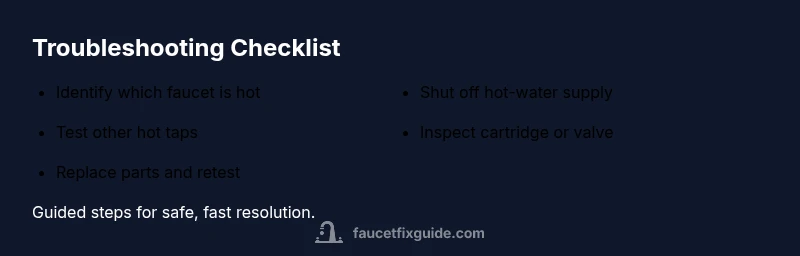
According to Faucet Fix Guide, the fastest fix for a hot faucet is to shut off the hot-water supply at the fixture or main valve and test other taps to confirm if the problem is isolated. In most homes, a misadjusted cartridge or valve causes the issue, not the heater. This early step prevents scalding while you diagnose and gives you time to assess whether a simple repair is enough.
Why identifying which faucet is hot matters
When you deal with an unexpectedly hot faucet, the risk of scalding is immediate, especially for children and seniors. The phrase which faucet is hot isn’t merely a curiosity; it directs your next steps and safety actions. In many homes, the culprit is a single handle or cartridge mixing hot water with cold, not a malfunctioning water heater. Recognizing the exact faucet causing the surge allows you to shut down the correct supply without turning off all water to the house. This targeted approach minimizes disruption to your daily routines while you work out a longer-term fix. Throughout this guide you’ll learn to test taps, trace the source, and distinguish between a worn cartridge, a stuck valve, or an installation error. By acting quickly and systematically, you reduce scald risk and prevent damage to fixtures, plumbing, and surfaces near the sink.
Quick safety checks you can perform now
Before you dive into repairs, set safety first. If any tap emits scalding water, immediately turn off the hot-water supply at the fixture or the home’s main valve. Use a thermometer or test strip on the other hot taps to gauge whether the problem is isolated or widespread. Avoid using the hot tap while you inspect. If you have children or elderly relatives nearby, keep them away from the sink and post a temporary warning. Once the area is safe, document which faucet is hot and note the temperature behavior. This information helps you decide whether you need a cartridge replacement, valve recalibration, or professional help. Faucet Fix Guide recommends keeping a basic tool kit on hand—adjustable wrench, screwdriver, cartridge puller, and a flashlight—to speed up repairs.
The diagnostic flow: symptoms, causes, and fixes
Start with symptoms: a hot faucet that becomes louder, drips from hot side, or produces inconsistent temperatures. Next, map possible causes: a worn or stuck mixing cartridge (high likelihood), a failing thermostatic valve (medium), or a cross-connection in the hot line (low). For each cause, propose a fix: replace the cartridge to restore correct mixing, recalibrate or replace a thermostatic valve if temperatures oscillate, or verify and correct valve positions at the supply stops. As you work, test each stage: after replacing a component, run several cycles at different temperatures to confirm stability. If the problem persists after a cartridge replacement, you may be dealing with a broader valve issue or an upstream heater setting. In all cases, ensure you have the correct model and size for your faucet and follow manufacturer guidelines. This systematic approach keeps you focused and minimizes unnecessary parts purchases.
Testing approach and isolation techniques
Isolate the hot line by shutting off at the supply stop, then re-open fixtures gradually to bleed air and ensure consistent flow. To locate the hot supply valve, check under sinks, near the faucet, or at the water heater. If your faucet uses a single-handle cartridge, remove the handle with the appropriate screwdriver when the water is off and inspect for mineral buildup, wear, or damage. For two-handle models, test separate hot and cold cartridges. When replacing a cartridge, follow the exact model instructions; use plumber’s grease on O-rings and ensure proper seating. After reassembly, turn on the cold supply first, then hot, and test by running hot water at several distances from the heater to ensure temperature stability. Document readings and outcomes to guide your next steps.
Preventive steps and aftercare
Regularly clean aerators, flush the hot line, inspect valves every 1-2 years, and proactively replace worn cartridges. Install anti-scald devices where needed to add protection against sudden temperature spikes. Maintain stable water heater settings and insulate hot-water pipes to minimize heat transfer fluctuations. If you recently installed a new faucet, verify that the cartridge matches the system and that the handle alignment is correct. Establishing a routine keeps hot-water surprises from becoming emergencies, preserves fixture life, and maintains safe, comfortable use in kitchens and bathrooms.
Steps
Estimated time: 60-90 minutes
- 1
Identify the hot faucet
Turn on the hot tap of the suspected faucet and observe temperature and flow. If the issue is isolated to a single fixture, you’ve likely identified the culprit. Note any accompanying noises or drips, as these hint at cartridge wear or valve faults.
Tip: Double-check you’re testing the hot side, not the cold. - 2
Shut off the hot-water supply
Locate the shut-off valve at the fixture or use the main supply as a backup. Close it securely, then open the hot and cold taps to relieve pressure. This prevents scalding during disassembly.
Tip: Have a towel ready for any residual water. - 3
Test remaining fixtures
With the hot supply off, test several other hot taps to determine if the problem is isolated or widespread. If only one faucet is hot, focus repairs there; if many taps are affected, the issue is closer to the heater or main supply.
Tip: Document which fixtures behaved similarly. - 4
Disassemble the faucet
Remove the handle and access the cartridge or valve. Inspect for wear, mineral buildup, or damage. Use manufacturer tools to avoid damage.
Tip: Keep small parts in a labeled tray to prevent loss. - 5
Replace cartridge or valve
Install a new cartridge or valve assembly according to the faucet model. Lubricate O-rings with plumber’s grease and ensure proper seating before reassembly.
Tip: Don’t overtighten components; snug is enough to seal. - 6
Reassemble and test
Reattach trim, restore water supply, and run the hot faucet at multiple distances from the heater. Check for steady temperature and quiet operation. Record results for future reference.
Tip: Keep a log of temperatures to track improvements.
Diagnosis: Faucet delivers unexpectedly hot water, temperature fluctuates, or hot water comes from a fixture when you intend cold.
Possible Causes
- highFaulty mixing cartridge or valve
- mediumThermostatic mixing valve failure or miscalibration
- lowCross-connection or incorrect valve position in hot water line
Fixes
- mediumReplace the faulty cartridge or mixing valve to restore correct hot/cold balance
- hardReplace or recalibrate a failing thermostatic valve to restore stable temperatures
- easyCorrect valve positions or cross-connections and air-bleed the lines after shutoff
Frequently Asked Questions
What is the first safety step when a faucet is hot and dangerous?
Shut off the hot-water supply at the fixture or main valve immediately. Move to a safe area and avoid using the faucet until temperatures are stabilized.
Shut off the hot water now and move to safety.
Can I fix a hot faucet without a professional?
Some fixes, like cartridge replacement, can be DIY with the right parts and tools. Complex valve systems may require a licensed plumber.
Yes, some fixes are doable at home, but complex valves need a pro.
How can I tell if the problem is the faucet or the water heater?
If multiple hot taps are affected, the issue may involve the heater. If only one fixture is hot, the faucet cartridge or valve is the likely culprit.
If most taps are hot, check the heater; if one faucet is hot, the faucet is the issue.
Is it safe to adjust thermostatic valves myself?
Adjustments can be safe if you follow the manufacturer’s instructions exactly. If instructions are unclear, contact a professional.
Only adjust if you have clear instructions. otherwise call a pro.
When should I call a plumber?
If you cannot identify or replace the cartridge, or the issue recurs after a DIY repair, a licensed plumber should assess the system.
Call a pro if you’re unsure or the problem returns.
Watch Video
Top Takeaways
- Identify the hot faucet quickly to limit scald risk.
- Isolate the hot water supply before inspecting components.
- Replace faulty cartridge or valve to restore balance.
- Test thoroughly and document results to prevent recurrence.