When to Replace Faucet Supply Line: A DIY Guide
Learn signs you need to replace a faucet supply line, plus a step-by-step, safety-focused guide for DIY homeowners and renters from Faucet Fix Guide.


Most often a leaky or stiff faucet supply line signals replacement. If you see dampness under the sink, a steady drip at the valve, or reduced faucet pressure, replace the line rather than trying a bandage repair. Start by shutting off the water, choosing the correct size, and gathering basic tools for a safe install.
Why the faucet supply line matters
The faucet supply line is the short, flexible tube that carries cold or hot water from your shut-off valve to the faucet. It’s pressurized, sealed, and designed to flex with everyday use. Over time, wear from vibration, mineral buildup, or a loose connection can cause tiny leaks, cracks, or cracks at the fittings. If the line fails, you’ll see damp cabinets, musty under-sink odors, or sudden spurts of water when you touch the faucet. Replacing a worn line not only stops leaks but also protects the shut-off valve and the faucet’s internal cartridge from water debris. When considering a replacement, remember that lines are available in different materials (braided stainless steel, braided nylon, or plastic) and connectors (compression or thread). Choosing the right one depends on your valve type, pipe size, and accessibility under the sink. Regular inspection during routine maintenance helps prevent sudden failures and water damage.
Common symptoms that indicate replacement is needed
Look for visible signs of wear or damage on the supply line, like kinks, cracks, or white mineral deposits along the hose. A soft, squishy section when you squeeze the line suggests internal deterioration. Recurrent leaks at the nuts or fittings, even after tightening, point to a flared or damaged compression seat. Leaks behind the wall or cabinet floor with no clear source often mean a failing line or connector. If you notice reduced water pressure, particularly on one side (hot or cold), the line could be partially blocked or pinched. Note if both hot and cold lines are affected; separate lines failing indicates different issues, while a single line failing points to the folded hose or corroded connector. In any of these cases, plan for replacement rather than attempting a temporary patch.
Quick safety and prep checks before touching pipes
Before you touch anything, shut off the water at the main or under-sink shut-off valves. Open the faucet to relieve pressure and drain residual water. Wear safety glasses and keep a bucket handy to catch drips. If you’re replacing braided lines, inspect both ends of the valve connection for corrosion, and have replacement washers or ferrules ready. Turn off any nearby electrical outlets and avoid working on wet floors to prevent slips. Use a flashlight to inspect the valve seats—if you see heavy mineral buildup or corrosion, note it as a potential extra task. Never force a stuck nut; apply penetrating oil and give it time. Finally, confirm you have the right size: 3/8-inch or 1/2-inch compression fittings are common in residential plumbing.
How to assess wear vs. other issues
Differentiate between a failing supply line and a faulty faucet cartridge, valve, or shut-off. If tightening fittings stops the leak temporarily but it returns, the hose may have internal wear. If the leak is at the nut and tightening reduces the flow but does not stop it, the seat between the valve and supply line could be damaged. A blocked line from mineral buildup can reduce flow without a leak; you'll notice inconsistent temperature and pressure. Compare hot vs cold lines: if only one line leaks, the problem likely lies with that connector rather than the entire line. Finally, check for hidden leaks behind drywall or cabinet walls with a moisture meter or by running the faucet and watching for dampness and temperature changes over several minutes.
When to replace vs repair: decision framework
In most households, a compromised supply line should be replaced rather than repaired. Repairs often involve re-crimping fittings or applying thread sealant, which provides only a temporary fix. If the line is kinked, swollen, or has visible cracks, replacement is safer and longer lasting. Consider age: lines over 5–7 years accumulate wear and may fail unpredictably. If you have hard water, mineral deposits can abrade hoses faster, suggesting earlier replacement. If access is tight or you lack basic tools, calling a professional can prevent water damage. Finally, compare costs: a braided stainless line typically costs more than plastic but lasts longer, while a mid-range option strikes a balance of durability and price.
Tools, parts, and tips for a successful replacement
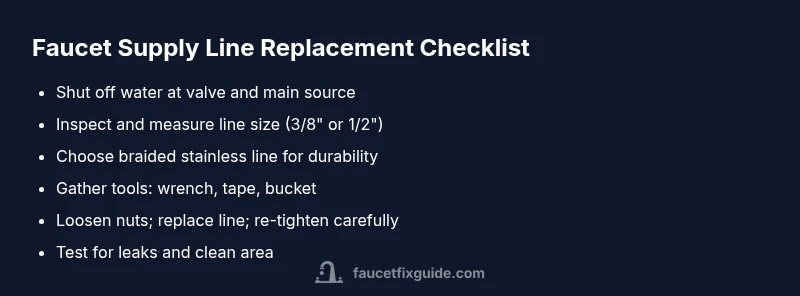
Gather: an adjustable wrench, compression Nut drivers, replacement supply line (3/8" or 1/2" compression, braided stainless), plumber’s tape, a bucket, towels, and maybe a basin wrench for tight spaces. Turn off water completely and test for zero pressure. Remove the old line by loosening the compression nut at the valve and faucet. Clean the valve threads with a cloth before attaching the new line. Hand-tighten and then give a quarter-turn with a wrench—do not overtighten. Replace any washers or ferrules if included with the new line. Check compatibility with your shut-off valve materials (plastic vs metal). Keep a spare soft rag handy for cleanup, and consider applying thread seal tape sparingly on metal threads if leaks persist after install.
Safe testing and cleanup after replacement
With the new line connected, slowly turn on the water and check for leaks at both ends. Start by opening the faucet fully to purge air; then gradually restore full flow while watching the fittings. If you see dripping, tighten slightly; if leaks persist, shut off water and recheck the connection. Wipe down the area and dry all surfaces to prevent mold. Re-check after a few minutes of operation. If you notice a persistent leak at the valve, the shut-off valve may be worn; consider replacing the valve or calling a plumber. Store tools and dispose of the old line properly.
Steps
Estimated time: 30-60 minutes
- 1
Shut off water and prep
Turn off the shut-off valve under the sink and then the main water supply if needed. Open the faucet to depressurize and drain residual water. Place a bucket and towels to catch any drips.
Tip: Keep a flashlight handy to inspect tight spaces. - 2
Gather tools and parts
Collect the replacement supply line (3/8" or 1/2" compression, braided stainless), two washers, an adjustable wrench, and plumber’s tape. Check the valve and faucet threads for wear before proceeding.
Tip: Verify size and connector type at both ends first. - 3
Remove the old line
Loosen the compression nut at the valve and then at the faucet. Gently pull the line free and set it aside. Clean any residue from the valve threads.
Tip: Hold the valve body steady to avoid twisting the pipe. - 4
Prepare the new line
Inspect the new line ends and washers. Apply a light coat of plumber’s tape to metal threads if recommended by the manufacturer. Attach one end to the valve first, hand-tightening before final snug with a wrench.
Tip: Do not overtighten; braided lines can kink if forced. - 5
Install the new line
Connect the other end to the faucet, repeat hand-tightening and final snug. Ensure both connections are aligned and not cross-threaded.
Tip: Align hoses away from sharp edges to prevent future wear. - 6
Test for leaks
Slowly reopen the supply valve and run water. Check both ends for drips. If a leak appears, tighten a touch more or reseat the washer.
Tip: Open the faucet slowly to flush air and debris.
Diagnosis: Drip or leak at faucet under-sink supply line
Possible Causes
- highWorn or cracked supply line
- mediumLoose compression fittings
- lowDamaged shut-off valve or ferrule
- mediumMineral buildup or corrosion on fittings
Fixes
- easyShut off water, then tighten fittings by a quarter turn and test
- easyReplace the supply line with compatible braided line
- mediumInspect and possibly replace shut-off valve or ferrule, re-test
Frequently Asked Questions
Do I need a professional to replace a faucet supply line?
Generally no—it's a straightforward DIY task if you can safely shut off water and access the connections. However, if you encounter corroded valves or leaks behind cabinetry, consider a professional to avoid water damage.
You can usually replace it yourself, but hire a pro if valves are corroded or you see hidden leaks.
What size is a typical faucet supply line?
Most residential lines use 3/8-inch compression on the faucet end and 1/2-inch compression at the shut-off valve. Always verify with your specific fixtures.
Most lines are 3/8 by 1/2 inch; check your fixtures to be sure.
Can I reuse old fittings?
Reusing old ferrules and washers can lead to leaks. It's best to replace with new components and inspect valve seats for wear.
Better to replace the fittings to prevent leaks.
How long does replacement take?
A standard under-sink replacement typically takes about 30-60 minutes, depending on access and valve condition.
Usually half an hour to an hour.
What are signs of a failing supply line?
Frequent leaks, damp cabinets, hissing sounds at connections, or noticeable pressure drops signal a failing line.
Look for leaks and reduced water pressure as clues.
Should I use plumber's tape on braided lines?
Thread seal tape can help on some metal-to-metal connections, but follow the manufacturer’s guidance. Braided lines often seal well without tape.
Tape can help on metal threads if recommended by the maker.
Watch Video
Top Takeaways
- Inspect supply lines during routine maintenance.
- Choose braided lines for durability in high-use kitchens and baths.
- Always shut off water before starting any replacement.
- Test thoroughly for leaks before returning to normal use.