How Often to Change Brita Faucet Filter: A Practical Guide
Discover how often to change Brita faucet filters, what factors affect replacement timing, and step-by-step methods to replace, flush, and maintain your filtration system for clean, safe drinking water.


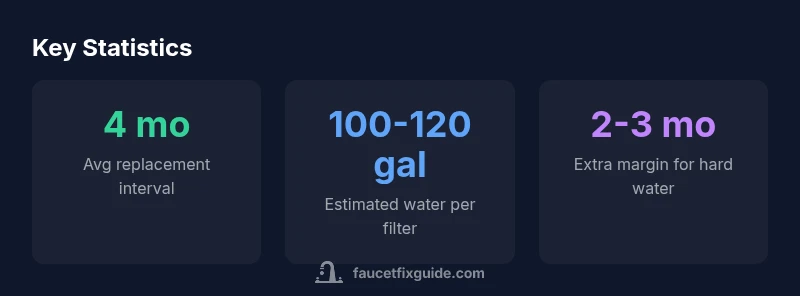
According to Faucet Fix Guide Analysis, 2026, Brita faucet filters should be replaced every 4 months or after 100 gallons, whichever comes first. Real-world timing varies by water quality and usage, so monitor for taste or flow changes. Check your specific model's instructions, and when in doubt, start with a 4-month schedule and adjust based on your household's needs.
Understanding replacement timing: the baseline
Many homeowners ask how often to change brita faucet filter; the baseline rule is to replace Brita faucet filters every four months or after about 100 gallons of water, whichever comes first. This baseline is a practical starting point across most Brita faucet filtration systems, but real-world results vary. Faucet quality, water hardness, and household usage all influence filter life. The Faucet Fix Guide Team notes that while these numbers are typical, you should always consult your specific model's instructions and observe your own water for changes in taste or flow. In cities with highly treated water, you may see slower degradation; in areas with hard or chlorinated water, replacements may be needed sooner. Keeping a replacement calendar or usage log helps ensure you don't exceed the recommended intervals, while still accommodating seasonal changes in water use. The key takeaway is to use a baseline but personalize the schedule to your home's water profile and your Brita model.
Filter type matters: Standard vs Longlast
Brita offers different cartridge types for faucet filtration. The standard cartridge is designed for everyday use and is typically replaced at the baseline interval. By contrast, the Longlast cartridge is marketed as lasting longer and handling higher filtration loads. Because the internal media and flow restrictions differ, the life expectancy can vary between models. When choosing a replacement, review the packaging and Brita's official guidance for the exact life expectancy in gallons and months. In practice, a household with heavy water use or hard water might notice faster taste changes or reduced flow, prompting earlier changes even with a Longlast cartridge. Always match your replacement plan to the cartridge type installed in your faucet mount.
Water quality and usage impact on replacement
Water characteristics directly affect how quickly a Brita faucet filter becomes less effective. Chlorinated municipal water tends to cause faster sediment buildup in some cartridges, while hard water can reduce flow and increase filter wear. Filtration efficiency, host plumbing age, and faucet design also play roles. If you live in a region with aggressive water treatment, you may need to monitor the filter more closely than the calendar alone. On the other hand, homes with gentle water chemistry and moderate usage may extend the replacement window. The bottom line is: use the calendar as a guide, then adapt based on what you notice at the tap.
Estimating replacement using gallons vs months
To tailor replacement timing, you can track either calendar months or water volume. The four-month rule works well for many households as a simple routine. If you keep a water usage log or a smart meter, you can translate consumption into gallons and compare it to your cartridge's stated capacity. When you reach the model's recommended gallon threshold, plan a cartridge change. Even if you are far from the month mark, a noticeable drop in flow or a change in taste should trigger a replacement. The goal is a practical, repeatable system that matches your usage patterns.
Step-by-step replacement process
Before you begin, have a new cartridge, a clean towel, and a small bowl to catch drips. Steps: 1) Turn off the faucet or place the system in a safe position. 2) Remove the old cartridge by twisting it counterclockwise. 3) Clean the housing and inspect the O-rings for damage; replace if necessary. 4) Insert the new cartridge and twist clockwise until it is secure. 5) Re-seat the cap and run cold water through the faucet for a minute or two to flush out carbon fines. 6) Mark your calendar or log the replacement date. By following these steps, you ensure proper filtration from day one.
Flushing and initial use after replacement
After installing a new Brita faucet cartridge, run cold water through the system until the water runs clear and you no longer see visible carbon dust. This flushing helps prevent any off-tastes in the first days of use. If your model includes an indicator or calibration step, perform it according to the manual. It is normal for the first batches of filtered water to taste slightly different as the carbon fines are cleared. If you notice persistent odors or flavors after a day or two, reevaluate the installation seal or consider replacing the cartridge again.
Common mistakes to avoid
Don’t assume a longer cartridge life automatically means better filtration. Don’t reuse old O-rings or cartridges. Don’t skip the flushing step. Don’t ignore a drop in flow or a persistent taste change—those are signals the cartridge needs replacement sooner than planned. Also, avoid mixing cartridge types if your faucet mount requires a specific one for correct flow and filtration.
Scheduling and record-keeping tips
Create a simple tracking method: write the replacement date on the cartridge packaging, set a yearly reminder, or use a digital calendar. If your family’s water use changes with the seasons, adjust your plan accordingly. Keep a small note of the model type and replacement date to simplify future maintenance. This habit helps keep your filtration system performing consistently and reduces guesswork.
When to consider professional help
Brita faucet filters are designed for DIY replacement, but some issues require professional attention. If you notice persistent leaks around the filter housing, unusual noises, or inconsistent filtration after replacement, contact a licensed plumber. Also, if you have questions about your home's water quality or if you suspect incompatible equipment or a faulty faucet mount, seek professional guidance. The goal is safe, clean drinking water without unnecessary risk.
Estimated replacement timelines by Brita filter type
| Filter Type | Replacement Interval | Estimated Gallons |
|---|---|---|
| Standard | 4-6 months | 100-120 gallons |
| Longlast | 6-9 months | 120-180 gallons |
Frequently Asked Questions
How often should I replace my Brita faucet filter?
Brita faucet filters generally need replacement every 4 months or after about 100 gallons, depending on usage and water quality. Always check your model's instructions. If your water is heavily chlorinated or hard, replace more often.
Typically every 4 months or 100 gallons. Check your model's guide for specifics.
Does well water affect filter life?
Yes. Well water can have higher mineral content and particulates, which may shorten filter life and cause taste changes sooner than city water. Monitor taste and flow and adjust replacement timing accordingly.
Well water can shorten filter life; monitor taste and flow and adjust.
Can I clean a Brita faucet filter cartridge?
No. Brita recommends replacing cartridges rather than cleaning them. Cleaning is not effective and can cause filtration issues. Use a new cartridge for reliable results.
Do not clean; replace with a new cartridge.
What if the water tastes metallic after replacement?
Flush the system with cold water until the taste dissipates and the water runs clear. Check the seals and ensure the cartridge is properly installed. If the taste persists, replace the cartridge again.
Flush until water tastes normal; check seals and installation.
Do all Brita faucet filters have indicators?
Indicator availability depends on the model. If your unit has an indicator, follow the manufacturer’s guidance for replacement. If not, use the standard 4-month/100-gallon baseline and monitor water quality.
Some models have indicators; others rely on time/gallons.
“Replacement timing should align with the manufacturer's recommendations and your home’s water use. Monitor taste and flow, and adjust the schedule accordingly.”
Top Takeaways
- Track replacement by months or gallons
- Know your filter type differences
- Taste and flow changes signal replacement
- Always flush new cartridges
- Follow model-specific instructions