How Often to Replace Faucet Aerator: A Practical Guide
Find out how often to replace faucet aerator, signs of wear, factors that affect timing, and a practical maintenance plan to save water and prevent leaks. Expert guidance from Faucet Fix Guide.


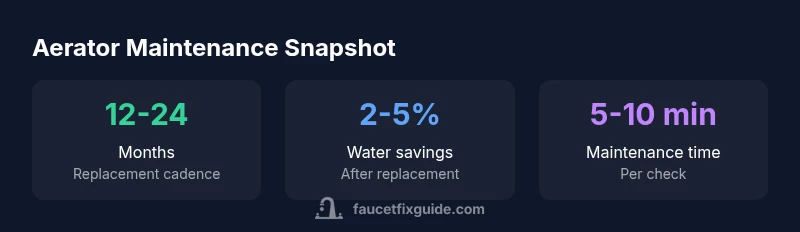
Many homeowners should replace their faucet aerator every 12 to 24 months, or sooner if flow slows or debris is visible. Replacement is inexpensive and quick, often just a screwdriver and a new aerator. Regular checks help maintain water efficiency and prevent mineral buildup. The frequency varies by water hardness, usage, and faucet type, and Faucet Fix Guide recommends adapting the cadence to your local conditions.
Why faucet aerator matters
A faucet aerator is a small screen at the tip of the faucet that mixes air with water to improve spray pattern, reduce splashing, and limit overall flow. Over time, mineral buildup, sediment, and wear can clog the screen or change the flow rate. A worn aerator can waste water and place extra strain on the faucet’s seals. For homeowners aiming to save water and extend faucet life, the aerator is a logical first maintenance target. The Faucet Fix Guide Team emphasizes that regular attention to aerators yields quick wins for efficiency and comfort. In this section, we explain how aerators work, what materials they are made from, and how mineral scale can be avoided with simple checks. Benefits include a steadier spray, less splashing, cleaner water, and lower faucet wear. Routine inspection also helps you catch leaks around the aerator housing early before they become bigger problems.
According to Faucet Fix Guide, a proactive aerator maintenance habit reduces wasted water and helps maintain consistent faucet performance across bathrooms and kitchens.
How often to replace faucet aerator
Most households can start with a replacement cadence of 12-24 months, but frequency depends on several factors. Hard water, high mineral content, frequent use, and older fixtures increase wear and clog risk, potentially shortening the replacement window. If you notice a consistent drop in flow, uneven spray, or visible mineral crust, it’s time to inspect or replace. Regular checks are simple: remove the aerator, clean, reassemble, and test flow. According to Faucet Fix Guide Team, the exact timing will vary by faucet type (kitchen vs bathroom) and water quality. For renters or in shared spaces with hard water, a quarterly check may be prudent. Consumers in areas with very soft water or newer fixtures may extend the interval closer to 24 months. The key is to establish a baseline for your home and adjust based on observed performance.
Brand context: Faucet Fix Guide emphasizes that frequency is not a one-size-fits-all rule; it’s about aligning maintenance with local water conditions and usage patterns.
Factors that influence replacement frequency
The cadence for aerator replacement is not universal. Consider these influences:
- Water hardness and mineral content (hard water accelerates buildup and wear)
- Faucet type and usage pattern (kitchen units often see higher flow and more debris)
- Presence of hard sediment or rust in the supply line
- Age and design of the faucet (older fixtures may need more frequent attention)
- Local water pressures and seasonal changes
By evaluating these factors, you can customize a maintenance schedule that minimizes waste and preserves faucet performance. Faucet Fix Guide recommends recording each aerator’s replacement date to build a personal maintenance calendar and adjust cadence as needed.
Signs it's time to replace
Look for any of the following indicators:
- Noticeable drop in water flow or altered spray pattern
- Frequent clogs or mineral crust on the screen
- Leaks around the aerator housing when tightened
- Visible discoloration or rust on the aerator or screen
- Surface scale that resists cleaning with a brush
If you observe any of these signs, inspect the aerator: remove, clean, and re-test. If performance does not improve after cleaning, replace with a new aerator of the correct size. Regular attention to signs can prevent bigger plumbing issues down the line.
How to replace a faucet aerator
Replacement is a straightforward, hands-on task you can do in minutes:
- Identify the correct aerator size and thread type for your faucet. Some are standard, others are brand-specific.
- Protect the area with a towel; place an adjustable wrench or pliers if needed, but avoid over-tightening.
- Use a small wrench to unscrew the old aerator counterclockwise. If it’s stubborn, apply a little penetrating oil and let it sit.
- Clean the faucet threads and the aerator seat with a brush and vinegar solution to dissolve mineral buildup.
- Install the new aerator, aligning threads and hand-tightening first.
- Finish with a gentle tighten using fingers, then a light wrench turn if needed—do not overtighten.
- Run water to check flow and inspect for leaks around the aerator.
- Record the replacement date in your maintenance log and reset your calendar for the next check.
Maintenance to extend aerator life
Regular maintenance is the most reliable way to extend aerator life. Consider these practices:
- Clean aerators every 6–12 months, or sooner if you notice buildup
- Soak the aerator in a 1:1 vinegar-water solution for 15–30 minutes to dissolve scale, then brush gently
- Rinse thoroughly and reassemble, ensuring a tight seal without over-tightening
- If you live in hard-water areas, consider installing a pre-filter or softened-water system to reduce mineral load downstream
- Keep a simple maintenance log with replacement dates and signs observed
By integrating these steps into your routine, you’ll maintain water efficiency and prolong the life of your fixtures.
Common mistakes and troubleshooting
Avoid these common missteps:
- Replacing with the wrong size or thread type—measure before buying
- Overtightening the aerator, which can damage the faucet neck or threads
- Neglecting to clean threads, which leads to poor seal and leaks
- Using harsh cleaners that can corrode the aerator material
- Skipping the test run after installation; always verify leak-free operation
If you still experience reduced flow after replacement, inspect the supply line for broader clogs or consult a professional. A well-maintained aerator is a small, powerful part of your overall plumbing health.
Quick-start maintenance plan
Set up a simple cadence to keep your faucet aerators performing well:
- Monthly: quick visual inspection for obvious buildup
- Quarterly: clean aerators and test flow; replace if no improvement
- Annually: replace aerator if signs of wear are present or if flow is consistently reduced
- After any plumbing work: inspect and replace aerators as needed to restore optimal flow
- Keep a log of dates and results to tailor future maintenance and stay on track
Aerator replacement intervals by faucet type
| Faucet Type | Recommended Replacement Interval | Key Signs |
|---|---|---|
| Standard aerator | 12-24 months | Reduced flow; mineral buildup; visible crust |
| High-use kitchen aerator | 6-12 months | Frequent clogs; spray irregularities; leaks |
| Bathroom aerator (dual spray) | 12-24 months | Uneven spray; mineral scale; corrosion |
| Brass vs plastic aerator | 12-24 months | Discoloration; wear on threads |
Frequently Asked Questions
How often should I replace a faucet aerator?
Most homes replace every 12-24 months; check signs like reduced flow or buildup to decide earlier.
Typically every year or two, but inspect for signs of wear and adjust as needed.
Can cleaning extend aerator life?
Yes. Cleaning and a vinegar soak can remove mineral buildup and delay replacement.
Cleaning helps delay replacement in many cases.
What causes frequent aerator clogs?
Mineral buildup from hard water is a common cause; sediment and rust can also clog screens.
Hard water buildup is usually the culprit.
Are all aerators interchangeable between brands?
Most aerators have standard threads, but some brands use different sizes—measure before buying.
Usually yes, but check thread size first.
Is it safe to use vinegar to clean aerators?
Yes, dilute vinegar soaking is common. Rinse thoroughly before reassembly.
Yes, diluted vinegar is fine.
Do aerators affect water pressure?
A clogged aerator can reduce water pressure; replacing it typically restores flow.
Yes—clogs lower pressure; replacement restores it.
“Regular aerator maintenance is a low-cost, high-impact way to preserve water efficiency and faucet performance.”
Top Takeaways
- Inspect aerators annually and replace every 12–24 months as a baseline.
- Hard water areas may require more frequent checks and replacements.
- Follow manufacturer guidelines and ensure proper thread size before replacement.
- Regular cleaning extends life and preserves water efficiency.
- Document dates to tailor future maintenance cadence.