Replace an Outside Faucet: A DIY Installation Guide
Learn how to replace an outside faucet with confidence. This step-by-step guide covers tools, safety, and testing to prevent leaks and freezing. Ideal for homeowners, renters, and DIY enthusiasts tackling faucet upgrades.


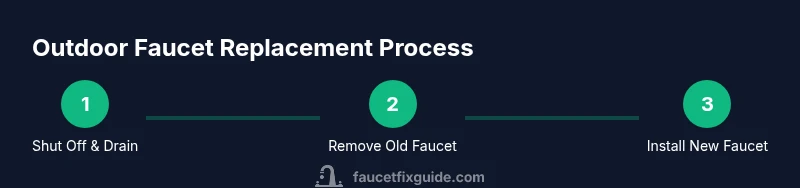
You can replace an outside faucet by shutting off the water, removing the old unit, and installing a compatible frost-free faucet with fresh thread seal tape. Tighten securely, reconnect the supply, and test for leaks. Expect about 60-90 minutes for a typical setup, plus 15 minutes to check for leaks.
What replacing an outside faucet entails
Replacing an outside faucet is a common DIY project that homeowners tackle to stop leaks, improve freezing resistance, and restore reliable outdoor water access. The core idea is to remove the worn or damaged faucet and attach a replacement that matches your supply line’s size and thread type. Frost-free models push the valve back inside the heated space, reducing the risk of freeze damage in cold climates. The process requires careful shutoff, drainage, and secure connections to prevent leaks after reassembly. According to Faucet Fix Guide, taking a methodical, tool-ready approach lowers the chance of a call-back and saves water from wasted drips. Plan for a few hours if this is your first time, and don’t rush critical steps like sealing threads or testing for leaks.
Why replacing an outside faucet matters for durability and efficiency
Outdoor faucets are exposed to weather, temperature swings, and garden debris. A failing faucet can waste water, cause icy sidewalks, and invite pipe damage when stuck in the open position. Replacing with a frost-free model improves winter performance and reduces the probability of a sudden freeze-induced burst. When done correctly, a new faucet reduces maintenance calls and helps ensure a clean water supply for yard tasks, hoses, and seasonal irrigation. Faucet Fix Guide notes that choosing the right model—straight or angled, frost-free or standard—depends on your wall depth, climate, and how far your supply line extends from the interior shut-off.
Tools and materials you’ll need (overview)
Before you start, gather a basic set of tools and a replacement faucet that matches your existing thread size. Common outdoor faucet sizes are designed for 1/2 inch or 3/4 inch pipe threads, so verify which applies to your home. Having a dry rag close at hand can help you wipe away water as you work, and a bucket will catch any residual drips. The right tape and sealant ensure a leak-free connection. A little planning goes a long way toward a smooth installation and avoiding rework.
Safety-first tips for outdoor faucet replacement
Working on outdoor plumbing can involve sharp edges, cold water, and limited visibility behind siding or mulch. Always wear gloves and eye protection, and confirm that electrical tools or nearby outlets aren’t exposed to moisture. If your home is older or you suspect corroded pipes, proceed with caution. If you encounter a stubborn shut-off valve that won’t seal, stop and call a licensed plumber. The safest approach is to turn off the main water supply if the local shut-off doesn’t isolate the exterior line.
Step-by-step planning for a successful install
A well-executed replacement blends careful prep with precise connections. Start by ensuring the old faucet is fully unthreaded and the supply line is clean. Prepare the replacement faucet with thread seal tape around the male threads and any compression fittings ready for reuse. Dry-fit the faucet to confirm clearance against the siding and door or window proximity. Re-check that you have all the tools close at hand before you begin turning the water back on. The more you plan, the less you’ll risk leaks or a tight, hard-to-reach installation.
Common mistakes to avoid
Rushing the process can leave you with stubborn fittings, cross-threaded connections, or missed seals. Avoid overtightening, which can strip threads or crack plastic components. Do not skip sealing tape on threaded joints, and never overlook the support bracket if your faucet uses one. If you must use a heat gun or flame to soften pipe adhesive, proceed with extreme caution and follow local safety codes. Taking time to double-check alignment and torque saves time later on.
Maintenance after replacement for longevity
After installation, keep your faucet clear of debris and inspect for leaks after the first few uses. A quick seasonal check helps catch developing leaks early. Rinse and dry the exterior spout to minimize mineral buildup, and consider applying a weather-resistant cover during extreme seasons. Routine checks extend the life of the faucet assembly and reduce unexpected water loss.
What to do if you discover a leak during testing
If you see a drip after tightening, back off slightly and re-tighten in small increments. Verify that the tape is properly placed and that there are no cross-threaded connections. If a leak persists around a compression fitting, you may need to reseat the compression nut with a wrench. If leaks are stubborn or you notice pipe damage, stop and consult a professional. Small leaks can become big problems if left unaddressed.
Tools & Materials
- Replacement frost-free outdoor faucet (spigot)(Choose a model with the same thread size as your supply line; frost-free is ideal for colder climates.)
- Adjustable wrench(Covers a range of nut sizes on the faucet body and supply line.)
- Pipe wrench(Helpful for stubborn or older connections; use cautiously on copper or steel pipes.)
- Pliers(Grip fittings and cores firmly without marring surfaces.)
- Screwdrivers (flathead and Phillips)(For removing escutcheons or hose bib screws if present.)
- Teflon tape (PTFE)(Wrap clockwise around male threads to seal joints.)
- Pipe thread sealant (pipe dope)(Optional, supports a leak-free seal on certain joints.)
- Bucket or small tray(Catch residual water when disconnecting the line.)
- Rags or towels(Keep the work area clean and dry to avoid slips.)
- Safety gloves(Protect hands from sharp edges and cold water.)
- Penetrating oil (optional)(Loosens corroded nuts if needed.)
Steps
Estimated time: 60-120 minutes
- 1
Shut off water and drain
Locate the interior shut-off valve for the exterior line and close it. Open a faucet outdoors to relieve pressure and drain residual water from the line.
Tip: If you can’t locate the valve, shut off the main supply and proceed with caution. - 2
Prepare the work area
Clear the area around the faucet, place a bucket under the connection, and remove any hoses. Clean the surrounding siding to avoid dirt entering the line when you detach the faucet.
Tip: Take photos of the existing setup for reference during reassembly. - 3
Remove the old faucet
Using an adjustable wrench, loosen the mounting nut or valve collar and unscrew the faucet body from the supply line. Have a rag handy to catch drips.
Tip: If the faucet is stubborn, apply a small amount of penetrating oil and wait 5-10 minutes before retrying. - 4
Clean and inspect the pipe
Inspect the exposed pipe for corrosion or damage. Clean the threads or pipe end so the new faucet seats evenly.
Tip: If the pipe end is damaged, stop and replace the affected segment or consult a plumber. - 5
Prepare the new faucet
Wrap the male threads with Teflon tape in the direction of tightening. If using a pipe sealant, apply a thin, even layer as directed.
Tip: Avoid over-taping, which can create an overly thick joint and cause leaks. - 6
Install the new faucet
Thread the new faucet onto the supply line by hand first, then snug with a wrench. Do not overtighten, which can strip threads or crack fittings.
Tip: Use a second wrench to hold the fitting steady while tightening the nut. - 7
Reconnect hoses or handles
If the faucet has a separate handle, reinstall it and secure any escutcheon plates. Reattach hoses or hose bib connections as needed.
Tip: Ensure the hose bib threads align before tightening to avoid cross-threading. - 8
Turn water back on and test
Slowly open the interior shut-off valve and inspect the exterior faucet for leaks. Check under the nut and along the body for signs of moisture.
Tip: Monitor for several minutes; a small initial drip may seal after a few minutes once pressure stabilizes. - 9
Final checks and protection
If you’re in a freeze-prone area, install a weatherproof cover and insulate exposed pipes. Wipe the area dry to prevent mineral buildup.
Tip: Keep a spare gasket or washer handy to address minor seat leaks quickly.
Frequently Asked Questions
Do I need to shut off the main water supply to replace an outside faucet?
Yes. Use the interior shut-off valve for the exterior line if possible. If you can't isolate the line, shut off the main water supply and proceed cautiously.
Yes. Use the interior shut-off valve for the exterior line if possible; if not, shut off the main supply and proceed with caution.
What size is the thread on typical outdoor faucets?
Most outdoor faucets use standard pipe threads, commonly 1/2 inch or 3/4 inch. Verify by measuring the male thread or checking the existing faucet.
Most outdoor faucets use standard 1/2 inch or 3/4 inch threads; measure or compare to the replacement.
Can I replace an outside faucet myself, or should I hire a plumber?
Replacing an outside faucet is a doable DIY project for many homeowners. If you encounter frozen pipes, corroded connections, or uncertain shutoffs, consult a licensed plumber.
Many people replace their outdoor faucet themselves, but call a plumber if you hit stubborn fittings or frozen pipes.
Is it necessary to drain the entire system after removing the faucet?
Not always. You typically drain only the line connected to the outdoor faucet. If your interior shut-off is reliable, you can isolate and drain just that section.
Usually you drain just the outdoor line; your interior shut-off helps control the rest.
What should I do if I have copper pipes and don’t want to solder?
Use compression fittings or corrosion-resistant adapters designed for copper to avoid soldering. Follow the manufacturer’s instructions for proper sealing.
If you’re avoiding soldering, use compression fittings designed for copper and seal well.
Watch Video
Top Takeaways
- Plan and gather tools before starting.
- Shut off water and drain to avoid spills.
- Seating and sealing threads prevents leaks.
- Test thoroughly after installation and protect from freezing.