Outdoor Garden Faucet Replacement: A Complete DIY Guide
Step-by-step instructions to replace an outdoor garden faucet safely. Learn tool prep, frost-proof vs standard choices, proper installation, weatherproofing, and maintenance for leak-free outdoor water supply.


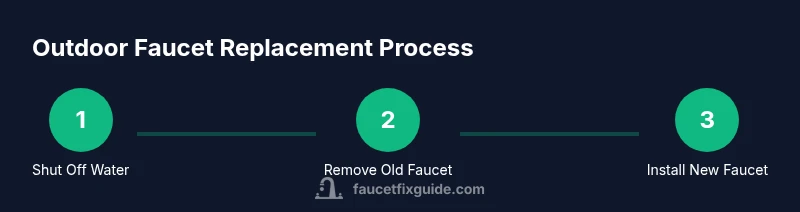
Goal: replace an outdoor garden faucet by shutting off the supply, removing the old unit, installing a new frost-proof or standard faucet, and testing for leaks. Gather basic tools and supplies, confirm pipe compatibility, and choose the right faucet for winter exposure. Faucet Fix Guide provides a step-by-step process. Follow safety notes to prevent water damage.
Why Replace an Outdoor Garden Faucet
Replacing an outdoor garden faucet is a smart move for homeowners who want to prevent leaks, water waste, and winter damage. If your faucet drips, is hard to turn, or shows corrosion, it’s a sign the fixture is past its prime. According to Faucet Fix Guide, an aging faucet is not just inefficient—it can also allow bacteria or debris to enter your drinking water line during the warmer months. The Faucet Fix Guide team found that upgrading to a frost-proof model often yields better reliability in freezing climates, while standard sillcocks are usually simpler to install but may require more winter care. For many yards, the right replacement improves performance and reduces future repairs, especially when you choose a model rated for outdoor exposure and moisture. In this article, you’ll learn how to evaluate your options, select the best faucet for your climate, and complete a safe, code-compliant replacement with common tools and best practices.
Assessing Your Faucet Type: Frost-Proof vs Standard
The first choice in an outdoor faucet replacement is deciding between frost-proof and standard designs. Frost-proof faucets place the valve deeper inside the wall, reducing the amount of water in the line that can freeze. They are especially beneficial in areas with hard winters or high exposure to cold winds. Standard faucets are generally easier and cheaper to install, but the water may remain in the supply line when winter approaches, increasing the risk of burst pipes if lines are not winterized. The Faucet Fix Guide Team notes that climate, hose usage, and available mounting depth should drive your decision. If you want a straightforward summer fixture, a standard hose bibb may suffice; if you live where temperatures regularly dip below freezing, a frost-proof model is often worth the extra effort and cost. Always check local code requirements and frost-free installation guidelines before purchasing.
Choosing the Right Faucet for Your Climate
Outdoor faucet replacement should consider weather, usage, and build quality. Look for a faucet with solid brass construction, a long shank for frost-proof models, and a corrosion-resistant finish. Verify that the thread size matches your supply line (most are ¾ inch IPS in North America) and opt for a model with a built-in backflow preventer or anti-siphon device if your region requires it. Consider the handle design—quarter-turn handles are faster to operate in cold weather, while cross handles offer better grip with gloves. If you plan to leave a hose attached, ensure the faucet has a frost-proof spout and a hose bib collar to protect threads. In short, pick a unit that matches climate, usage patterns, and local plumbing codes. The Faucet Fix Guide analysis shows that choosing a durable, properly sized faucet saves time and reduces leaks over the life of the fixture.
Tools and Materials You’ll Need
Before you start, familiarize yourself with the essential tools and parts. The right equipment makes the replacement smoother and safer. Dust off the old hardware area and set out a clean workspace. The list below covers what you’ll typically need:
- Adjustable wrench (6-12 inch) – essential for loosening and tightening
- Slip-joint pliers – helps grip stubborn fittings
- Screwdriver (flat-head and Phillips) – for clamps or mounting screws
- Pipe thread sealant tape (Teflon tape) – wrap 3-4 times around male threads
- Replacement outdoor faucet (frost-proof or standard) – match ¾ inch IPS and climate needs
- Bucket or large container – catch water and keep area clean
- Rags or towels – absorb spills and dry surfaces
- Penetrating oil (optional) – to loosen corroded components
- Step ladder (optional) – reach higher installations
Step-by-Step Preparation: Safety and Prep
Preparation is the backbone of a safe, code-compliant replacement. Clear the area around the faucet, protect nearby plants, and turn off power to any nearby devices if needed. Read local plumbing codes to ensure compliance. For safety, wear gloves and eye protection when handling metal edges or sharp fittings. The goal is to reduce water damage risk and prevent accidental slips when the area is wet. Plan your approach, confirm you have the correct faucet type, and lay out towels and a bucket to manage incidental spills. This phase sets the stage for a smooth, efficient replacement.
Step 1: Shut Off Water and Depressurize
First, locate and shut off the cold-water supply to the outdoor faucet. If you have an indoor shut-off valve, use it; otherwise, shut off the main water supply to your home. After shutting off the supply, open the outdoor faucet to relieve residual pressure and drain the line. This step minimizes water spray and reduces the risk of sudden leaks when disconnecting the old faucet. Have towels ready to absorb any remaining moisture. Pro tip: wait 5–10 minutes to ensure pressure has fully dropped before proceeding.
Step 2: Remove the Old Faucet
With the water relieved, disconnect the hose and loosen the mounting hardware securing the faucet. Use two wrenches or pliers to prevent twisting the supply line. If the faucet is stubborn, apply a small amount of penetrating oil and let it sit for a few minutes before retrying. Once detached, inspect the supply line threads and the wall stub-out for damage or corrosion. Take a quick photo for reference if you’re installing a model with different threading or mounting hardware. This step prepares the connection point for the new faucet.
Step 3: Prepare the New Faucet and Threads
Inspect the new faucet to ensure it matches the existing supply line and the mounting configuration. Wrap Teflon tape clockwise around the male threads 3–4 times, ensuring a tight, even layer to prevent leaks. If your faucet uses a gasket or washer, install it correctly before threading the unit into place. Confirm that the valve stem aligns with the existing handle orientation and that anti-siphon devices or backflow preventers are installed if required by code. Misalignment here can cause leaks or poor operation.
Step 4: Install the New Faucet
Screw the new faucet into the wall stub-out by hand first to avoid cross-threading, then finish with a wrench, using a second wrench on the base to prevent stressing the supply line. Tighten just enough to compress the washer without crushing threads. Reconnect the hose and any clamps, ensuring the connection is snug but not overtight. If using a frost-proof model, ensure the long stem is oriented correctly to maximize freeze protection. Double-check that the faucet sits plumb and square against the wall.
Step 5: Test for Leaks and Weatherproofing
Turn the main water supply back on and slowly pressurize the line. Inspect all connections for leaks at the threads, hose bib, and handle. If leaks appear, tighten the connections slightly and re-check. For frost-proof installations, test the faucet by running water for a minute and observing the exterior spout for drips. Apply weatherproofing measures if needed, such as insulating sleeves or pipe wrap, particularly in exposed locations. If leaks persist after careful tightening, disassemble and re-seal the joint using fresh Teflon tape.
Step 6: Maintenance After Replacement
Keep your replacement faucet in good working order with periodic inspections. Wipe away mineral buildup, especially at the hose threads, to prevent leaks or reduced water flow. Schedule seasonal checks to verify seals and gaskets, and reapply tape if you notice seepage. For climate with freezing temperatures, winterize outdoor faucets by draining lines and insulating exposed pipes. Maintenance reduces the likelihood of sudden failures and extends the life of the fixture.
Tools & Materials
- Adjustable wrench (6-12 inch)(Essential for loosening/tightening fittings; avoid over-tightening to protect threads)
- Slip-joint pliers(Helps grip stubborn fittings; use with two hands to prevent twisting supply line)
- Screwdrivers (flat-head and Phillips)(Used for hose clamps or mounting screws on some models)
- Pipe thread sealant tape (Teflon tape)(Wrap 3-4 times clockwise around male threads before installing)
- Replacement outdoor faucet (frost-proof or standard)(Match ¾ inch IPS; choose frost-proof for colder climates)
- Bucket or large container(Catch water and keep area clean during replacement)
- Rags or towels(Absorb spills and dry surfaces after testing)
- Penetrating oil (optional)(Helps loosen corroded fittings if needed)
- Step ladder (optional)(Helpful for high-mounted fixtures)
Steps
Estimated time: Estimated total time: 45-90 minutes
- 1
Shut Off Water and Depressurize
Locate the cold-water shut-off to the faucet or the main supply and turn it off. Open the outdoor faucet to depressurize and drain the line, minimizing spray during disassembly. Keep towels handy for any residual drips.
Tip: Wait 5–10 minutes after closing the valve to ensure the line is fully depressurized. - 2
Disconnect the Hose and Remove Hardware
Dettach the hose, clamps, and mounting nuts using two wrenches to avoid twisting the supply line. Remove the faucet from the mounting surface and inspect the wall stub-out for wear or damage.
Tip: Take a quick photo of pipe orientation for reference when installing the new unit. - 3
Prepare the New Faucet Threads
Wrap Teflon tape clockwise around the male threads 3–4 times, ensuring an even layer. Check that the washer or gasket is in place and ready for installation.
Tip: Don’t overwrap; excess tape can break off and clog the outlet. - 4
Install the New Faucet
Handshake the faucet into the wall stub-out, then tighten with a wrench while supporting the faucet body with another tool to avoid twisting the pipe. Ensure the unit sits square and tight against the wall.
Tip: Use two wrenches: one for the fitting and one to stabilize the faucet body. - 5
Reconnect Hose and Test for Leaks
Reconnect the hose, turn the water back on slowly, and observe all connections for leaks. Check both the threads and the hose bib area for drips.
Tip: If a leak appears, tighten gradually and re-check; reseal if necessary. - 6
Weatherproofing and Final Checks
Inspect the exterior area for water pooling or frost risk. Apply insulation or protective sleeves to exposed pipes if you live in a cold climate. Verify the faucet operates smoothly and winterization plans are in place.
Tip: Consider attaching an anti-siphon device if required by your local code.
Frequently Asked Questions
What is the difference between frost-proof and standard outdoor faucets?
A frost-proof faucet keeps most of the water inside the wall, reducing freeze risk, while a standard faucet sits mostly outside. Climate and winterization needs should guide your choice.
Frost-proof valves stay inside the wall to resist freezing, while standard ones are easier to install but need winter care.
Do I need to drain pipes before replacing the faucet?
Yes. Shut off the supply, open the faucet to relieve pressure, and drain the line to minimize spills and leaks during removal.
Shut off water, open the faucet, and drain the line before you begin.
Can I replace an outdoor faucet myself, or should I hire a plumber?
DIY is feasible for straightforward replacements with basic tools. Frost-proof installations or complex plumbing may benefit from a licensed professional.
Many homeowners DIY, but complex or frost-proof installs may need a pro.
What about backflow preventers?
Some codes require backflow prevention. Verify whether your faucet includes one or needs an external device for compliance.
Check if your area requires backflow protection and address it during installation.
How long does replacement typically take?
Most replacements take about 45–90 minutes, depending on access and faucet type. Frost-proof installations may take longer.
Usually under 2 hours, with frost-proof installs taking a bit longer.
What should I do if a leak persists after replacement?
Shut off water, re-tape threads, re-seat the faucet, and re-test. If the leak continues, inspect for wall damage or contact a professional.
If leaks persist, re-check fittings and consider professional help if needed.
Watch Video
Top Takeaways
- Plan the faucet type based on climate and usage.
- Shut off water and test thoroughly for leaks after replacement.
- Use correct threading tape and avoid overtightening.
- Follow local codes for frost protection and backflow prevention.