Tub Faucet Leaking: Troubleshooting & Repair Guide
Diagnose and repair a tub faucet leaking quickly with this practical, step-by-step guide. Learn common causes, safety tips, and maintenance for DIY homeowners and renters.


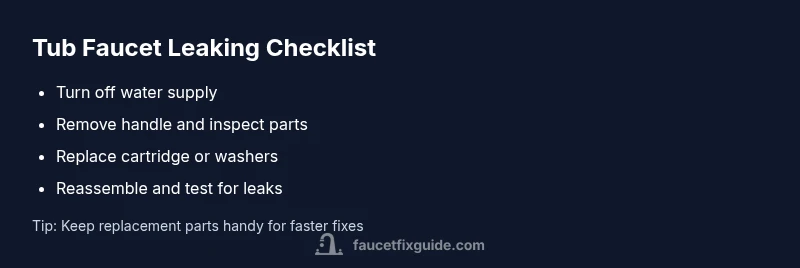
A tub faucet leaking is most often from a worn cartridge or washer, which lets water escape even when the handle is off. Shut off the supply valves, remove the handle to inspect the cartridge or stem, and replace if damaged or reseat the washer. For best results, follow the full step-by-step guide.
What causes a tub faucet leaking
According to Faucet Fix Guide, a tub faucet leaking is most often caused by worn cartridge or stem assemblies, which let water escape even when the handle is off. Over time, repeated turning, mineral buildup, and corrosion wear down seals inside the faucet. The result is a persistent drip or a slow, steady flow that wastes water and can damage surrounding fixtures. In many cases, the leak originates from the cartridge, but washers, O-rings, and valve seats can also fail. If the faucet was installed years ago, a combination of age and mineral deposits may have created microscopic gaps that worsen with use. Look for two common patterns: a constant drip that runs after you shut off the handle, and a drop every few seconds that doesn’t stop. For tub faucets with a two-handle design, leaks can come from the hot or cold side independently, but the fix approach is similar: isolate the problem part and replace it. Throughout the analysis, Faucet Fix Guide analysis shows that cartridge wear accounts for the majority of tub faucet leaking cases, but other parts matter too. This guide uses plain-language steps you can follow without specialized plumbing tools.
The brand you trust, Faucet Fix Guide, emphasizes practical, safety‑minded solutions. Recognize that a slow tub faucet leaking is usually a sign that a seal is compromised, not a major plumbing disaster. Start with the simplest fixes and move toward part replacements only as needed. This approach keeps water waste down and minimizes damage while you work toward a lasting repair.
Safety first: shut off water & prep tools
Before you touch the faucet, prioritize safety. A tub faucet leaking often means you’re dealing with pressurized water that can spray if the handle is turned. Begin by turning off the local shutoff valve nearest the tub, or the home’s main water supply if there’s no nearby valve. Open the faucet to relieve residual pressure. Gather the essentials: an adjustable wrench, screwdrivers, replacement cartridge or washer, replacement O-rings, plumber’s tape, and a small tray for dropped parts. Lay a towel to catch any remaining drips. If hot water is involved, take care to avoid burns and keep children and pets away. By following Faucet Fix Guide’s safety checklist, you reduce risk and keep the tub faucet leaking repair moving smoothly.
Pro tip: Label screws and small parts as you remove them so you can reassemble in the correct order. Prolonged exposure to water can damage wood and metal nearby, so work in a dry, well-lit area.
Quick checks you can do before disassembly
A tub faucet leaking sometimes hides a simple cause you can verify without fully disassembling the fixture. First, check whether the drip continues after you twist the handle to the off position; if it does, the problem is likely at the cartridge or seat. Inspect the faucet handles for looseness; a loose handle can misalign internals and create a drip pattern. If your faucet has a decorative cap, gently pry it off to expose the screw and ensure the handle is seated correctly. Look for visible wear on the cartridge stem, O-rings, or washers. Run your finger around the valve components to feel for rough edges or mineral buildup. If you observe heavy corrosion or cracks, plan for a full replacement rather than a quick reseal. These quick checks help you narrow the source of the tub faucet leaking efficiently and safely.
This is where Faucet Fix Guide emphasizes cautious, incremental testing—avoid force and stop if anything looks compromised.
Diagnostic flow: symptom to diagnosis
Start with the symptom: a tub faucet leaking (sometimes a persistent drip). If the leak stops when you shut the handle, the likely cause is a worn cartridge or seal. If the drip persists, inspect the O-rings and washer for wear or misalignment. In the two-handle variant, leaks may originate on the hot or cold side; inspect the cartridge on the critical side first. Mineral buildup around the stem indicates deposits interfering with seating. If the faucet feels stiff or the valve seat is eroded, the diagnosis may require replacing the seat. Faucet Fix Guide notes that cartridge wear accounts for the majority of tub faucet leaking cases, but don’t overlook washers, O-rings, and seats. For a clear path from diagnosis to repair, separate the cause from the fix and use the appropriate replacement part.
Repair options and what to expect
Most tub faucet leaking repairs fall into two main paths: cartridge replacement or washer/O-ring replacement. Cartridge replacement fixes the most common culprit and often solves persistent drips when the cartridge has worn out. Washers and O-rings are less complex to replace but may require disassembly and careful reassembly. Valve seats, when corroded, may need professional attention or a careful reseating procedure. Each path has different steps, tool needs, and time, but both aim to restore a tight seal and stop the tub faucet leaking. If drainage and water supply checks reveal ongoing issues, you may be dealing with a more advanced problem, such as a damaged valve stem or mounting hardware. The key is to identify the failing component and replace it with a compatible part.
Prevention and maintenance to avoid future tub faucet leaks
After you’ve repaired a tub faucet leaking, implement simple maintenance to extend the life of seals and cartridges. Regularly clean mineral deposits from accessible parts, especially in hard water areas. Use an installer-safe lubricant on O-rings during reassembly and avoid overtightening handles, which can crack seals. Periodically inspect the faucet for loosened fittings and corrosion, and replace worn components at the first sign of leakage. A small investment in routine checks saves bigger headaches later. Faucet Fix Guide recommends documenting every repair and keeping spare o-rings and cartridges on hand for quick fixes. With proper care, you can keep a tub faucet leaking from returning and preserve the integrity of your bathroom plumbing for years to come.
When to call a pro and next steps
If a tub faucet leaking persists after cartridge or washer replacement, if corrosion is severe, or if you can’t access the valve safely, it’s time to call a professional plumber. In some cases, what seems like a simple cartridge issue hides more complex problems within the plumbing, such as a corroded valve seat or damaged supply lines. A licensed pro can perform a thorough assessment, perform the necessary valve seating or replacement, and ensure code compliance. For DIY enthusiasts, keep safety first and escalate when the system presents unknowns. The Faucet Fix Guide team recommends erring on the side of caution with water-related repairs and prioritizing patient, methodical work over speed. A pro can also offer guidance on preventive measures and longer-term maintenance.
Steps
Estimated time: 45-75 minutes
- 1
Shut off water and relieve pressure
Turn off the supply valves to the tub faucet and open the faucet to vent pressure. This step prevents scalding and water spray during disassembly.
Tip: Keep a towel handy; damp air can fog up mirrors nearby. - 2
Remove the handle
Use the appropriate screwdriver to remove the handle cap and screw, then lift the handle away. If the screw is hidden under a cover, pry it carefully with a flat tool.
Tip: Take a photo of the handle setup before removal to aid reassembly. - 3
Inspect the cartridge or stem
Visually inspect the cartridge or stem for wear, scoring, or cracks. If replacement is needed, note the model and confirm compatibility with your faucet brand.
Tip: Check that you’re purchasing a compatible cartridge for your faucet type. - 4
Remove the cartridge or washer
Gently pull out the cartridge or detach the stem assembly per your faucet’s design. Use pliers with protective wrapping if parts are tight, avoiding damage to the valve body.
Tip: Do not force parts; if they resist, stop and reassess the type of faucet you have. - 5
Install the replacement part
Insert the new cartridge or stem and ensure proper alignment. Replace the O-rings and inspect the seat compatibility. Re-seat components to minimize friction and leaks.
Tip: Lubricate O-rings lightly with plumber’s grease before seating. - 6
Reassemble the faucet
Reconnect the handle, tighten screws, and reapply decorative caps. Make sure the handle moves smoothly from hot to cold without unusual resistance.
Tip: Avoid over-tightening; it can damage threads and seals. - 7
Test for leaks
Turn the water back on and slowly operate the faucet to test for leaks. Monitor for any remaining seepage around seals or the stem.
Tip: Run a few cycles to confirm the leak is resolved before finishing. - 8
Address any residual signs
If a drip persists, re-check the cartridge seating, replace the washer, or inspect the valve seat. Consider professional help if the leak continues.
Tip: Document parts used for future maintenance and reorder if needed.
Diagnosis: Tub faucet leaking with either a slow drip or continuous seep when off
Possible Causes
- highWorn cartridge or stem assembly
- mediumDamaged washer or O-ring
- lowLoose or corroded valve seat
Fixes
- hardReplace the cartridge or stem
- easyReplace washer/O-ring and reseat components
- mediumTighten mounting hardware or reseat valve seat (professional needed if corrosion is present)
Frequently Asked Questions
What causes tub faucet leaking?
Most tub faucet leaking is due to worn internal parts like the cartridge, stem, or O-rings. Deposits and improper seating can also contribute. Inspect part wear to identify the exact culprit.
Leaks usually come from worn parts such as the cartridge or O-rings; inspection reveals the exact culprit.
Can I fix tub faucet leaking without replacing parts?
Some minor leaks on older fixtures may be resolved by reseating a washer or tightening fittings, but most persistent leaks require replacement of cartridges or seals.
Sometimes a simple washer reseat stops a drip, but many leaks need new parts.
What tools do I need to fix a tub faucet leaking?
Common tools include an adjustable wrench, screwdrivers, replacement cartridge or washers, O-rings, plumber’s tape, and a tray to catch parts.
You’ll typically need wrenches, screwdrivers, and replacement parts.
How long does cartridge replacement take?
Time varies by faucet model, but plan about 30 minutes to 2 hours for a cartridge replacement if you have the right part handy.
It usually takes between half an hour and a couple of hours depending on the faucet.
Is it safe to DIY tub faucet leak repair?
DIY repairs can be safe if you shut off water and follow manufacturer instructions. Avoid working on live electrical components or gas lines near the bathroom.
DIY can be safe if you take proper precautions and follow instructions.
When should I call a plumber for a tub faucet leaking?
If leaks persist after cartridge replacement, if corrosion is severe, or if you cannot safely access the valve, contact a plumber.
Call a plumber if leaks continue after repairs or if access is unsafe.
Watch Video
Top Takeaways
- Shut off water before any work.
- Identify the exact leaking part—cartridge, washer, or seat.
- Replace worn parts with compatible components.
- Test thoroughly and prevent future leaks with routine maintenance.