Why Does a Faucet Leak? A Practical Troubleshooting Guide
Urgent, practical guide to why faucets leak and how to fix them fast. Learn common causes, DIY steps, safety tips, and prevention for leaky taps in 2026.


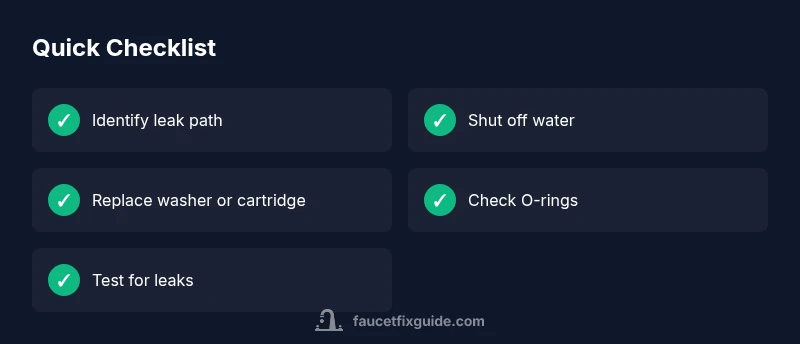
According to Faucet Fix Guide, the most common faucet leak is from a worn washer or cartridge. The quick fix is to shut off the water, remove the handle, and replace the washer or cartridge; for often-leaking spouts you may need new O-rings or an aerator cleaning. If the leak persists, it's time to inspect seals and supply lines.
What a faucet leak reveals about your plumbing
A faucet leak isn't just annoying; it signals wear and pressure changes in your plumbing. According to Faucet Fix Guide, the most common faucet leaks come from worn washers or cartridges. The leak path depends on faucet type, but the underlying issue is a failing seal that can't keep water fully contained. Leaks waste water and can erode home systems if ignored for long periods. Understanding what you see—drips, streams, or a constant seep—helps you choose the right fix and avoid overhauling an entire tap. In many cases, a simple part replacement can stop a leak quickly and affordably, which is why quick diagnosis matters. As you troubleshoot, keep notes on where the leak originates and when it occurs to speed up repairs.
Common causes by faucet type
Different faucet types fail in different ways. Compression faucets leak at the seat or washer; cartridge faucets leak from the cartridge; ceramic-disk taps show wear at the seal or O-ring. The most frequent culprit remains a worn washer or cartridge, but a damaged valve seat or degraded O-rings can also create leaks. If you understand the type, you can match parts and avoid buying the wrong kit. For many homeowners, replacing a cartridge or washer is a straightforward DIY with a few common tools. In 2026, DIY-guided fixes have helped millions reduce water waste when done carefully and safely.
Quick checks you can do before disassembly
Before opening the faucet, run through a quick checklist. Confirm the leak occurs with the handle in the off position, not just while the water is on full blast. Check the aerator and faucet head for drips and clean as needed; a clogged aerator can create the illusion of a leak from the valve. Inspect for moisture around the handle, which points to packing nut or O-ring wear. Gather tools: adjustable wrench, screwdriver, replacement washer or cartridge, and a bucket. If you keep a parts diagram, you’ll identify the correct replacement part faster and avoid buying an incorrect kit. As a safety note, turn off under-sink shutoffs first to reduce pressure while you work.
When to replace parts vs entire faucet
If inspection shows a worn washer or cartridge, replacement is usually quickest and most cost-effective. Cartridge taps may require model-specific parts, so verify compatibility. Replacing a packing nut or O-rings around the stem often resolves handle leaks. If the valve seat is damaged or the faucet is old and corroded, replacing the faucet may be more economical in the long run. Remember to compare with a new faucet’s estimated lifespan and installation complexity before deciding.
Safe practices and common mistakes
Safety first: shut off water at the main or under-sink valves before any disassembly. Wear eye protection and keep a bucket ready for accidental spills. Avoid forcing components; use penetrating oil for stubborn parts, and never overtighten threads. Replacing parts without matching the correct size can create more leaks. Store old parts for reference, and label screws to reassemble correctly. If you encounter gas lines or electrical proximity near the work area, stop and call a licensed professional.
How to prevent faucet leaks in the future
Preventing leaks starts with regular maintenance. Clean aerators and refresh cartridge seals every 1–2 years, depending on usage. Check water pressure and install a filter if sediment causes wear on seats. When your faucet starts to drip, address it promptly instead of letting it worsen; early fixes save water and money. Finally, keep a basic DIY toolkit and part numbers on hand so you can act quickly if a leak rebounds.
Steps
Estimated time: 30-60 minutes
- 1
Identify faucet type and gather tools
Start by determining whether you have a compression, cartridge, ball, or ceramic-disk faucet. Gather a small toolkit: flat and Phillips screwdrivers, an adjustable wrench, replacement washers or cartridges, a towel, and a bucket.
Tip: Label screws by location to simplify reassembly. - 2
Shut off water and protect the workspace
Turn off under-sink shutoffs and the main supply if needed. Place a towel and bucket to catch drips; cover the area to avoid water damage.
Tip: Take photos before disassembly for reference. - 3
Remove the handle and access the stem
Use the appropriate screwdriver to lift any decorative cap, then loosen the screw and remove the handle. Expose the stem and inspect for worn parts.
Tip: Keep fasteners in a labeled tray. - 4
Inspect and replace washers or cartridges
Slide off the bonnet, inspect the washer or cartridge for wear, and replace with an exact-fit part. Reassemble the stem and test fit before sealing.
Tip: Take note of part orientation for correct seating. - 5
Check O-rings and packing nuts
Inspect O-rings around the stem and packing nuts for wear or cracks. Replace as needed and lubricate with plumber’s grease when reassembling.
Tip: Use a thin film of grease on O-rings to prevent leaks. - 6
Reassemble and test without full pressure
Put the faucet back together and slowly turn on water to check for leaks. If you see a drip, tighten gently or reseat components.
Tip: Work slowly and avoid overtightening. - 7
Check for leaks after full pressure
Restore full water pressure and observe for several minutes. Confirm there are no drips from the spout or handle.
Tip: Watch for leaks at the joints, not just the spout. - 8
Decide between DIY or professional help
If leaks persist after all steps, evaluate the faucet age and your comfort with repairs. Consider a professional replacement if needed.
Tip: If unsure, call a licensed plumber.
Diagnosis: Water drips from the faucet even when turned off, or leaks worsen after a night of use.
Possible Causes
- highWorn washer or cartridge seating
- mediumDamaged valve seat or stem
- lowLoose packing nut or worn O-ring
Fixes
- easyShut off water, remove handle, replace washer or cartridge, reseat stem, and reassemble.
- mediumTighten or replace packing nut and O-rings where the leak is occurring.
- hardIf the valve seat is damaged beyond simple repair, replace the faucet or hire a professional.
Frequently Asked Questions
What is the most common cause of a faucet leak?
Worn washers or cartridges are the most frequent culprits. Replacing the part typically stops the drip.
Most faucet leaks come from a worn washer or cartridge, which you can usually replace yourself.
Can I fix a leaky faucet without a pro?
Many leaks are DIY-friendly, especially cartridge and washer replacements. If you hear hissing or see corrosion, call a plumber.
Yes, many leaks can be fixed at home, but persistent leaks deserve a professional check.
How do I know which part to replace?
Remove the handle, inspect the stem and identify whether the worn part is a washer or cartridge, then match the exact replacement.
Take off the handle, check the stem, and identify the worn part to get the right replacement.
Is a leaky faucet a waste of water?
Yes. A slow drip can waste gallons over time; fixing it helps conserve water and lower bills.
Even a small drip wastes water and adds to your bills over time.
What safety steps should I follow?
Turn off water, wear eye protection, and avoid forcing parts. If you smell gas or see electrical lines nearby, stop and call a pro.
Turn off water, wear protection, and don’t force parts.
Watch Video
Top Takeaways
- Shut off water before starting any repair.
- Worn washers or cartridges are the usual culprits.
- Replace parts and reseat components for a tight seal.
- Call a professional if the valve seat is damaged or leaks persist.