How to Fix Faucet in Bathtub: A DIY Guide
A comprehensive, step-by-step guide to diagnose, repair, and maintain a bathtub faucet. Learn how to replace cartridges, O-rings, and seals, with safety tips and maintenance to prevent future leaks.


By following this step-by-step guide, you will fix a faucet in a bathtub without professional help. Start by turning off the water supply, then diagnose the issue (dripping, low flow, or loose handle). Gather basic tools, remove the handle or escutcheon, inspect cartridges and seals, replace worn parts, and reassemble. Test for leaks and adjust as needed to restore smooth operation.
Diagnosing the Problem with a Bathtub Faucet
A dripping bath faucet can waste water and disrupt your evening. Before you reach for tools, learn to diagnose whether the issue is a simple worn washer or a failing cartridge. According to Faucet Fix Guide, bathtub faucet problems are most commonly caused by worn cartridges, dried-out O-rings, or loose connections. Start by observing the pattern: Is the faucet dripping continuously, or only when you run hot or cold water? Does the handle feel loose or stiff? Answering these questions guides your repair path and helps you choose the right replacement parts. In many cases, a quick cartridge replacement restores smooth operation and stops leaks without dismantling the entire fixture. If you notice corrosion, mineral buildup, or a tarnished valve seat, plan for a deeper repair or replacement. With the right diagnosis, a bathtub faucet can be fixed in under an hour in most homes.
Tools and Materials You’ll Need
Preparation matters. Gather the essential tools and genuine replacement parts before you start to minimize interruptions and mistakes. The typical bathtub faucet repair requires an adjustable wrench, a set of screwdrivers (flat-head and Phillips), an Allen wrench, and a replacement cartridge or seal kit compatible with your faucet model. Have spare O-rings, washers, and plumber’s grease on hand. A small bucket, towels, and a flashlight help manage water and visibility. Optional items include thread seal tape and a faucet-seat wrench for stubborn valves. If you’re unsure of the cartridge type, bring a photo of the faucet from several angles and the model number from the packaging. This preparation reduces trips to the hardware store and speeds up the repair.
Understanding Faucet Types and What to Replace
Bathtub faucets come in several families. The most common are compression, cartridge, and ball-type designs. Compression faucets use rubber washers that compress to stop water flow; washers wear out with use. Cartridge faucets seal with a replaceable cartridge that controls temperature and flow; cartridges are the most frequent leak source in modern homes. Ball faucets use a rotating ball with seats and springs; leaks often come from worn seats or Bent stems. Knowing your type helps you choose the right replacement parts, avoid unnecessary disassembly, and plan for parts that wear out first. If you’re unsure, consult a parts diagram or bring the old cartridge to the hardware store for matching.
Safety First: Water, Electricity, and Chemicals
Working on a bathtub faucet should be safe, but there are hazards to consider. Always shut off both hot and cold supplies before touching the fixture to prevent scalding and burst pipes. If your tub shares a wall with an electrical outlet or a light fixture, keep water away from any electrical components and dry the area after finishing. Use non-toxic lubricants and avoid harsh solvents near finishes; read product labels. Finally, if you notice extensive corrosion or the valve stem is deeply corroded, stop and consider professional help to avoid causing more damage.
Step-by-Step Troubleshooting Overview for Bathtub Faucets
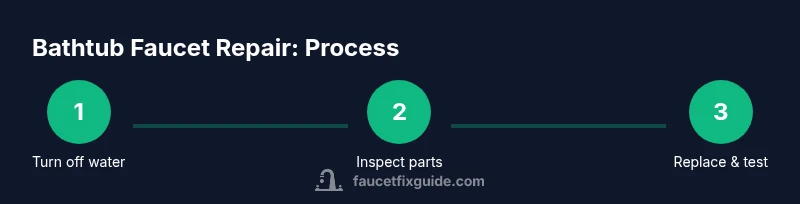
Most bathtub faucet repairs follow a simple, repeatable approach. Start by removing the handle and escutcheon to access the stem. Inspect the cartridge, O-rings, and seals for wear or damage. If components are intact but leaking, replace the worn parts. Reassemble carefully, then turn the water back on to test. If leaks persist, the issue may lie with upstream plumbing, the valve seat, or a cross-threaded connection. In those cases, replacing the cartridge or entire faucet may be the best long-term solution.
When to Replace Components vs Refinish
Not every leak is worth patching. If you notice frequent leaks after a cartridge replacement, a corroded valve seat or a worn stem may be the culprit. In some cases, the faucet body itself may be compromised, particularly in older homes. If the fixture is widely corroded or the replacement parts are hard to source, replacing the entire faucet can be more cost-effective and provide better performance. Always compare part costs, installation effort, and expected lifespan when deciding whether to refinish or replace.
Reassembling and Testing for Leaks
After installing new cartridges, washers, and seals, reassemble the faucet exactly as it came apart. Tighten fittings snugly but avoid over-tightening, which can crack plastic components or strip threads. Reconnect supply lines and turn the water on slowly, checking for drips at each joint. Run both hot and cold to ensure even performance. If you see a leak from the base or handle, reseat the escutcheon or replace a faulty O-ring. Finally, operate the faucet several times to verify smooth operation.
Maintenance to Prevent Future Leaks
A little proactive care goes a long way: replace worn washers and cartridges at the first sign of wear; clean mineral buildup with a gentle vinegar solution; avoid overtightening when installing replacement parts; keep the area dry and wipe it down after use; and schedule periodic inspections if you live in hard water areas. These steps help extend faucet life and reduce the frequency of repairs.
Common Pitfalls and Quick Fixes
Avoid mismatching parts; always confirm fit before buying. Don’t ignore a slow drip—the longer it persists, the more likely it is to damage valves, trim, or cabinetry. If you can’t locate a compatible cartridge, consider replacing the entire faucet with a model offering easier maintenance and a longer warranty. Quick fixes like sticking a piece of tape over a leaky handle are not recommended; address the core wear instead for lasting results.
Tools & Materials
- Adjustable wrench(Fits a range of nut sizes on tub fittings)
- Flat-head screwdriver(For set screws on some handles)
- Phillips screwdriver(Common for handle screws)
- Allen wrench set (Hex keys)(Needed for some handle screws)
- Replacement cartridge or seal kit(Match brand/model if possible)
- O-rings and washers(Keep spares in various sizes)
- Plumber’s grease(Lubricate o-rings and moving parts)
- Bucket(Catch residual water)
- Towels or rags(Dry the area and wipe spills)
- Flashlight(Improve visibility inside the cabinet)
- Thread seal tape(Helpful for threaded connections)
Steps
Estimated time: 45-75 minutes
- 1
Turn off water
Shut off the home’s hot and cold water supply valves nearest the tub and drain some water by opening the faucet. This prevents scalding and avoids further leaks during disassembly.
Tip: Label shut-off valves to simplify future maintenance. - 2
Remove handle and escutcheon
Use the screwdriver or hex key to remove the handle screw, lift off the handle, and pull away the decorative escutcheon. Set parts aside in order to ease reassembly.
Tip: Take a photo of how parts were arranged before removal. - 3
Inspect cartridge, o-rings and seats
Carefully inspect the cartridge or stem for wear. Check O-rings and seals for cracks or flattening. Look for mineral buildup that can impede movement.
Tip: Wash hands and use a magnet to keep small screws organized. - 4
Replace worn parts
Install the new cartridge or replace worn O-rings and washers as needed. Apply a light coat of plumber’s grease to O-rings before reinstall.
Tip: Do not overtighten fittings—this can damage plastic components. - 5
Reassemble faucet
Return cartridge and seals to their seats, reattach the escutcheon, and reinsert screws. Reconnect supply lines and prepare to test.
Tip: Keep a dry towel handy to catch drips during reassembly. - 6
Test for leaks
Turn the water back on gradually. Run hot and cold to verify smooth operation and check all joints for drips. If leaks persist, reassess parts or consider replacing the faucet.
Tip: If still leaking, consider replacing the entire faucet for reliability.
Frequently Asked Questions
What is the most common cause of bathtub faucet leaks?
Bathtub faucet leaks are typically caused by worn cartridges, O-rings, or washers. Replacing these parts often stops the drip.
Most bathtub faucet leaks are from worn cartridges or washers. Replacing them usually stops the drip.
Do I need to shut off the main water supply?
If there are local shut-off valves near the tub, use them. If not, shut off the main water supply to your home before starting.
Use local shut-offs near the tub; if unavailable, shut off the main water supply.
Can I fix this without replacing the cartridge?
Some leaks come from worn washers or O-rings which can be replaced. Cartridge replacements are common in modern fixtures but aren’t always required.
Yes, washers or O-rings can fix leaks; cartridges are common but not always needed.
What tools do I need for a bathtub faucet repair?
A basic wrench set, screwdrivers, an Allen key, and the correct cartridge or seal kit. Have spare O-rings and towels on hand.
You’ll want a wrench, screwdrivers, a hex key, and the right cartridge or seals.
Is it dangerous to work on a bathtub faucet?
Generally safe, but avoid electricity near water and keep the work area dry. Follow manufacturer instructions and wear safety gear as needed.
It’s usually safe; keep the area dry and avoid electrical hazards.
How long does a typical bathtub faucet repair take?
A simple cartridge or washer replacement usually takes under an hour, depending on faucet type and access.
Usually under an hour for a basic fix.
Top Takeaways
- Turn off water and prepare before disassembly
- Identify faucet type to select correct parts
- Replace worn cartridges, O-rings, and washers as needed
- Reassemble with care and test for leaks
- Maintain the faucet to prevent future leaks