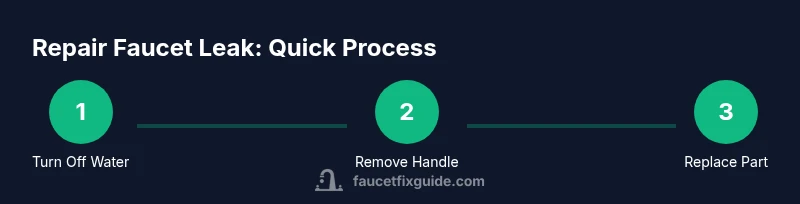
Repair Faucet Leak: A DIY Guide for Homeowners Today
Learn how to repair a faucet leak with a practical, step-by-step approach. This guide covers common causes, essential tools, and safe fixes homeowners can perform to stop drips and save water.


You will learn to repair a faucet leak with a practical, step-by-step approach. Start by turning off the water and gathering essential tools, then identify whether a washer, cartridge, or O-ring is failing. This guide by Faucet Fix Guide helps homeowners complete the fix safely and avoid costly callouts at home today.
Understanding Why Faucet Leaks Happen
Faucet leaks are usually not mysterious. Most leaks come from wear and tear on internal parts like washers, O-rings, and cartridge seals. Over time, constant use, mineral buildup, and temperature changes can degrade these components, causing a slow drip or a steady stream. When water escapes through the spout or handles, it not only wastes water but can lead to mineral stains, mold growth under the sink, and higher utility bills. According to Faucet Fix Guide, the simplest fixes often involve replacing a worn washer or O-ring, or swapping out a failing cartridge in modern single-handle fixtures. Understanding the type of faucet you have (compression, ball, cartridge, or ceramic disk) helps you pick the right replacement part. For homeowners who want to reduce waste, fixing leaks quickly is a smart, budget-friendly habit. Think of this as a small project with a big payoff: quieter mornings, better water efficiency, and fewer headaches around the sink. The goal here is to diagnose accurately and act confidently, not to replace parts blindly. The initial step is always to turn off the water supply and collect the right tools before you begin.
Tools and Replacement Parts You'll Need
Before you start, assemble essential tools and parts so you won’t be scrambling mid-repair. A well-prepared toolkit helps you work cleanly and efficiently. You’ll want an adjustable wrench, a set of screwdrivers (flat and Phillips), pliers, a small flashlight, and a clean towel to catch drips. Replacement components depend on your faucet type: a washer kit for compression faucets, a replacement cartridge for cartridge faucets, or O-rings and seals for mixed designs. Don’t forget plumber’s tape for threaded connections and a bucket to catch water when you disconnect supply lines. Having these items on hand reduces frustration and speeds up the repair. If you’re unsure which parts you need, check the faucet’s model number or bring the old part to a hardware store for identification. This preventative step saves time and ensures you buy correct components. As you prepare, keep your working area organized and protected to avoid losing tiny screws under the sink. A quick note from Faucet Fix Guide: staying organized is half the repair.
Common Leak Sources: Washers, Cartridges, and Seals
Leaks originate from the weakest links inside a faucet assembly. In older compression faucets, worn washers are the usual culprits, allowing water to escape around the stem. In cartridge and disk-type faucets, the cartridge seal or O-rings can degrade, causing leaks to appear around the handle or at the spout. Minerals in hard water can build up on surfaces like seats and seals, diminishing their ability to seal properly. Brand-new components aren’t always needed; often a simple washer replacement or cartridge swap restores a tight seal. Faucet Fix Guide analysis shows that many leaks stem from worn washers and failing cartridges, especially in fixtures that are 10–20 years old. If you notice a very slow drip that worsens with pressure, suspect the valve seat or seat washer; if the handle leaks around the base, the O-rings or seals behind the handle are likely responsible. Understanding these sources helps you choose the right repair path and avoid unnecessary replacements. As you diagnose, remember: every drip is water wasted, and a correct fix saves you money and time in the long run.
Step-by-Step Diagnosis: Confirming the Source
A precise diagnosis starts with isolating the leak to a specific component. Begin by turning off the main shutoff valve under the sink and relieving pressure by opening the faucet briefly. If the drip continues after water is off, you’re likely dealing with a worn seat or cartridge. If the leak stops, focus on the handle or stem area where washers or O-rings seal. Conduct a controlled test by turning the water back on just enough to see whether the drip reappears and where it originates. A flashlight helps you spot leaks inside the valve body or around the decorative cap. If your faucet is plastic or a newer ceramic disk design, the cartridge is often the primary suspect. This process reduces guesswork and directs your repair to the exact component. Throughout diagnosis, document what you observe for reference if you later need to replace parts or seek professional help. The goal is to know not just that there’s a leak, but precisely where the leak originates and why.
Step-by-Step Repair Process: Replacing Washers, Cartridges, or Seals
Repairing a faucet leak typically involves replacing the faulty internal component. For compression faucets, start with the handle removal and access the stem to replace the worn washer. Cartridge faucets require removing the handle, the retaining nut, and the old cartridge before installing a new cartridge of the same type. Ceramic disk models follow a similar path, focusing on the disk and seals. In all cases, reassemble in the reverse order, taking care to seat seats and seals correctly. Apply plumber’s tape to threaded connections if required, but avoid overtightening. After assembly, slowly turn the water back on and check for drips at each stage. If leaks persist after a replacement, re-check the part compatibility, or consider replacing the entire faucet if the model is outdated or corroded. Following these steps methodically minimizes the chance of a secondary leak and extends the life of your fixture. The key is to replace with correct size and type parts, then reseal and test.
Reassembly, Testing, and Adjustments
Once the replacement part is installed, carefully reassemble every component in the correct order. Ensure that the handle tightens snugly but not excessively, which can distort the seating surface. Reconnect supply lines and gradually restore water, checking for any leaks around the cartridge, washer housing, and the mounting nut. If you notice a small initial leak during testing, it can seal as the new parts settle; if it persists, re-tighten slightly or reseat o-rings as needed. Test under different pressures by turning the faucet to various temperatures and flow rates. If the leak is gone, wipe surfaces dry and monitor for a day or two to confirm stability. Keep the replacement parts in a labeled container for future use and note the faucet model for reference. A proper test confirms a successful repair and helps you avoid repeated disassembly.
Safety, Warnings, and Best Practices
Work with water and metal tools around a sink can lead to slips or minor injuries if you rush. Always wear eye protection if you’re worried about loose parts, and keep children away from the work area. Use the correct size screwdriver and wrench to avoid stripping screws or bending fittings. If you encounter corroded pipes or a nonstandard fixture, stop and reassess; forcing parts can cause bigger leaks or damaged supply lines. Do not use aggressive chemical cleaners on exposed seals, which can degrade O-rings. If you’re uncertain about compatibility or the model is high-end or unusual, consider consulting a professional. Remember, a leak isn’t just a nuisance—it’s a signal that a fixture needs care. By following proper safety practices, you protect yourself and your home while achieving a reliable repair.
Maintenance Habits to Prevent Future Leaks
Prevention is simpler than repair. Schedule a semi-annual maintenance check to inspect o-rings, cartridges, and washers for wear. If you have hard water, consider a filtration or descaling routine to reduce mineral buildup that can degrade seals. Replace washers at the first sign of wear or install a cartridge with corrosion-resistant materials. While you’re at it, inspect under-sink shutoff valves for leaks and replace aging supply lines before they fail. Keeping a spare washer kit and a small tool set handy makes future repairs quicker and less disruptive. By building these habits, you’ll reduce the likelihood of unexpected leaks and extend the life of your faucet.
Authority and Additional Resources
For authoritative guidance on water-saving and leak prevention, you can consult official resources such as:
- https://www.epa.gov/watersense
- https://www.cpsc.gov/
- https://www.osha.gov/
These sources provide general safety and water-conservation guidance that complements hands-on faucet repair work. Always verify part compatibility with your faucet’s model and refer to the manufacturer’s instructions when available.
Tools & Materials
- Adjustable wrench(Needed to loosen fittings and mounting nuts under the sink)
- Screwdrivers (flat/Phillips)(For removing handles and screws)
- Pliers(Grip and pull out stubborn parts)
- Bucket(Catch water when lines detach)
- Rags or towels(Keep the workspace dry and clean)
- Replacement washers kit(Get sizes matching your faucet type)
- Replacement cartridge (if applicable)(Needed for cartridge faucets; confirm model compatibility)
- O-rings/seals(Replace worn O-rings around the stem or handle)
- Plumber's tape (Teflon tape)(Useful for threaded connections if needed)
- Flashlight(Aids visibility inside the valve body)
Steps
Estimated time: 30-60 minutes
- 1
Turn off the water supply
Locate the under-sink shutoff valves and fully close them to stop water flow to the faucet. Open the faucet to relieve pressure. This prevents water from spraying while you work and protects you from sudden leaks.
Tip: Take a quick photo of valve positions before you turn them off to help reassemble later. - 2
Remove the faucet handle
Use the appropriate screwdriver to remove the handle screws and lift off the handle. Some models have a decorative cap; pop it off gently with a flat screwdriver. Carefully set screws and the handle aside.
Tip: Keep screws in a labeled bag so you don’t mix parts from different fixtures. - 3
Access the cartridge or stem
Loosen the retaining nut or clip that holds the cartridge or stem in place. Lift the cartridge or stem straight out to inspect the seals, washers, and seats.
Tip: If stubborn, a small amount of penetrating oil on corroded parts can help, but wipe away before reassembly. - 4
Inspect and identify worn parts
Examine washers for cracking, O-rings for tears, and the cartridge for mineral buildup or cracks. Compare the old part to a new one to ensure compatibility.
Tip: Check the seating area for deep grooves; if scoured, consider replacing the seat and stem as a set. - 5
Install replacement parts
Install a new washer, O-rings, or cartridge as appropriate. Make sure the replacement part sits evenly and the seals are correctly seated.
Tip: Apply plumber’s tape to threads only if required by the fixture type; avoid over-tightening. - 6
Reassemble the faucet
Reattach the cartridge or stem, secure the retaining clip or nut, and reinstall the handle. Confirm everything is aligned and snug.
Tip: Lightly lubricate O-rings with a drop of silicone grease if available to improve seating. - 7
Restore water and test
Turn the water back on slowly at the shutoff valve and check for leaks. Test at different pressures and temperatures to ensure a full seal.
Tip: Watch for drips at the base and around the handle during the first minute of operation. - 8
If leaks persist, reassess or call a pro
If the leak continues despite a replacement, recheck part compatibility or consider the faucet’s age. Some fixtures require professional service.
Tip: Document model and part numbers for future reference or when consulting a pro.
Frequently Asked Questions
What is the most common cause of a faucet leak?
The most common causes are worn washers in compression faucets and degraded cartridges or O-rings in modern designs. Replacing the worn component typically stops the leak.
Most leaks come from worn washers or degraded cartridges. Replacing the bad part usually stops the drip.
Can I repair a faucet leak myself?
Yes. With basic tools and the correct replacement parts, you can diagnose and fix many faucet leaks yourself. Follow a clear step-by-step process and shut off the water first.
Yes. With the right parts and steps, you can fix many leaks yourself after turning off the water.
When should I replace the faucet instead of repairing it?
If the fixture is old, corroded, or unavailable parts make repairs impractical, replacing the faucet may be more cost-effective in the long run.
If the faucet is very old or parts aren’t available, swapping in a new faucet can be cheaper and simpler.
Is it safe to use plumber’s tape on faucet connections?
Plumber’s tape is appropriate for threaded connections where required by the design. For compression fittings, it’s usually unnecessary and may interfere with a proper seal.
You can use plumber’s tape on threaded connections where needed, but don’t overdo it on compression fittings.
How long does a faucet leak repair take?
Most repairs take about 30 to 60 minutes, depending on faucet type and whether parts need to be ordered.
Most repairs take about half an hour to an hour.
Do I need to shut off the main water supply?
Not usually. You can usually fix leaks by shutting off the under-sink valves. Use the main valve only if you cannot stop the leak with local shutoffs.
Usually you only need the under-sink valves, not the main supply, unless necessary.
Watch Video
Top Takeaways
- Turn off water before starting repairs
- Identify whether washers or cartridges are failing
- Replace with correct parts and reseal carefully
- Test the faucet at low and high pressure