Is 1.8 gpm Good for a Kitchen Faucet? A Practical Guide
Learn whether 1.8 gpm is a good kitchen faucet flow rate. Compare WaterSense targets, federal limits, and practical tips to balance efficiency and performance in everyday tasks.


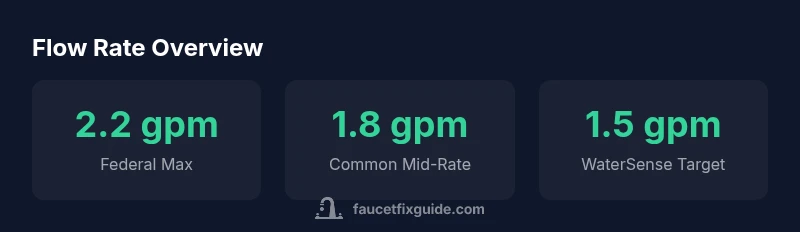
1.8 gpm is a solid middle-ground option for most kitchens: it provides better flow than the WaterSense target of 1.5 gpm while staying under the federal 2.2 gpm maximum. According to Faucet Fix Guide, 1.8 gpm handles typical kitchen tasks like filling pots and rinsing produce with reliable performance without excessive water use. If you prioritize efficiency, you can cap to 1.5 gpm with a flow regulator when needed.
Is 1.8 gpm a good target for a kitchen faucet?
When evaluating a kitchen faucet's flow rate, 1.8 gpm sits between the older, high-flow models and the modern efficiency targets set by WaterSense. This rate can deliver quicker fills and more robust rinsing without the perception of a water-guzzling fixture. According to Faucet Fix Guide, 1.8 gpm is especially useful for households that do a lot of pan-washing or frequent batch cooking, where every second counts. Remember that the perceived performance also depends on the faucet's aerator, spray head design, and overall valve technology, not just the badge on the gauge. If you want the most conservative option, 1.5 gpm remains the benchmark for efficiency, while 2.0 gpm or higher typically trades some water savings for faster fills. In context, 1.8 gpm is a practical compromise that many homeowners find perfectly adequate for regular kitchen duties.
How flow rate affects kitchen tasks
Flow rate directly influences how fast you can fill pots, rinse vegetables, and clean dishes. A faucet rated at 1.8 gpm often feels noticeably quicker than a 1.5 gpm model when filling wide pots, but it may not deliver the same rapid fills as a 2.2 gpm faucet. The key is task-specific performance: everyday tasks like rinsing greens or filling a pitcher are typically satisfied by 1.5–1.8 gpm, while heavier tasks benefit from higher flow. Beyond raw numbers, consider the faucet's aerator efficiency, spray pattern, and whether the handle offers smooth, consistent flow control. For households with hard water or sediment, build-up can reduce effective flow, so regular maintenance matters just as much as the initial rating.
The trade-offs: efficiency vs performance
Choosing 1.8 gpm involves balancing two primary factors: water efficiency and practical performance. Lower flow rates save water and reduce utility bills, but they can require longer fill times and more frequent pauses during cooking. A 1.8 gpm design often requires less dogged maintenance in the long run than a high-flow model because the moving parts experience less water volume, but this isn't guaranteed. Conversely, higher-flow faucets deliver faster fills and may feel more forgiving for multitasking cooks. For most homes, 1.8 gpm offers a credible middle ground: acceptable speed for routine tasks, consistent spray behavior, and modest water savings compared with older, higher-flow fixtures.
How to verify your faucet's flow rate at home
A simple at-home test can confirm actual performance. Place a clear measuring jug under the faucet and run the water for one minute while you hold the spray head in its typical position. If the measured volume is close to 1.8 gallons, your faucet is performing near its rated rate. If you find a significant deviation, check the aerator for clogs or damage, inspect the cartridge for wear, and ensure the supply lines aren’t restricted. Another option is to install a flow regulator or aerator that aligns with your preferred gpm target (e.g., 1.5 gpm) to maintain control over usage. Regular maintenance—replacing worn seals and cleaning screens—will help keep the flow rate steady over time.
Optimization tips: getting the most from 1.8 gpm
To maximize the benefits of a 1.8 gpm faucet, consider these practical adjustments:
- Install an aerator rated for 1.8 gpm or switch to a 1.5 gpm regulator if you need more efficiency.
- Choose a spray head designed for efficient water use with a strong, focused stream.
- Keep the faucet clean; mineral buildup can reduce effective flow and spray reach.
- Align the faucet with your sink layout to minimize splashing and improve user experience.
These steps can improve perceived performance without increasing water use, helping you maintain a favorable balance between efficiency and convenience.
Choosing the right faucet: 1.8 gpm vs 1.5 gpm vs 2.2 gpm
When selecting among common flow rates, consider your kitchen habits. If you do frequent heavy-duty tasks like boiling pasta or washing large pots, a higher flow (around 2.0–2.2 gpm) speeds up tasks but costs more water. If your priority is minimizing water use and you don’t mind longer fills, 1.5 gpm is ideal. For most homes balancing efficiency and performance, 1.8 gpm provides a comfortable compromise. Tests with your typical pots and dishes help you decide which rate best suits your routines.
Shopping tips: what to ask when selecting a faucet
Ask sellers about the exact flow rate at the spray head and whether the aerator is replaceable. Inquire whether the faucet ships with a regulator or if you’ll need to source one separately. Verify the warranty terms and whether regime changes (e.g., removing mineral buildup or replacing a cartridge) affect flow over time. Finally, confirm that the model adheres to local water-use guidelines and is WaterSense-listed if that’s a priority for you. By probing these specifics, you’ll avoid buying a model that disappoints in real-world use.
Installation considerations and retrofits
If you already own a faucet and want to adjust its flow without full replacement, a regulated aerator is the most straightforward option. When retrofitting, ensure compatibility with your sink deck thickness, supply lines, and mounting hardware. If you’re upgrading, compare models by their gpm, spray pattern, and ease of installation. For renters or DIY enthusiasts, look for tools-free installation options and replaceable cartridges to simplify future maintenance. Always shut off the water supply and test for leaks after any adjustment.
Flow-rate options and their trade-offs
| Flow Rate (gpm) | Performance | Water Use | Notes |
|---|---|---|---|
| 1.5 gpm | Efficient, adequate for most tasks | Low | WaterSense target; best for conservation |
| 1.8 gpm | Balanced performance | Moderate | Common compromise; versatile for many homes |
| 2.2 gpm | Fastest fills | High | Higher water use; useful for heavy-duty tasks |
Frequently Asked Questions
Is 1.8 gpm considered WaterSense compliant?
No. WaterSense targets 1.5 gpm. A faucet rated at 1.8 gpm is typically not labeled WaterSense, but it can still be compliant with federal limits (2.2 gpm max) and meet household needs. Consider your priorities and local guidelines when choosing.
1.8 gpm is not WaterSense labeled, but it is allowed under federal limits. It can be a good compromise if you want more performance without excessive water use.
How does gpm impact kitchen tasks?
Higher gpm speeds up filling and rinsing; lower gpm saves water but may increase fill times. For most households, 1.5–1.8 gpm handles daily tasks well, while 2.2 gpm offers faster performance for heavy-duty cooking.
Higher flow fills faster; lower flow saves water but may take longer to fill large pots.
Can I adjust flow without replacing the faucet?
Yes. Install a flow regulator or aerator calibrated to your preferred gpm (e.g., 1.5 or 1.8 gpm). Regular maintenance, like cleaning the aerator, can also improve consistency.
You can adjust flow with a regulator or aerator and by keeping the aerator clean.
What should I consider when comparing 1.8 gpm vs 1.5 gpm vs 2.2 gpm?
Consider your typical cooking habits, the importance of water savings, and how quickly you need to fill pots. 1.8 gpm is a compromise; 1.5 gpm optimizes efficiency, and 2.2 gpm maximizes speed at the expense of higher usage.
Think about your cooking tasks and water-saving goals when choosing among these rates.
Does switching to a different gpm affect warranty?
Changing flow rate with regulators or aerators generally does not void a warranty, but verify with the manufacturer. Some warranties hinge on proper installation and use, so follow the provided guidelines.
Warranties usually stay intact with proper parts and installation; confirm with the maker.
“A well-chosen flow rate hinges on your kitchen tasks and water priorities. In practice, 1.8 gpm often delivers reliable performance with meaningful conservation, especially when paired with an efficient aerator.”
Top Takeaways
- Choose 1.8 gpm as a balanced middle ground.
- WaterSense targets favor 1.5 gpm for efficiency.
- Test actual flow at home for real-world performance.
- Upgrade aerators to tune flow without full replacement.