Is 1.2 gpm Good for a Bathroom Faucet? A Practical Guide
Explore whether 1.2 gpm is a good target for bathroom faucets. Learn how flow rate, pressure, aerators, and WaterSense guidelines affect performance, water savings, and daily usability. A Faucet Fix Guide analysis-based look at when to choose 1.2 gpm.


Is 1.2 gpm good for a bathroom faucet? In most homes, yes—1.2 gpm is a common low-flow target that balances water savings with everyday usability. It works well with modern aerators and well-designed cartridges, though performance depends on water pressure, faucet design, and how you use the sink. Adjustments may be needed for heavy tasks or very low pressure.
Is 1.2 gpm good for a bathroom faucet?
Is 1.2 gpm good for a bathroom faucet? In practice, this flow rate represents a widely adopted low-flow target that can substantially reduce water usage without compromising daily tasks in many homes. The key is compatibility: the faucet, aerator, and cartridge must be designed to perform well at or near 1.2 gpm. If you live in an area with modest water pressure or have a compact bathroom, 1.2 gpm can be particularly attractive. From a conservation perspective, 1.2 gpm aligns with modern efficiency goals and often pairs with WaterSense-labeled fixtures that aim for reduced consumption while maintaining perceived performance. For homeowners evaluating whether 1.2 gpm is good for a bathroom faucet, consider both your typical tasks and your home’s pressure profile. The Faucet Fix Guide team notes that a well-chosen low-flow option should deliver steady flow for handwashing, face washing, and filling a small cup of water, while not forcing you to wait excessively for a sinkful of water. In short, 1.2 gpm is often a solid starting point for a bathroom faucet if you want meaningful water savings with practical usability.
How flow rate affects performance
Flow rate directly influences how quickly water travels from the faucet to the sink. With 1.2 gpm, you may notice a slower fill during tasks that require rapid water delivery, such as rinsing or brushing teeth. However, modern aerators and cartridge designs are optimized to minimize the feel of reduced flow by shaping the water stream and maintaining adequate velocity. Pressure also matters: in high-pressure systems, 1.2 gpm can feel robust, whereas in very low-pressure homes the same rate might require a higher-quality aerator. When evaluating is 1.2 gpm good for a bathroom faucet, test both a steady stream for washing hands and a quick tap for filling a glass. If your water pressure averages under 40 psi, you should look for fixtures specifically rated for low-flow performance.
Factors that influence satisfaction with 1.2 gpm
Not all 1.2 gpm setups feel the same. Key factors include the aerator design, cartridge type, faucet height, and spout geometry. A well-matched aerator can preserve a comfortable spray pattern, even at lower flow. Cartridge quality affects how smoothly the handle operates and whether the flow remains consistent as the faucet ages. If you have metal mineral buildup, cleaning the aerator can restore intended performance and prevent a perceived drop in flow. Additionally, the overall bathroom layout plays a role: a shallow sink or short spout benefits from crisp water delivery, whereas tall basins with long draws might reveal the trade-off between water savings and speed of filling. The combination of is 1.2 gpm good for a bathroom faucet and your specific hardware determines the real-world experience.
Measuring current flow and targeting 1.2 gpm
To verify your current flow, you can conduct a simple test: remove the aerator, place a container under the spout, open the faucet fully for a timed 10-second interval, then multiply the measured volume by six to estimate gallons per minute. If your result is significantly above 1.2 gpm, you can replace the aerator with a model rated at 1.2 gpm, or adjust the cartridge to a lower-flow setting if available. Check the manufacturer’s documentation for compatible low-flow options. Remember to reassemble and test again to confirm stable performance. For households with mixed-use bathrooms, consider installing separate low-flow aerators on each faucet for precise control.
When to consider higher or lower flow rates
In bathrooms with high-use tasks—such as frequent cleaning or shared family use—a slightly higher flow rate, like 1.5 gpm, can reduce task time and improve perceived performance. For powder rooms or guest baths where water is scarce, sticking to 1.2 gpm or even 1.0 gpm can maximize savings. If you have very high water pressure, 1.2 gpm often delivers adequate performance without splashing or over-spray. Conversely, in low-pressure systems, you may notice that 1.2 gpm feels undersupplied; mid-range options around 1.3–1.5 gpm could be a practical compromise. The choice hinges on your priorities: energy and water savings vs. speed of completing daily tasks.
Step-by-step guide to moving to 1.2 gpm
- Identify the current flow rate using the bucket test described above.
- Select a compatible 1.2 gpm aerator or cartridge compatible with your faucet model.
- Install the new low-flow component following manufacturer instructions, ensuring a proper seal to prevent leaks.
- Re-test the flow with the same 10-second method and adjust as needed.
- If you notice a pressure drop, inspect piping for obstructions or consider checking for regulator issues.
- Maintain the system by cleaning aerators every 6–12 months or as needed to prevent buildup from reducing flow.
These steps help ensure you achieve a consistent 1.2 gpm while avoiding underperformance. Faucet Fix Guide recommends starting with is 1.2 gpm good for a bathroom faucet as a baseline, then fine-tuning based on your specific setup.
Maintenance tips for consistent low flow
Regular maintenance is essential to sustain a 1.2 gpm flow. Clean aerators and screens to remove mineral buildup, which can reduce flow; inspect cartridges for wear and replace as needed to maintain smooth operation. Periodic checks of supply lines for kinks or leaks prevent pressure loss. For homes with hard water, consider a brief mineral-control routine to reduce scale buildup inside the faucet and aerator. Keeping your faucet clean and tuned ensures that 1.2 gpm remains effective over time.
Flow-rate options for bathroom faucets and typical task impact
| Flow rate (gpm) | Typical tasks impact | Pros | Cons |
|---|---|---|---|
| 1.2 | Balanced performance for bathroom tasks | Good water savings; compatible with many aerators | Slightly slower fill for high-volume tasks |
| 1.5 | Standard limit; common in many homes | Broad compatibility; reliable feel | Higher water use than 1.2 gpm |
| 2.0 | High-demand tasks | Fast fill; strong feel | Less water-efficient; higher bills |
Frequently Asked Questions
What is a good gpm for a bathroom faucet?
Most bathrooms do fine with 1.2 gpm; it reduces water use while maintaining adequate performance if fixtures are well-designed.
Most bathrooms do fine with 1.2 gpm if the fixtures are designed for low flow.
Will 1.2 gpm cause slower filling of a sink?
Yes, some tasks that require rapid filling may take longer, but proper aerator and cartridge selection can mitigate this while still saving water.
Yes, some tasks may take longer, but you can choose components that keep it efficient.
Can I convert an existing faucet to 1.2 gpm?
You can often install a 1.2 gpm aerator or cartridge designed for your faucet model, following the manufacturer’s guidance.
You can usually swap in a 1.2 gpm aerator or cartridge with the right model.
How does water pressure affect low-flow faucets?
Higher water pressure generally improves perceived flow at 1.2 gpm, while very low pressure may make 1.2 gpm feel sluggish.
Pressure matters a lot—more pressure helps low-flow feel better.
Is 1.2 gpm considered WaterSense compliant?
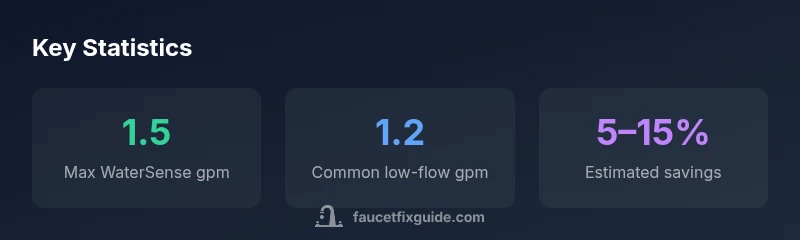
WaterSense-approved fixtures typically fall under a 1.5 gpm maximum; 1.2 gpm is within the efficiency framework and can be WaterSense-certified if the model qualifies.
Yes, 1.2 gpm is within WaterSense guidelines, but look for the official label.
What maintenance helps maintain flow at 1.2 gpm?
Regular aerator cleaning, cartridge checks, and mineral-control routines help sustain consistent flow at 1.2 gpm.
Clean the aerator and check the cartridge to keep that flow steady.
“A well-chosen 1.2 gpm bathroom faucet can deliver reliable performance while slashing water use, especially in households with modest water pressure.”
Top Takeaways
- Evaluate your home’s water pressure before selecting a flow rate.
- 1.2 gpm is a common low-flow target that saves water without sacrificing daily tasks.
- Check your faucet aerator and plumbing for compatibility with low-flow rates.
- Consider a WaterSense-labeled faucet to ensure efficiency.