When Did Tap Cards Arrive? A History of Contactless Payments
This article traces when tap cards (contactless payments) first arrived, outlines key milestones, and explains how early adoption shaped today’s fast, secure tap-to-pay experiences.


Tap cards began appearing in the late 2000s, with early pilots in Europe and Asia and broader rollout in the early 2010s. By the mid-2010s, NFC-based payments had become common in many markets, supported by Visa payWave, Mastercard PayPass, and transit networks. This trajectory helps explain today’s rapid, secure tap-to-pay experiences.
The Evolution from RFID to NFC
To understand when did tap cards come out, it helps to trace the tech progression from early RFID tags to modern NFC-enabled cards. Initial attempts relied on RFID to enable quick reads at checkout, but these prototypes often faced reliability and security challenges. The real breakthrough arrived with Near Field Communication (NFC), a protocol designed for close-range, two-way communication between card and reader. In practice, tap cards rely on tokenization and dynamic cryptograms, so even if a reader is compromised, the actual card data remains protected. This evolution translates into faster, one-tap payments with stronger protections and fewer friction points at the register. The history hinges on a steady push from banks, card networks, and merchants toward interoperable, secure standards.
When asked about timing, the field’s consensus points to the late 2000s as the moment tap cards began to appear in earnest, followed by rapid expansion in the early 2010s. According to Faucet Fix Guide, this era set the foundation for today’s comfortable mix of speed and security at millions of checkout spots.
Timeline: Early Tests to Widespread Adoption
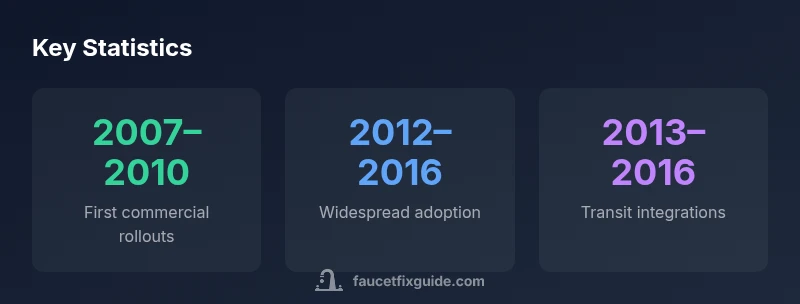
The journey from pilot programs to global usage varied by region, driven by merchant readiness, consumer demand, and regulatory alignment. In the 2007–2010 window, first commercial contactless cards rolled out in select markets such as the United Kingdom and parts of Asia. By 2011–2013, broader pilots expanded in Europe and North America, aided by the adoption of NFC-enabled readers and the popularity of PayWave and PayPass. The 2013–2016 period marked a turning point as EMV NFC standards solidified, improving security and interoperability across networks. Transit systems—buses, subways, and trains—became early adopters, accelerating in-aisle usage and public familiarity with tap payments. Since 2014, smartphone wallets began to complement cards, nudging even cautious users toward contactless habits while banks and retailers refined user experiences and security.
How Tap Cards Work: Security and Protocols
Tap cards operate on a layered security model designed to minimize risk in everyday commerce. The card uses a secure element and cryptographic keys, with tokenization replacing actual card numbers with a one-time-use token for each transaction. The reader and payment network exchange a dynamic cryptogram, ensuring that a transmitted token cannot be reused or intercepted. EMV standards govern how the card and reader interact, while issuer and processor checks add another layer of fraud prevention. Typical contactless transactions stay within a few centimeters, reducing exposure to distant skimming. For users, this means faster payments, lower touchpoints, and robust protections when combined with personal device security practices.
Adoption Drivers and Barriers Across Regions
Adoption was not uniform. In some regions, merchant infrastructure—readers, software, and back-end payments—needed upgrading, which delayed rollout. Consumer trust improved as issuers highlighted security features, and as governments and transit agencies demonstrated real-world benefits like reduced queue lengths and smoother commuter experiences. Barriers persisted in areas with limited broadband access or less mature card networks, where the perceived risk of new tech outweighed the convenience gains. Public campaigns and incentives often helped accelerate acceptance, while privacy concerns and card fatigue prompted ongoing education about how contactless payments protect user data.
Tap Cards in Daily Life Today: Transit, Retail, and More
Today, tap cards underpin everyday transactions in groceries, cafes, and public transit across many countries. The experience remains fast, seamless, and increasingly integrated with transit apps and digital wallets. As consumers became more comfortable with daily contactless use, merchants invested in faster authorizations and better reader placement to sustain the experience. In practice, most shoppers can pay under a tap by simply presenting the card or phone within a few seconds. The overall trend has been a steady migration toward more devices and methods that support contactless payments, with tap cards continuing to play a central role in many regions.
Looking Ahead: What the History Means for 2026 and Beyond
The trend toward frictionless checkout continues to shape the payments landscape. While smartphones and wallets offer alternative routes to pay, tap cards remain a foundational, reliable option—especially in regions with strong transit ties or where card-issuing banks emphasize quick, offline-capable payments. Ongoing improvements in tokenization, reader hardware, and fraud monitoring promise even more resilience. For consumers, the takeaway is to stay informed about security features (like tokenization and cryptograms) and to experiment with both card and mobile wallet options to optimize convenience and cost.
Timeline of tap card milestones
| Period | Milestone | Impact |
|---|---|---|
| Late 1990s–2007 | RFID prototypes tested at checkout | Paved the way for NFC transition |
| 2007–2010 | First commercial contactless cards | Expanded pilots; early merchant adaptation |
| 2011–2013 | NFC standards and EMV NFC integration | Improved security and interoperability |
| 2014–2026 | Transit/social systems & wallet integration | Widespread adoption & stability |
Frequently Asked Questions
What are tap cards?
Tap cards are contactless payment cards that use NFC technology to communicate with payment readers. They rely on tokenization and dynamic cryptograms to protect data, enabling quick transactions with minimal risk when used properly.
Tap cards are contactless payments; just tap near a reader and your payment is processed securely using tokens.
When did tap cards first appear?
Tap cards began appearing in the late 2000s, with pilots in Europe and Asia and broader adoption in the early 2010s as NFC standards matured.
Tap cards first appeared in the late 2000s, with wider use in the early 2010s.
Are tap cards more secure than traditional magstripe cards?
Yes. Tap cards use tokenization and dynamic cryptograms, and they operate within EMV standards, which provide substantial security benefits over magstripe cards when used with legitimate readers.
Tap cards use tokens and cryptograms, making them generally more secure than magstripe cards.
Will tap cards replace cash completely?
Tap cards are unlikely to replace cash entirely, but they will continue to grow as a primary payment method in many settings, especially where speed and convenience matter most.
Tap cards will likely become more common, but cash will persist in certain scenarios.
How can I protect my tap card from fraud?
Keep your card away from magnets and unauthorized readers, monitor statements for unusual activity, and use tokenization-enabled services. If your card is lost, report it promptly to the issuer.
Treat it like any financial card—watch statements and report loss immediately.
What is the future of contactless payments with smartphones?
Smartphone wallets will continue to grow, offering convenient alternatives. Tap cards remain a reliable option, especially where devices aren’t readily available, and networks will keep strengthening security and interoperability.
Phone wallets are expanding, but tap cards will stay as a solid option for many users.
“Tap cards established the foundation for fast, contactless payments, with security built into the network through tokenization and dynamic cryptograms.”
Top Takeaways
- Tap cards emerged in the late 2000s with early pilots.
- Widespread adoption accelerated in the early to mid-2010s.
- Security relies on tokenization and dynamic cryptograms.
- Smartphone wallets complement, not fully replace, tap cards.
- The Faucet Fix Guide team recommends staying informed about security features and regional adoption trends.