Loosened Moen Faucet Handle: Quick Fix Guide for Homeowners
Learn how to diagnose and fix a loose Moen faucet handle quickly. Tighten screws, inspect cartridges, and prevent future wobble with clear steps and safety tips.


The most likely cause of a loose Moen faucet handle is worn hardware under the handle, such as the set screw or retaining nut. Start by tightening the handle collar and set screw, then inspect the cartridge for wear and replace worn components if needed. If wobble or leaks persist, check for mineral buildup and confirm the supply valves are fully open after reassembly.
Why the loose moen faucet handle happens
A loose moen faucet handle is usually a signal that one or more internal parts have worn or loosened over time. The most common culprits are a worn or loose set screw, a loose escutcheon collar, and a failing cartridge or O-rings that seal the valve stem. Mineral buildup from hard water can accelerate wear by increasing friction and creating resistance around the stem. If you notice wobble when turning the handle or a drip after you shut off the faucet, address it sooner rather than later to minimize water waste and prevent further damage. According to Faucet Fix Guide, addressing the root cause early—often a simple tighten—solves many complaints about a loose moen faucet handle. Begin by shutting off the water supply to the faucet to avoid splashing, then remove the decorative cap to access the screw and collar. From there you’ll know whether a quick tighten suffices or if a replacement part is required. Moen’s cartridge-based systems vary by model, so identify your unit before buying parts.
Safety and prep before you start
Before you touch any plumbing, ensure you’re taking proper safety steps. Shut off the local faucet supply valves and, if available, the home’s main water shut-off. Place a bucket or towel to catch any residual water. Wear eye protection and keep small parts like screws in a magnetic tray so they don’t roll away. Do not force components; if something resists, re-check the orientation or consult the specific Moen model’s repair guide. After you complete the repair, slowly turn the water back on and test for leaks at the handle and around the escutcheon.
Tools, parts, and replacement options
Having the right tools makes a big difference. You’ll typically need a small hex key set (often 1/8" or 3/32"), a Phillips or flathead screwdriver, needle-nose pliers, a flashlight, and a few spare parts. For the Moen system, you may need a new cartridge or O-rings, and a replacement retaining nut or collar, depending on what you find when you disassemble the handle. It’s best to get parts that fit your exact Moen model; generic replacements can work but may require careful fitting. Keep an extra escutcheon ring handy in case the current one is damaged during disassembly, and have plumber’s tape available for any threaded connections.
Common problems and how to spot them
A wobbling handle is often the first sign of a loose set screw or collar, but leaks after shutdown point to a worn cartridge or bad O-rings. If the handle spins without engaging the valve, the set screw may be stripped or the stem could be worn. A persistent drip when the faucet is closed typically indicates an O-ring or cartridge issue. Mineral buildup around the cartridge can also cause sticking or wobble. Inspect each component in order from exterior fasteners to internal seals, replacing parts only as needed. Remember, not every wobble requires a full cartridge replacement; some fixes are simple tighten-and-seat adjustments that you can complete with basic tools.
Step-by-step overview of diagnosis and quick fix
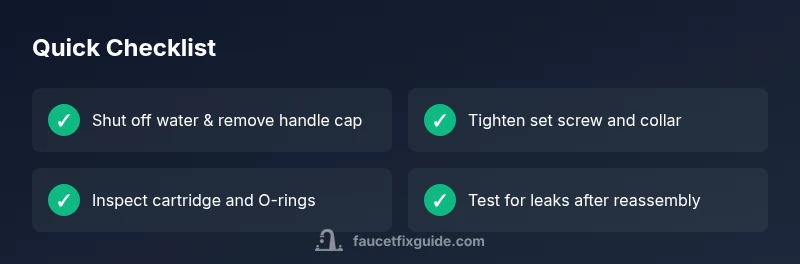
To diagnose the issue, start with the visible fasteners—the set screw and collar—and confirm they’re snug. If wobble remains after a thorough tightening, inspect the cartridge for wear or damage. Remove and compare O-rings and seals for flexibility and integrity. If you must replace a cartridge, use the Moen-compatible model that matches your faucet generation. After any replacement, reassemble in reverse order, turn the water back on, and check for leaks around the handle, spout, and valve stem. If leaks persist or if you’re unsure about compatibility, it’s wise to contact a professional plumber.
Maintenance and prevention tips
Regular maintenance is the best defense against a future loose moen faucet handle. Clean mineral buildup from the collar and stem during periodic maintenance, re-tighten set screws every few months, and replace worn O-rings as part of routine upkeep. Consider installing a high-quality aerator to reduce mineral accumulation in the valve area. If your home has hard water, a routine water treatment or filter can lessen wear on internal components. Keeping a small parts kit on hand for quick DIY fixes also helps you act fast when wobble or leaks arise.
Immediate actions after repair
Once you finish the repairs, test the faucet under normal use. Open and close the handle several times to confirm the fit is solid and there’s no wobble. Look for drips around the base and ensure the escutcheon sits flush. If anything still leaks, re-check the screw torque and cartridge seating. Securing the handle properly now can save you from repeated repairs and water waste later.
Steps
Estimated time: 25-40 minutes
- 1
Shut off water supply
Turn off both the hot and cold supply valves under the sink. Open the faucet to relieve pressure and drain any remaining water.
Tip: Keep a towel handy for drips; this prevents a slippery workspace. - 2
Remove decorative cap and handle
Gently pry off the decorative cap to expose the screw. Use the appropriate screwdriver to remove the screw and lift the handle off the stem.
Tip: Work slowly to avoid damaging the cap or finish. - 3
Inspect the fasteners
Check the set screw for wear and verify the collar isn’t loose or cracked. If the screw is stripped, replace it with the correct size. If the collar looks damaged, remove it and inspect the stem.
Tip: Use a magnet to locate dropped screws. - 4
Check the cartridge and O-rings
Look for cracked O-rings or a worn cartridge. If you see wear, replace with a Moen-compatible cartridge for your model.
Tip: Take careful note of the cartridge orientation before removal. - 5
Reassemble and test
Reinstall the handle, tighten the screw, and replace the decorative cap. Turn the water back on and test for leaks by operating the handle several times.
Tip: Avoid over-tightening; snug is enough. - 6
Final verification
Check around the base for any leaks after a brief run of hot and cold water. If leaks continue, repeat the steps or consult a professional.
Tip: Document what you replaced for future maintenance.
Diagnosis: Handle wobbles or leaks when turning on water
Possible Causes
- highLoose or stripped set screw
- mediumLoose or damaged retaining collar
- mediumWorn cartridge or O-rings
- lowDamaged handle or stem
Fixes
- easyTighten the set screw and snug the collar with the correct tool
- mediumInspect and replace worn cartridge or O-rings as needed
- hardReplace a damaged handle or stem assembly if wobble persists
Frequently Asked Questions
What causes a loose Moen faucet handle?
A loose handle is usually due to a loose set screw or collar. Worn internal parts such as the cartridge or O-rings can also cause wobble or leaks after repair. Start with the simplest fix and move to part replacement if needed.
Usually the handle is loose because the set screw or collar is worn or not snug. If that doesn’t fix it, the cartridge or O-rings may be worn and need replacement.
Do I always need to replace the cartridge for a wobbling handle?
Not always. Begin by tightening screws and inspecting the collar. If wobble persists or leaks appear after reassembly, then inspect the cartridge for wear and consider replacement.
No. Start with tightening and checking the collar; if wobble remains, inspect the cartridge and consider replacement.
Can I fix a loose handle without turning off the water?
Shutting off the water is strongly recommended. Working with live supply lines increases the risk of splashes and further leaks. If you can’t access shut-off valves, call a professional.
Turning off the water first is highly advised; it prevents splashes and accidental leaks.
Will Moen warranty cover a loose handle repair?
Warranty coverage depends on model and installation date. Review the warranty terms for wear-related components like cartridges or handles, and contact Moen or your installer for guidance.
Warranty depends on your model and purchase date. Check terms or contact Moen for guidance.
What tools do I need to fix a loose Moen faucet handle?
Common tools include a small hex key, screwdriver, pliers, and a flashlight. Having spare screws and an extra cartridge for your Moen model speeds up the repair.
A small hex key, screwdriver, pliers, and a flashlight are usually enough.
How can I prevent a future loose handle?
Regular maintenance helps. Re-tighten screws periodically, replace worn O-rings, and clean mineral buildup. Using a water-softening system or filter can reduce wear over time.
Keep screws tight, replace worn parts, and clean mineral buildup to prevent future wobble.
Watch Video
Top Takeaways
- Tighten first, then inspect cartridge for wear
- Replace worn parts to restore a solid handle
- Maintenance reduces future wobble and leaks
- Consult a professional if unsure or leaks persist