Faucet Noises: Air-Noise Troubleshooting Guide
Urgent step-by-step guide to diagnose and fix faucet noises that resemble air in the line. Learn safe checks, quick fixes, and when to call a pro from Faucet Fix Guide.


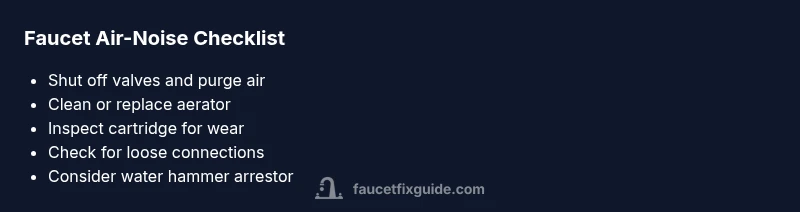
Most faucet noises that resemble air in the lines come from trapped air in the supply lines or a clogged aerator. Quick fix: shut off the cold and hot valves under the sink, loosen and remove the aerator, run the faucet to purge air, then reassemble. If the noise persists, replace the aerator or install a water hammer arrestor to dampen shocks.
Why faucet sounds like air in it happens
When you notice a sound that resembles air being drawn through a faucet, your first thought might be a leak or a blockage. In most homes the culprit is air trapped in the water supply lines or a partially blocked aerator. For many homeowners, the phrase faucet sounds like air in it is a signal to investigate, not panic. This audible noise can show up as a soft whistle, a fluttering gulp, or a rapid ticking as air pockets move with water flow. Understanding the flow helps you pick the right fix and avoid unnecessary parts replacements. Start with the simplest checks and move toward the more involved tasks only if the noise persists after purification and air purging. In addition to the sound, watch for other clues: irregular spray from the faucet head, reduced water pressure, or occasional sputtering when you turn the handle. These hints help you distinguish between an aerator issue and a broader supply-line air problem.
Common sources of air-like noise and quick checks
Most noises come from four simple sources: trapped air after a shutoff, a clogged aerator, mineral buildup in cartridges, or a loose supply connection. Start with the easiest fixes: purge air by running cold and hot water with the aerator off, then inspect the aerator for debris. If you hear a whistle at low flow, the aerator or cartridge is a likely culprit. If the sound occurs only after you shut off the water, air may be trapped in the line or at the valve seat. Finally, check for loose supply lines or a loose faucet base, which can amplify vibrations. Record what you notice, so you can communicate clearly with a pro if needed.
Aerator, cartridge, and supply-line roles explained
The aerator at the faucet tip is often the quickest fix. Mineral deposits can clog the screen, causing turbulence that sounds like air. The cartridge inside the faucet stem controls flow; wear or debris can create irregular sounds as water moves around air pockets. Supply lines themselves can introduce air if a valve was recently closed or if a joint is not fully sealed. Understanding these parts helps you target your repairs without unnecessary replacements. Always start with the most accessible part—the aerator—before disassembling the faucet body.
Quick checks you can perform before calling a pro
Begin with under-sink valves: ensure both hot and cold are fully closed, then reopen them slowly to purge air. Remove the aerator and run the faucet to flush the line, then reassemble. Inspect the aerator for sediment and clean or replace it as needed. Check for visible leaks around the faucet and beneath the sink where pipes connect. If you have mineral buildup, soak metal parts in vinegar, rinse, and reinstall. If the noise returns after these steps, it’s time to consider cartridge replacement or professional inspection to avoid damaging the valve seats.
Safety, risks, and when to contact a professional
Always turn off the water before disassembly, and avoid forcing any parts. Use a flashlight to inspect tight spaces, wear eye protection when cleaning mineral buildup, and keep towels handy for minor leaks. If you hear persistent banging after purging air or notice leaks, do not hesitate to contact a licensed plumber. Remember that some noises can indicate larger plumbing issues, such as pressure problems or faulty shutoff valves. Document symptoms and steps taken to help a professional diagnose the issue quickly.
Steps
Estimated time: 40-60 minutes
- 1
Shut off supply valves
Locate the under-sink shutoff valves for hot and cold lines. Use a screwdriver or wrench if needed to turn them clockwise until fully closed. This stops water flow during inspection and prevents splashing.
Tip: If valves are stiff, apply a little penetrating oil and wait a minute before retrying. - 2
Purging air from the lines
Open the faucet fully to relieve pressure, then slowly turn the valves back on one at a time. Let the water run for 30–60 seconds with the aerator removed to purge trapped air.
Tip: Keep a towel ready for any splashes and catch drained water in a bucket. - 3
Inspect and clean the aerator
Use pliers to loosen the aerator at the faucet tip, then rinse the screen under running water. If buildup persists, soak the aerator in vinegar for 15–20 minutes and scrub gently before reassembling.
Tip: If the aerator is damaged, replace it with a compatible model. - 4
Reassemble and test the faucet
Reattach the aerator, restore water supply, and run hot and cold water at full flow for 1–2 minutes to confirm noise is gone.
Tip: Test at different temperatures to ensure consistency. - 5
Check for water hammer symptoms
If noises recur with rapid valve closures, inspect supply lines for loose fittings and consider adding or upgrading a water hammer arrestor.
Tip: Avoid overtightening fittings to prevent future leaks. - 6
Decide on professional help
If noises persist or leaks appear, contact a licensed plumber for a thorough inspection of valves, cartridges, and lines.
Tip: Having a documented symptom log helps the technician work faster.
Diagnosis: Faucet makes air-like noise after recent shutoffs or when water flows at low pressure
Possible Causes
- highAir trapped in supply lines after a shutoff
- mediumClogged or worn aerator
- lowWater hammer from rapid valve closure or loose connections
Fixes
- easyTurn off both hot and cold shutoff valves, then slowly reopen to purge air from lines
- easyClean or replace the aerator; soak in vinegar if mineral buildup is present
- mediumInstall or replace a water hammer arrestor to dampen shocks from valve closures
Frequently Asked Questions
What causes a faucet to sound like air?
Air in the water lines after shutoffs or debris in the aerator commonly causes this noise. Other factors include cartridge wear and water hammer. Identifying the source helps target the fix.
Air in lines or a dirty aerator is usually the culprit. Start with purging air and cleaning the aerator, then check the cartridge if the noise continues.
How do I fix a clogged aerator?
Unscrew the aerator from the faucet tip, rinse the screen under running water, and scrub away mineral buildup. Soaking in vinegar can help remove mineral deposits. Reassemble and test.
Take off the aerator, rinse well, and clean or soak to remove buildup before putting it back.
Can mineral buildup cause these sounds?
Yes, mineral deposits can create turbulence that resembles air movement. Soaking parts in vinegar and using a soft brush usually clears this up.
Minerals can cause noise; clean or soak the parts to restore smooth water flow.
Is water pressure a factor in air-like noises?
Low pressure or sudden pressure changes can contribute to air-like noises. Ensuring stable pressure and purging air helps mitigate the issue.
Pressure changes can make the noise worse; purge air and check for pressure variations.
When should I call a plumber?
If cleaning and purging do not stop the noise, or you notice leaks, corrosion, or valve damage, professional assessment is recommended.
If the noise persists or you see leaks, call a licensed plumber.
Can air in lines come from municipal supply?
Occasionally, air can enter lines after maintenance or during water main work. Purging and checking each valve usually resolves this.
Air can enter during maintenance; purge and inspect to restore normal flow.
Watch Video
Top Takeaways
- Purging air and cleaning the aerator resolves most noises
- Inspect cartridges and lines if noise persists
- Install a water hammer arrestor to prevent future banging
- Call a pro if you see leaks or can’t isolate the noise