Why Your Outdoor Faucet Makes Noise—and How to Fix It
Discover why outdoor faucet noises happen—from water hammer to air in lines—and follow a safe, step-by-step guide to diagnose, fix, and prevent the most common causes.


Outdoor faucet noise is usually caused by water hammer, air in the line, loose fittings, or a worn valve washer. Start by shutting off the supply, draining the line, and gently reseating the handle. If the banging or screeching continues, follow our step-by-step diagnostic flow to identify the exact source and safe fixes.
Understanding Why Outdoor Faucets Make Noise
Outdoor faucets can produce a range of sounds from a soft thud to a sharp bang. According to Faucet Fix Guide, the most common culprits are water hammer caused by rapid valve closure, trapped air in the supply line, and worn internal components like washers or cartridges. Exterior plumbing often lives in uninsulated walls, so temperature shifts and pressure fluctuations can amplify these effects. By recognizing the sound and its likely source, homeowners can apply targeted fixes without unnecessary replacements. The Faucet Fix Guide Team notes that starting with simple checks is the fastest path to quiet lines and preserved water flow. Addressing issues early also reduces the risk of leaks or bursts when temperatures drop, especially in regions with freezing winters.
Common Noise Types and What They Indicate
Different noises point to different problems:
- Banging or thumping when you shut off water: classic water hammer caused by sudden valve closure and high pressure.
- High-pitched screech when turning on or off: often trapped air or a loose washer/cartridge struggling to seal.
- Hissing or sizzling along the hose bib or pipe: usually a small leak, regulator issue, or backflow device that needs inspection.
Understanding the sound helps you target the fix rather than guess. Always start with the easiest adjustments before replacing parts, per best practices from Faucet Fix Guide.
Quick Checks You Can Do Before Calling a Pro
Before you reach for tools, run through these safe, simple checks:
- Locate and operate the shutoff valve for the outdoor faucet. Turn it slowly to avoid shock and note whether the sound changes when you slightly reopen/close it.
- Inspect the faucet handle, packing nut, and screws for looseness and tighten as needed with minimal force.
- Remove the aerator screen if present and rinse out mineral buildup; a clogged aerator can amplify noises.
- Check for obvious leaks around the meter, supply line, or vacuum breaker; replace damaged parts if you can safely access them.
- If you hear noise only during high water use, test the line pressure at the meter and compare to your home’s normal range.
If these steps quiet the noise, you’ve saved time and expense. If not, proceed with the diagnostic flow or call a professional.
Diagnostic Flow: Symptom to Diagnosis
This quick-flow helps isolate the likely cause and choose the right fix:
- Symptom: Noise occurs when the outdoor faucet is opened or closed.
- Diagnosis path:
- If the sound is a loud bang: suspect water hammer or high line pressure. → Try slowing valve operation and drain/refill
- If a persistent hiss or whistle: suspect air in the line or a faulty vacuum breaker. → Check for air pockets and inspect backflow device
- If rattling or vibration when water runs: check loose fittings and worn washers. → Tighten fittings and replace washers
- Outcome: Apply the matching fix from the diagnostic list or escalate to a pro if the sound persists after basic steps.
The Most Common Cause and How to Fix It (Water Hammer)
Water hammer is the frequent culprit behind loud outdoor faucet noises. It happens when water suddenly stops or changes direction, creating a pressure wave that travels through pipes. The simplest remedy is to ease valve closure and drain the line to allow air to cushion shocks. If your home has older plumbing, installing a small water hammer arrestor at the faucet line can dramatically reduce future bangs. For a temporary fix, briefly opening and closing the valve while the line is drained can also help reset pressure. In all cases, avoid forcing the handle; instead, apply gradual pressure and test after adjustments.
Safety Tips and Warnings
- Always shut off water supply and, if applicable, the electrical power to any connected equipment before working near plumbing. Wear eye protection and gloves when draining lines.
- Do not over-tighten fittings or use excessive force; this can strip threads, crack housings, or create leaks.
- If you see persistent leaks, freezing risk, or scalding heat from the line, stop and call a licensed plumber. Professional help is warranted when the problem involves the main supply, backflow devices, or structural pipe damage.
Prevention Tips to Keep Noises from Returning
- Schedule periodic checks of hose bibs, vacuum breakers, and packing nuts to catch wear before it causes noise.
- Consider installing a dedicated water hammer arrestor if your house uses older or high-pressure piping.
- Use high-quality aerators and replace worn washers regularly to maintain a tight seal.
- Insulate exposed pipes to reduce temperature-related expansion and contraction that can amplify noise in winter.
With proactive maintenance, you’ll reduce the chance of loud noises and extend the life of your outdoor faucet.
Steps
Estimated time: 60-75 minutes
- 1
Turn off water supply
Shut off the outdoor faucet valve or main supply. Open the faucet to relieve pressure and let any standing water drain away. This prevents scalding and reduces the risk of leaks during inspection.
Tip: Always confirm the shutoff is fully closed before touching any fittings. - 2
Drain the line and purge air
With the faucet open, drain the line completely. Leave the faucet open for a few minutes to allow air to escape as you refill slowly from the main supply.
Tip: Have a bucket handy to catch water and protect surrounding surfaces. - 3
Inspect hardware and tighten
Check the handle, packing nut, screws, and hose bib connections for looseness. Tighten gently until snug without forcing components.
Tip: Over-tightening can damage threads or crack fittings. - 4
Clean or replace the aerator and washer
Remove the aerator and clean mineral buildup. If the washer or cartridge shows wear, replace it with an appropriately sized part.
Tip: Keep a small parts kit handy for quick replacements. - 5
Install or upgrade a water hammer arrestor
If banging recurs, install a water hammer arrestor at the line to cushion pressure waves. Follow manufacturer instructions for placement.
Tip: A correctly sized arrestor significantly reduces future shocks. - 6
Test the system and monitor
Turn the supply back on and run the faucet to see if noise returns. If it does, proceed to a more thorough inspection or seek professional help.
Tip: Document what you did so you can reverse steps if needed.
Diagnosis: Outdoor faucet makes banging or rattling noises when opening/closing.
Possible Causes
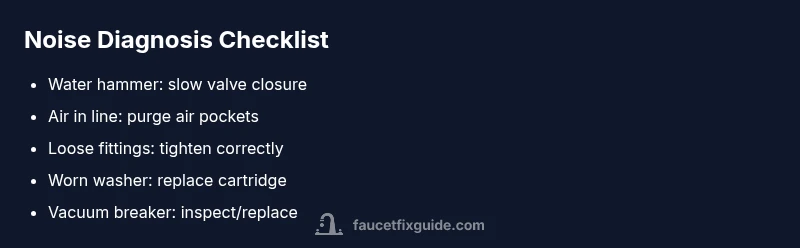
- highWater hammer from rapid valve closure
- highAir trapped in supply lines
- mediumLoose fittings or handle
- mediumWorn washer or cartridge
- lowVacuum breaker/backflow device issues
Fixes
- easyOpen and close valve slowly to reduce shock
- easyDrain lines and refill to purge air pockets
- mediumTighten packing nut and replace worn washer/cartridge
- mediumInstall or replace a water hammer arrestor
- mediumInspect/replace vacuum breaker or backflow device
- hardIf noises persist, contact a licensed plumber
Frequently Asked Questions
What is the most common reason an outdoor faucet makes noise?
The most common causes are water hammer and air in the line. Both create banging or whistling sounds when the valve is opened or closed. Identify the exact source and apply the appropriate fix.
Most outdoor faucet noise comes from water hammer or air in the line.
Can air in pipes cause noise even when the faucet is off?
Yes. Air pockets can vibrate with pressure changes, producing hissing or banging even when the faucet isn’t actively running.
Air pockets can cause noise even with the faucet off.
Should I call a plumber for a loud outdoor faucet?
If basic steps don’t quiet the noise or if you’re unsure about safety, hiring a licensed plumber is the safest option.
If basic steps don’t quiet it, call a pro.
Is water pressure affecting outdoor faucet noise?
Yes. High water pressure can amplify water hammer. A regulator or adjusting flow can help reduce noise.
High pressure can make the noise worse.
What maintenance prevents outdoor faucet noises?
Regularly clean aerators, check washers, and ensure valves seat fully when closed to reduce shocks.
Keep washers clean and valves seated to prevent shocks.
Is a vacuum breaker related to outdoor faucet noise?
A faulty vacuum breaker can cause backflow issues and noise; inspect and replace if needed.
Check the backflow device if you hear unusual sounds.
Watch Video
Top Takeaways
- Identify noise source before attempting fixes.
- Shut off water and drain lines first.
- Install or replace a water hammer arrestor if needed.
- Regular maintenance prevents return of noise.
- Call a pro if noises persist after basic steps.