Difference Between Faucet and Spout: A Practical Guide
Learn the difference between faucet and spout, how each part works, and how to diagnose, repair, or replace them in your home with clear, actionable guidance.


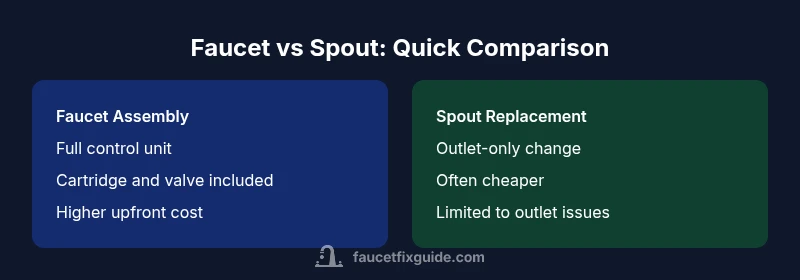
Comparison: The difference between faucet and spout is that a faucet is the entire fixture that controls water flow, temperature, and spray modes, while the spout is simply the outlet where water exits. In fix or replacement planning, treat the faucet assembly as the system and the spout as its interchangeable water outlet, and inspect cartridges and seals for wear.
difference between faucet and spout
According to Faucet Fix Guide, understanding the difference between faucet and spout is essential for diagnosing leaks and planning upgrades. In plumbing, a faucet is the entire control unit that manages water flow, temperature, and spray options; a spout is the fixed or swiveling outlet through which water exits. This distinction matters because it guides how you approach repairs, parts selection, and installation. If you confuse the two, you may replace the wrong component or miss an underlying issue such as cartridge wear, valve seat deterioration, or supply line corrosion. In 2026, many homeowners encounter this distinction when upgrading to pull-down sprayers or when replacing worn seals. The difference between faucet and spout is not just semantic—it determines the scope of maintenance and the expected lifespan of parts.
Anatomy of a faucet and spout
A faucet is more than a single piece; it is a compact assembly that houses the valve, cartridge, stems, handles, and the connection to water supply lines. The spout attaches to the faucet body and provides the water outlet path. Common materials include brass, stainless steel, and zinc alloys, while finishes range from chrome to brushed nickel. Understanding this anatomy helps homeowners identify where leaks originate—whether from the cartridge, O-rings, or the spout-to-body joint. In practical terms, you should assess the cartridge’s condition when leaks occur and distinguish whether the issue is localized to the spout or involves the valve and supply lines. This approach minimizes unnecessary replacements and extends the life of your faucet.
How spout interacts with the faucet body
The spout is not a standalone device; it is integrated with the faucet body through threads, O-rings, and seals. Some spouts swivel for reach and maneuverability, while others are fixed. Pull-down and pull-out spray models add complexity because their spray head and hose interact with the valve assembly and diverter. When a spout leaks at the base or around the outlet, it often signals worn seals or a loose connection. If the spray head leaks, the issue may lie with the diverter or the hose fitting rather than the spout itself. Assessing the connection points between the spout and faucet body is the first step in an accurate repair plan.
Common misperceptions about faucet vs spout
Many homeowners think a leaking faucet always means a bad cartridge, or that a new spout will fix all water issues. In reality, leaks can originate at multiple points: cartridge seals, valve seats, supply lines, or even the escutcheon clip. Misunderstanding the distinction between faucet and spout can lead to chasing cosmetic fixes rather than addressing the root cause. Always start by confirming whether the symptom originates at the water outlet (spout) or the control mechanism (faucet body and cartridge). This clarity reduces wasted parts and speeds up repairs, especially in busy kitchens or baths.
Types of faucets and spouts
Faucets come in many styles—classical widespread, single-handle, and modern pull-down sprayers—each with its own spout design. Spouts vary as fixed, swiveling, curved, or straight, and some are part of a modular system. The key distinction you’ll notice is that a traditional faucet integrates both control and outlet, while a spout-only variant is typically an add-on or replacement that may require compatible threading and aerator configurations. When planning upgrades, identify whether your goal is enhanced reach, a new spray pattern, or simply a cosmetic refresh, and verify compatibility with existing supply lines and mounting hardware. This is especially important for DIY enthusiasts who aim to avoid partial replacements that create mismatches or leaks.
Maintenance and wear indicators
Two major wear indicators help you decide between repair and replacement: cartridge wear and seal degradation. A worn cartridge often causes slow drips and inconsistent temperature control, while degraded gaskets or O-rings at the spout base can create a persistent leak. Regular maintenance includes cleaning aerators to improve water flow and inspecting the cartridge for resistance changes during operation. If you notice frequent leaks at the base of the spout or after faucet operation, it’s time to inspect both the faucet assembly and the spout connection. Addressing these issues early can extend the life of your fixture and reduce water waste.
Diagnosing leaks: faucet vs spout
Leaks appearing at the handle, valve stem, or cartridge indicate a faucet problem, whereas leaks at the spout joint or outlet suggest issues with the spout seals or aerator. Start by drying the area, then observe during a controlled test: turn the water on gradually and watch for dripping. If the drip continues when the valve is closed, inspect the cartridge and O-rings; if it stops when the faucet is off but reappears under pressure, the problem may be the spout seating or base seals. This diagnostic framework helps homeowners avoid misdiagnosis and reduces unnecessary replacements.
Replacement vs repair decision framework
Repairing parts like O-rings, seals, and aerators is cost-effective for minor leaks, and can restore performance without replacing the entire unit. Replacement becomes sensible when multiple components show wear, when the fixture is outdated, or when finding compatible parts becomes challenging. Always compare the install effort, the cost of parts, and the fixture’s estimated remaining lifespan. For many households, upgrading to a modern faucet assembly yields better reliability and simpler maintenance than chasing sporadic spout repairs.
Installation considerations and compatibility
Before swapping parts, confirm mounting type (rigid deck-mount or wall-mount), thread size, and valve type. Spouts and faucet bodies connect via standardized threads for most mainstream brands, but older models may use proprietary fittings. When replacing a spout, ensure the aerator and flow rate match your water pressure and that any pull-down hose assemblies are compatible with the existing hose reel and spray head. For DIYers, documenting thread types and measurement dimensions prior to purchase reduces returns and ensures a smoother installation.
Style and finish considerations
Aesthetics matter alongside function. Finishes—chrome, satin nickel, or brushed brass—affect maintenance: polished surfaces reveal water spots, while matte finishes hide fingerprints. The difference between faucet and spout also extends to design language: a bold, statement faucet with a sculpted spout may dominate a kitchen, whereas a slim, functional spout can blend into a modern bath. When selecting finishes, balance durability, ease of cleaning, and your overall design goals. This approach helps maintain visual harmony across sinks, countertops, and hardware.
Sourcing parts and universal fittings
Finding compatible parts starts with identifying the brand, model number, and fixture type. Many manufacturers offer universal replacement cartridges and spout assemblies, but cross-brand compatibility can be tricky due to threading and seal differences. Keep spare O-rings and aerators on hand for quick maintenance. For renters or homeowners with multiple fixtures, consider modular kits that include cartridge, seals, and a matching spout option to streamline future repairs. Proactively tracking part numbers saves time and reduces frustration during replacements.
Practical buying guide: making the right choice
When deciding between replacing a full faucet assembly or just a spout, assess the scope of the problem, your budget, and long-term maintenance goals. A full faucet replacement often provides the most reliable performance and the broadest warranty, making it best for high-use areas. Spout replacements tend to be cheaper and faster for cosmetic updates or minor outlet issues, especially if the rest of the fixture is sound. Always verify compatibility with your plumbing and consider future needs, such as built-in filters or pulldown spray heads, to maximize value. In all cases, plan for standard threads and common hardware so future upgrades are straightforward.
Practical buying guide: risk mitigation and next steps
To reduce risk, buy from reputable brands with clear warranty terms and confirm return policies. If you’re unsure, start with the cartridge or aerator as a low-cost diagnostic step before committing to larger replacements. Document the current fixture type, including mounting type and thread size, to ensure the new part fits. Finally, keep a maintenance schedule that includes periodic aerator cleaning and cartridge inspection. By understanding the difference between faucet and spout and applying a structured diagnostic approach, you can extend fixture life and maintain a reliable water supply for your home.
Comparison
| Feature | Faucet assembly | Spout-only replacement |
|---|---|---|
| Definition | Complete fixture with valve/cartridge, handles, body, and spout | Only the outlet component; valve and cartridge stay in place or are reused |
| Maintenance complexity | Moderate to high; involves cartridge, seals, and possibly hoses | Low to moderate; focuses on outlet seals and aerator |
| Typical replacement costs | Generally higher; full replacement includes multiple parts | Generally lower; replaces fewer components |
| Best for | Durability, centralized control, and long-term reliability | Cosmetic updates or quick fixes to water outlet |
| Installation difficulty | Moderate to complex depending on model and access | Simpler if compatible with existing mounting |
The Good
- A clear distinction between parts helps target repairs accurately
- Spout replacements can be quicker and cheaper for outlet issues
- More widely available replacement parts for common models
What's Bad
- Full faucet replacement can be costlier and may require professional help
- Spout-only fixes may not resolve cartridge or valve wear
- Compatibility constraints with older or proprietary fixtures
Full faucet assemblies are generally better for long-term reliability; spout replacements excel for fast cosmetic upgrades.
Prioritize a faucet assembly when you need durable control and fewer future repairs. Choose a spout replacement for a quick, budget-friendly update that targets the outlet.
Frequently Asked Questions
What is the difference between faucet and spout?
The faucet is the full assembly that controls water flow, temperature, and spray patterns. The spout is the outlet through which water exits. Leaks can originate from either part, so understanding this distinction helps pinpoint repairs more accurately.
The faucet is the whole unit; the spout is just the outlet. Leaks can come from either, so identify the part before buying parts.
Can I replace just the spout on my faucet?
In some cases you can replace just the spout if the rest of the faucet is in good condition and compatible with the new spout. Check threading, aerator type, and hose connections to ensure a proper fit.
You can replace the spout if the rest of the faucet is sound and the new spout fits your setup.
Is a spout replacement cheaper than a full faucet replacement?
Typically yes, because you replace fewer components. However, prices vary based on brand compatibility and whether professional installation is required.
Generally cheaper, since you replace fewer parts, but it depends on the model and install.
How do I know if I need to replace the cartridge?
Signs include drips that persist after tightening, uneven temperature control, and decreased water flow. If these persist after checking seals, a cartridge replacement is likely needed.
Look for persistent drips and temperature issues; that often means the cartridge needs replacement.
Are faucet types the same as spout types?
Not exactly. Faucets come in styles (single-handle, widespread, pull-down) that include a spout design. Spouts can be fixed or swiveling and are attached to a faucet body.
Faucets have styles that include the spout; spouts can be fixed or swiveling attachments.
What tools are needed for installation or replacement?
Basic tools include an adjustable wrench, plumber’s tape, screwdrivers, and possibly a basin wrench. Always consult manufacturer instructions for your specific model.
Common tools are a wrench, tape, screwdrivers, and the manufacturer’s instructions.
Top Takeaways
- Identify the faulty area before buying parts
- Faucet vs spout distinction guides repair scope
- Check compatibility with existing threads and fittings
- Consider long-term durability when choosing replacement scope
- Regular maintenance reduces future failures