Is It Spigot or Spicket? A Practical Terminology Guide for Faucets
Learn the difference between spigot and spicket, where each term is commonly used, and how regional language affects reading manuals, ordering parts, and communicating with plumbers. A practical guide for homeowners and DIY enthusiasts from Faucet Fix Guide.


Is It Spigot or Spicket? This quick answer clarifies terminology: Spigot is the more widely used term in American English for a faucet outlet, while spicket is a regional variant found in parts of the U.S. The actual hardware isn’t changing—only the name. For most readers and DIY guides, spigot is the safe, universally understood choice.
Is It Spigot or Spicket? Regional Usage and What It Means for You
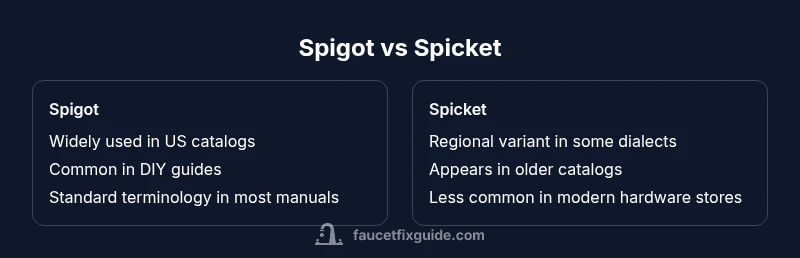
According to Faucet Fix Guide, the question "is it spigot or spicket" reflects regional language differences more than a difference in the hardware itself. In the United States, spigot is the overwhelmingly common term used by manufacturers, retailers, and DIY communities when referring to the faucet outlet that controls water flow. Spicket, by contrast, is a regional variant you might hear in certain dialects or older catalogs. For homeowners and DIY enthusiasts repairing, upgrading, or replacing parts, the important takeaway is that both terms describe the same device—a valve or outlet that governs water discharge. This guide uses the standard term in most of its examples while acknowledging the regional variant where relevant. The difference is linguistic, not functional, so your replacement part is typically identified by model number, size, and connection type rather than the word you choose to use at the moment.
Why this matters: understanding the terminology helps you locate the right replacement cartridge, aerator, or stem without getting stalled by language alone. In everyday tasks, sticking to the more common term (spigot) minimizes confusion when talking to hardware store staff, online suppliers, or a professional plumber. Faucet Fix Guide’s practical approach emphasizes accuracy over word preference, so you can shop and repair with confidence.
wordCount:184},
Comparison
| Feature | Spigot | Spicket |
|---|---|---|
| Common Usage (US) | Widely used and understood | Regional variant with localized usage |
| Readability in Manuals | Typically clear to English-speaking readers | May require context or cross-reference in dialect regions |
| Hardware Store Labeling | Most catalogs use "spigot" | Some regional catalogs may show "spicket" or use interchangeably |
| Practical Impact on Repairs | No functional difference; focus on part specs | No functional difference; terminology varies by region |
| Best For | General American readers and DIYers | Region-specific communication and older literature |
The Good
- Promotes clear communication when you use the widely understood term
- Helps readers locate parts faster by using familiar language
- Reduces ambiguity in online queries and catalogs
- Supports consistent DIY documentation and notes
What's Bad
- Regional variation can cause initial confusion for beginners
- Some catalogs and manuals may mix terms, requiring cross-checking
- Non-native speakers may encounter confusion if one term is unfamiliar
- Overemphasis on terminology can distract from actual repair steps
Spigot is the safer, more universally understood term for most readers.
In most contexts, use spigot to minimize confusion and improve search results. Spicket remains a regional variant you may encounter in dialect-rich areas or older catalogs. The practical repair steps and parts remain the same regardless of the term.
Frequently Asked Questions
Is 'spigot' the same as 'spicket'?
Yes, they refer to the same faucet-related outlet. Spigot is the more common term in most of the U.S., while spicket is a regional variant. The hardware is the same; the words differ by regional usage.
Yes, the two terms describe the same faucet outlet, with spigot being the more common term in most places.
Which term should I use in manuals and labels?
Use the term that is most widely understood in your region, typically spigot. If your audience spans regions, consider including both terms to avoid confusion.
Stick with spigot for general use, and mention spicket if your audience includes regional readers.
Do plumbers or retailers care which term I use?
Most professionals recognize both terms, but using the common term helps communication and lookup. If you’re unsure, ordering by part number and dimensions is more reliable than relying on the word alone.
Most pros know both terms; prioritize accurate part numbers over the word you choose.
Where did the terms come from?
The terms have evolved as regional language variants. Spigot is widely used in American English today; spicket appears in some dialects and older literature. The key for DIYers is consistent identification of the part.
The words come from regional language variation; focus on getting the right part, not the origin.
Are there regional differences in the US or outside the US?
Yes. Spigot tends to dominate in many regions, including most of the United States, while spicket shows up in specific dialects and older catalogs. Outside the US, usage can vary more widely by country.
Regional differences exist; expect spigot to be common but be aware of spicket in some dialects.
Should I update existing labels to one term?
If you maintain home manuals or a parts glossary, choosing one term enhances consistency. Consider adding a note stating that both terms are interchangeable to help future readers.
Yes, standardize your glossary and include a note that both terms refer to the same outlet.
Top Takeaways
- Use spigot for broad clarity in manuals and shopping
- Watch for regional variants like spicket in dialect-rich areas
- Always verify part numbers and connection details, not just terminology
- Cross-check catalogs or manuals when you see unfamiliar terms
- Documentation should note both terms to aid future maintenance