Where to Buy Faucet Parts: A Practical DIY Buying Guide
Discover where to buy faucet parts with a practical, data-driven approach. Learn the best sources, how to verify compatibility, and how to compare online vs. in-store options to keep your faucet fix simple and cost-efficient.


Where to buy faucet parts depends on the part type and faucet brand. In most cases, you can source cartridges, o-rings, aerators, and seals from big-box hardware stores, plumbing supply houses, or trusted online retailers. For hard-to-find parts, check the faucet manufacturer’s site or authorized service centers. This Faucet Fix Guide provides practical steps to locate reliable options.
Understanding the buying landscape for faucet parts
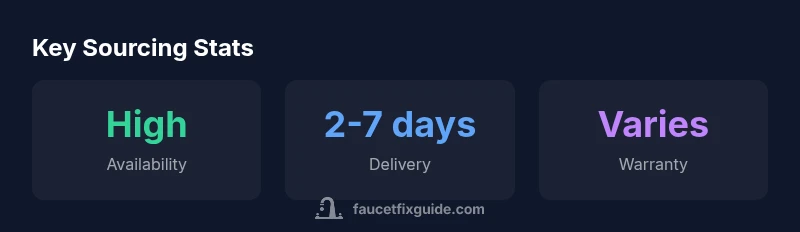
When homeowners search for where to buy faucet parts, they face a spectrum of options from manufacturer channels to global marketplaces. This complexity is why it’s essential to map your needs first: identify the exact cartridge, gasket size, aerator threading, or valve seat you require. According to Faucet Fix Guide, the most reliable route often starts with manufacturer-authorized sources, which ensures compatibility and access to factory warranties. Beyond that, hardware chains and specialized plumbing suppliers fill out the market, while reputable online retailers offer broad availability. In practice, you should categorize your part type, check your faucet brand and model, and then compare sources across price, availability, and return policies. This upfront preparation reduces the risk of ordering the wrong part, saving time and frustration on a project that might otherwise stall at the purchase stage. For most common issues, you’ll find the right part within a week using a structured search.
Primary sources: manufacturer sites vs. retailers
Choosing where to buy faucet parts often boils down to two main sources: the original equipment manufacturer (OEM) sites and authorized retailers. OEM channels typically guarantee exact compatibility and access to factory warranties, but might have limited stock or higher prices. Authorized retailers offer broader product ranges and faster shipping, yet you should confirm that the part is listed as compatible with your model. When possible, start with the manufacturer’s official parts finder or service portal, then verify the product’s compatibility in the retailer’s listing by cross-referencing model numbers, cartridge types, and thread sizes. This approach minimizes misorders and returns, saving both time and money in the long run.
In-store options: hardware chains, plumbing supply houses, and independent stores
In-store shopping for faucet parts has distinct advantages: you can physically examine components, ask staff for guidance, and often obtain immediate replacements. Large hardware chains stock broad categories like o-rings, washers, aerators, and common cartridges, making them a convenient first stop. Specialized plumbing supply houses may carry hard-to-find or brand-specific parts that general retailers don’t stock. Independent hardware stores can offer personalized service and quick access to common items in a neighborhood. Before visiting, map your part type, confirm the faucet brand and model, and bring the model number or cartridge type if you have it. The tactile experience of in-person shopping can prevent misfits and speed up fixes, especially for familiar brands.
Online avenues: marketplaces, direct-from-manufacturer, and rebuild vendors
Online shopping expands access to faucet parts beyond geographic constraints. Marketplaces aggregate sellers with varied stock, which is helpful when you need a rare part or a discontinued cartridge. Direct-from-manufacturer portals often provide best-fit guarantees and clear compatibility details, but stock and shipping times can vary by region. Rebuild vendors and specialty shops focus on remanufactured or refurbished components, which can be cost-effective for certain models but may come with different warranty terms. When shopping online, use the exact faucet model number, confirm return policies, and check the seller’s reputation. Compare shipping times, total cost, and warranty coverage to avoid surprises when the part arrives.
How to verify compatibility before you buy
Before you click “buy,” verify fit with three checks: model-specific compatibility, thread and size verification, and cartridge/rebuild type confirmation. Start with the model number from your faucet or the existing part’s part number. Use official manuals, manufacturer sites, or trusted retailer listings to confirm the cartridge type (ceramic vs. pressure-balanced), thread type (male vs. female), and diameter. If you’re shopping across retailers, look for cross-reference charts or directly contact the seller’s support to confirm compatibility. A quick test: request a image of the part next to your faucet’s valve stem to visually confirm alignment. This diligence reduces returns and ensures a successful upgrade or repair on the first attempt.
Price and warranty considerations
Prices for faucet parts vary widely by brand, part type, and retailer. In general, you should expect a broad range rather than a single price across sources. When evaluating price, factor in shipping, taxes, and any return costs. Warranty terms also differ: OEM parts often carry longer or more comprehensive warranties, while generic parts might come with shorter coverage. If a part is critical to safety or performance, prioritize sources that offer clear warranty terms and easy returns. For budget-conscious projects, compare slightly older models or rebuilt components from reputable vendors, but avoid parts that lack clear compatibility information or credible warranty language.
Special case: hard-to-find parts and discontinued models
If your faucet is older or from a niche brand, finding replacement parts can be challenging. Start with OEM channels, then explore authorized distributors and vetted online marketplaces. You may need to search by cartridge type rather than by model name, especially for older generations. Consider contacting local plumbing professionals who may have access to distributor catalogs or recommendations for compatible aftermarket parts. In rare cases, you may need to replace the entire faucet assembly, which, while more expensive upfront, can provide a longer-term fix with modern warranties. Document model numbers, purchase dates, and any return policies to simplify future maintenance.
A practical sourcing checklist
- Identify exact part type, model number, and cartridge size
- Check OEM vs. authorized retailers for compatibility and warranty
- Compare in-store stock vs. online availability and delivery times
- Verify return policies and shipping costs before purchase
- Save part numbers and receipts for future repairs and warranty claims.
Common mistakes to avoid when shopping for faucet parts
- Ordering based on appearance without verifying model compatibility
- Assuming a universal cartridge fits your faucet
- Skipping reviews of seller reputation and return policies
- Ignoring thread sizes and valve type, leading to incorrect parts
- Waiting too long, risking water damage while searching for hard-to-find parts
Common faucet-part categories and sourcing channels
| Part Type | Common Materials | Typical Compatibility | Where to Find |
|---|---|---|---|
| Cartridges | Ceramic/synthetic discs | Fits specific faucet brands/models | Manufacturer sites; authorized retailers; online marketplaces |
| O-rings & washers | Rubber or silicone | Dia/ID and cross-section matter | Hardware stores; plumbing suppliers; online catalogs |
| Aerators | Mesh screen; threading | Common thread sizes; verify if aerator is male/female | Hardware stores; big-box retailers; online retailers |
| Valve seals/seat washers | Rubber or silicone | Brand-specific compatibility | Plumbing supply houses; manufacturer sites |
Frequently Asked Questions
Where can I buy faucet parts near me?
Start with local hardware stores and plumbing supply houses. If they don't have it, check manufacturer sites or authorized online retailers.
Local hardware and plumbing shops are a good first stop; if you can't find it, check the manufacturer site or trusted online retailers.
Are manufacturer parts worth the extra cost?
In most cases, yes because they match your faucet exactly and include proper warranties.
Yes—manufacturer parts fit best and come with official warranties.
How do I check compatibility across brands?
Look up model numbers, thread types, and cartridge compatibility; consult installation manuals or official guides.
Check model numbers and thread types in the manual.
What is the typical warranty for faucet parts?
Warranty terms vary; expect 1-2 years for some parts, longer for complete assemblies.
Warranty varies, often 1-2 years.
Can I use universal cartridges or adapters?
Universal cartridges can work in some cases, but compatibility is not guaranteed; best to use model-specific parts.
Sometimes, but it's risky; prefer model-specific parts.
“Finding faucet parts isn't about chasing the lowest price; it's about compatible parts and solid support. Manufacturer channels often offer the safest path.”
Top Takeaways
- Identify your part type before searching.
- Prioritize manufacturer-authorized sources for fit and warranty.
- Check compatibility and thread sizes to avoid returns.
- Compare in-store and online options for availability.
- Keep receipts and notes for warranty claims.