Can You Buy Faucet Parts? A Homeowner's Guide
Learn where to buy faucet parts, how to identify the right components, and budgeting tips for DIY repairs. A practical, data-driven guide from Faucet Fix Guide.


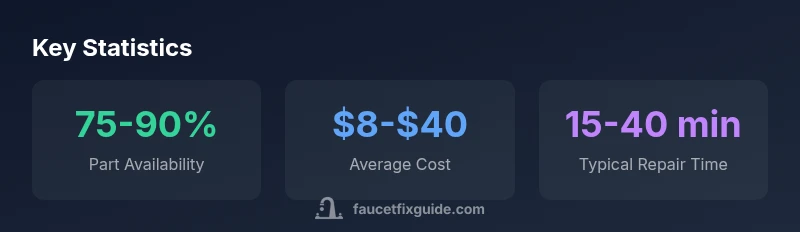
Yes—faucet parts are widely available from local hardware stores, plumbing suppliers, online retailers, and manufacturer sites. Most brands offer common components such as cartridges, aerators, O-rings, and handle kits. To buy the right part, locate your faucet’s brand and model, then confirm the cartridge type and measurements. With exact part numbers, you can compare listings and avoid buying the wrong item.
Can You Buy Faucet Parts? Practical reality for homeowners
Yes, you can buy faucet parts for most brands, from common component cartridges to aerators and sealing kits. According to Faucet Fix Guide, sourcing parts is often straightforward through local hardware stores, big-box retailers, and manufacturer websites. This accessibility means DIY repairs are within reach for homeowners, renters, and eager DIY enthusiasts. To get started, identify your faucet's brand, model, and the exact part you need. Look for markings on the cartridge, stem, or escutcheon, and note any part numbers that appear on packaging or the existing component. With the right numbers, you can compare fit, compatibility, and warranty considerations before purchasing. In many cases, a single compatible part can restore function without replacing the entire faucet, saving money and reducing waste.
Where to Buy Faucet Parts: Online vs Local
Most folks will check three channels: local hardware stores, plumbing supply shops, and online retailers. Local stores offer immediate pick-up and support from staff who can help you locate the right cartridge or aerator. Plumbing supply shops and authorized showrooms often carry OEM parts and can order specific models if you provide the faucet brand and model. Manufacturer websites are reliable sources for genuine parts and often provide compatibility charts. Online marketplaces can broaden your options and price comparisons, but you must verify compatibility and seller legitimacy. When possible, steer toward OEM (original equipment manufacturer) parts for the best fit, though high-quality aftermarket parts can be a good value for many common faucet types. Always compare shipping times, return policies, and warranty terms before buying.
Understanding Faucet Part Types
Faucet parts come in several basic categories, and knowing what each part does helps you choose the right replacement. Cartridges control water flow and temperature; a worn cartridge is a common source of leaks and temperature inconsistencies. Aerators screw onto the faucet tip and adjust water stream while saving water. O-rings and seals prevent leaks at joints and around handles. Washers and gaskets sit behind the cartridge or within valve assemblies. Handles, stems, and escutcheons provide the user interface and cosmetic finish. Replacement kits often bundle several parts, which can simplify repairs when multiple components show wear.
Reading Model Numbers and Specifications
Manufacturers usually print model numbers on the faucet body, handle, or the parts themselves. If you can't locate a number, bring the old part to compare. Take measurements: cartridge diameter, stem length, thread size, and inlet/outlet connection type. Use these details to search catalogs or manufacturer sites for compatible parts. When shopping online, cross-check the part description with your faucet's brand and model to avoid mismatches. If you're unsure, contact customer support with photos of the faucet and the existing parts.
Compatibility Check: Fit Before You Buy
Compatibility isn't guaranteed by brand alone. Even within a single brand, variations exist across models and production years. Always verify the type of cartridge, the stem style, and the thread size. Use the manufacturer's compatibility list or ask a plumbing professional to confirm. If you have a multihandle faucet, ensure that the seal kit matches the exact handle layout. When possible, order a matching OEM part from the faucet's maker, or a high-quality aftermarket part that explicitly states compatibility with your model. Return policies matter if you discover a mismatch.
Cost Range and Budgeting for Faucet Parts
Replacement parts vary widely by part type and brand. Small components like aerators and O-rings typically cost only a few dollars, while complete cartridge replacements and handle kits can run higher. Expect typical ranges such as $8-$40 for cartridges, $2-$15 for aerators, and $6-$60 for handle kits. If you anticipate needing several parts or a full cartridge replacement kit, budget toward the higher end of the range. Remember that buying OEM parts may cost more upfront but ensures the closest fit and longest warranty.
Tools and Preparation for Installing Parts
Before you start, gather essential tools: an adjustable wrench, a small flathead screwdriver, plumber's tape, thread sealant, and a basin wrench for tight spaces. Turn off the water supply and release residual pressure by running the faucet. Clean the area to identify leaks and inspect the valve and cartridge area. If your faucet uses a cartridge, install the new cartridge per the manufacturer's instructions, aligning keyed slots and tightening to the recommended torque. Check for leaks after reassembly and restore water supply slowly to observe.
Special Cases: Non-Standard Faucets and OEM vs Aftermarket
Some faucets from less common brands use nonstandard cartridges or unique seal kits. In these cases, you may need to source parts directly from the manufacturer or from specialized distributors. OEM parts provide the best fit but tend to be pricier. High-quality aftermarket parts can be a good compromise, but verify compatibility claims with your model. If in doubt, capture a photo of the faucet and contact customer support or a licensed plumber to guide your purchase.
Quick DIY Tips and Pitfalls to Avoid
Tip: Use OEM part numbers whenever possible; mismatches can cause leaks or poor operation. Pitfall: buying generic parts for a nonstandard faucet; you may waste time and money. Do not force components onto threads or bend delicate stems. Take your time verifying compatibility and following installation steps. End with a test: turn on the water and check for leaks around the base and spout.
Common faucet parts and typical costs
| Part Type | Typical Availability | Typical Cost Range | Notes |
|---|---|---|---|
| Faucet cartridge | High availability | $8-$40 | Brand-specific; check model number and cartridge type |
| Aerator | Very common | $2-$15 | Can be unscrewed and replaced; compatible with most brands |
| O-rings & seals | High | $3-$20 | Part of cartridge replacement kits |
| Handle kit | Moderate | $6-$60 | Brand-specific; include trim and escutcheon if needed |
Frequently Asked Questions
Can you buy faucet parts at big-box stores?
Yes. Many big-box retailers carry common faucet parts like aerators and O-rings, and some stock cartridges for popular brands. Availability varies by location, but you can usually find at least a few compatible options or obtain guidance from store staff.
Yes, you can usually find common faucet parts at big-box stores, and staff can help you locate the right item.
Are faucet parts universal across brands?
Most parts are brand- and model-specific. Some aftermarket parts claim broad compatibility, but the safest approach is to verify the exact cartridge type, stem, and thread size for your faucet.
Most parts aren’t universal; double-check the exact model and part type before buying.
What information do I need to identify the right part?
You’ll need the faucet brand, model, cartridge type or stem style, and measurements (diameter, thread size). If possible, bring or photograph the old part to compare.
Get the brand, model, and the part type, plus measurements if you can.
How do I verify compatibility before buying?
Consult the manufacturer’s compatibility list, verify model numbers, and compare part numbers. When in doubt, contact support with photos of the faucet and the part you’re replacing.
Check model numbers and compatibility lists; when unsure, ask for help with photos.
Should I replace the whole faucet instead of parts?
If the faucet is old or leaks persist after a cartridge or seal replacement, replacing the faucet may be more cost-effective. Consider age, warranty, and labor when deciding.
Sometimes a full faucet replacement makes more sense than multiple parts.
Where can I find authentic OEM faucet parts?
OEM parts are best sourced from the faucet manufacturer’s website or authorized dealers. They offer the most reliable fit but can be pricier; verify compatibility before purchasing.
Official manufacturer sites are the safest source for OEM parts.
“Identifying the exact part and model makes sourcing faucet parts straightforward and economical. When you match the numbers, you cut down on guesswork and returns.”
Top Takeaways
- Check model numbers before buying.
- Parts are often available widely from stores.
- OEM parts ensure compatibility.
- Budget for parts and potential kit costs.
- Compare online vs in-store for best price.