How Faucets Are Made: A Comprehensive Guide
Explore how faucets are made—from materials and casting to finishing and testing. Learn the manufacturing journey, quality controls, and sustainability practices that make your faucet reliable and long‑lasting.


This guide explains how faucets are made, from alloy selection to final finish. The Faucet Fix Guide Team walks you through material choices, casting, machining, finishes, assembly, and testing to ensure a durable, leak-free faucet. You'll learn why brass alloys are common, how precision tolerances matter, and how quality controls catch defects before products reach your home.
Materials and Alloys: What Faucets Are Made From
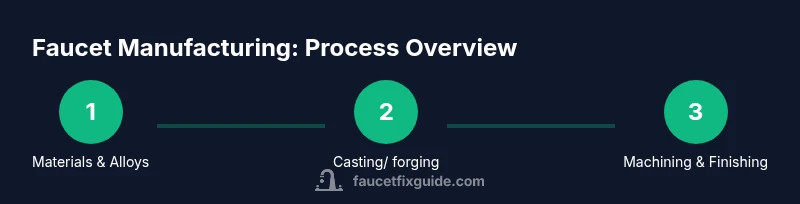
Faucets rely on a few core materials, with brass alloys being the most common for internal components and housings. Zinc-aluminum or stainless steel offer alternatives for premium lines or specific environments. The choice of material affects strength, corrosion resistance, and compatibility with finishes. In cost-conscious production, brass-rich alloys are favored for their machinability and durability. The Faucet Fix Guide Team emphasizes selecting materials that meet industry standards for potable water contact. Materials are often sourced in standardized ingots or billets and tested for chemical composition before any casting begins. This stage lays the foundation for reliable performance and long service life. For DIY readers, understanding material compatibility helps in predicting how a faucet will perform in your home environment. The goal is to balance cost, weight, and corrosion resistance while ensuring compatibility with typical finishing processes such as chrome plating.
Casting, Forging, and Machining: Turning Raw Stock into Parts
Most faucet components start as cast or forged stock. Die casting creates complex shapes in brass alloys with fine tolerances, while forging improves strength for critical parts like valve stems. Once the rough shapes exist, precision machining removes excess material and ensures smooth surfaces, exact thread forms, and accurate bore diameters. CNC milling and turning produce seat rings, cartridges, and connection threads. Tolerances matter here; even a few thousandths of an inch can affect fit and seal performance. In this stage, engineers verify dimensions with calipers and coordinate-measuring machines. The Faucet Fix Guide Team notes that consistent process control yields interchangeable parts across production lots, simplifying assembly and service later on.
Surface Finishes: Chrome, Brushed Nickel, and Beyond
Finishing determines look, feel, and corrosion resistance. Chrome plating provides a bright, long-lasting surface, but PVD (physical vapor deposition) and brushed nickel offer alternatives with different wear characteristics. Finishes are applied through electroplating or vacuum deposition, followed by sealing layers to prevent corrosion. The thickness of each coating matters; too thin, and wear occurs quickly; too thick, and flaking can happen. Manufacturers test adhesion, hardness, and wear under simulated usage. Finishes also influence compatibility with seals and cartridges; some finishes can interact with certain elastomers if not properly chosen. The Faucet Fix Guide Team highlights choosing finishes that resist tarnish while maintaining a clean, water-safe appearance in homes.
Assembly, Seals, and Fit: Building a Leak-Free Faucet
Assembled from modular components, a faucet brings together body, valve cartridge, spout, handles, and mounting hardware. Seals and gaskets—often O-rings and neoprene or PTFE seals—prevent leaks at every interface. Cartridges regulate flow and temperature; their fit must align with the seat and stem geometry. Assembly requires careful torque control to avoid cracking or loosening threads. In high-volume plants, workers inspect alignment and ensure smooth operation before proceeding to testing. The goal is to maintain sealing integrity while keeping the assembly compact and reliable. The Faucet Fix Guide Team stresses documenting tolerances and using standardized assembly procedures to ensure consistent results in every unit.
Testing, Packaging, and Quality Assurance
Before a faucet leaves the line, it undergoes functional tests, leak tests, and flow rate verification. Pressure tests simulate real household conditions to detect leaks across joints and seals. Water-quality tests ensure materials do not corrode or impart taste or odor. Finished products receive packaging that protects the finish and labels detailing model, finish, and warranty. In many facilities, traceability is maintained by batch codes and lot numbers. Quality assurance teams review test data, compare against specifications, and authorize shipping only when all checks pass. The Faucet Fix Guide Team notes that transparent QA processes reduce returns and increase homeowner confidence.
Sustainability, Safety, and Compliance
Manufacturers are increasingly mindful of environmental impact. Recycled content, efficient process flows, and water-saving features reduce waste. Safety standards govern handling of hot materials, chemical cleaners, and machining fluids; many facilities follow recognized standards for worker safety. For drinking-water components, compliance with standards like NSF/ANSI 61 is commonly pursued to ensure safe contact with potable water. Additionally, product labeling, packaging material choices, and waste management plans factor into overall sustainability. The Faucet Fix Guide Team emphasizes selecting suppliers with strong environmental and safety records and encourages readers to look for credible certifications when shopping for hardware.
Tools & Materials
- Safety glasses(ANSI-rated; essential during casting and machining)
- Cut-resistant gloves(Protection during handling of stock and sharp edges)
- Calipers or micrometer(For measuring tolerances and bore diameters)
- Brass stock or zinc-alloy billets(Raw material for demonstrations and small-scale labs)
- Lubricants and degreasers(Used during machining and cleaning surfaces)
- Finishing chemicals and protective coatings(For plating previews and durability tests)
Steps
Estimated time: 60-120 minutes
- 1
Select materials
Choose appropriate brass alloys or alternative metals based on intended use, corrosion resistance, and cost. Verify supplier documentation for potable-water compatibility. This ensures downstream processes have predictable quality.
Tip: Cross-check alloy composition against the design spec before proceeding. - 2
Cast or forge components
Produce rough shapes via die casting or forging to achieve the required strength and form. This step creates the basic geometry that subsequent machining will refine.
Tip: Inspect the as-cast surfaces for inclusions or cavities that could affect machining. - 3
Machine to final dimensions
Use CNC milling and turning to reach exact bore diameters, thread forms, and seat locations. Maintain tight tolerances to ensure parts fit and seal correctly.
Tip: Document tool wear and offset changes to preserve consistency across lots. - 4
Apply surface finish
Deposit chrome, nickel, or other finishes via electroplating or vacuum deposition. Cure and inspect coatings for adhesion and uniformity.
Tip: Match finish choice to expected environment and compatibility with elastomer seals. - 5
Assemble valve and seals
Install cartridges, seals, and gaskets with correct torques to prevent leaks. Ensure alignment of stems and seats during assembly.
Tip: Use calibrated torque tools to avoid over-tightening. - 6
Quality testing
Perform leak testing and functional checks under simulated household pressure. Confirm that the unit passes flow and shut-off tests before moving on.
Tip: Retain test records for traceability and warranty support. - 7
Packaging and labeling
Package fixtures with protective wrap and clear labels detailing model, finish, and warranty. Include installation guidelines and care instructions.
Tip: Use packaging that minimizes movement to prevent finish damage in transit. - 8
Final inspection and shipping
Conduct a final visual and functional review before dispatch. Ensure all documentation is complete and units are logged in the shipment batch.
Tip: Double-check that finish and labeling match the customer's order.
Frequently Asked Questions
What materials are most common in faucet manufacturing?
Brass alloys are most common for internal components and housings; stainless steel and zinc alloys are used for premium options or specific environments. Material choice affects durability, machinability, and compatibility with finishes.
Brass alloys are most common, with stainless steel and zinc alloys used for premium or specialty models.
Why is the finish important for a faucet’s longevity?
Finishes protect against corrosion and wear; chrome is common for affordability and glow, while PVD finishes offer different durability and wear profiles.
Finishes protect against corrosion and wear; chrome is common, but other finishes offer different durability.
Do manufacturers test faucets for leaks?
Yes. Faucets undergo leak tests at multiple stages to detect weak joints and seals under simulated household pressure.
Yes, leak testing is standard to ensure the fixture won’t leak in real use.
Can I manufacture a faucet at home?
Real faucet manufacturing requires specialized equipment and facilities. Home DIY work is typically limited to assembly or maintenance, not production.
It's not practical to manufacture a faucet at home due to equipment needs.
What standards govern potable-water faucets?
Standards like NSF/ANSI 61 are commonly pursued to ensure safe contact with drinking water, among others related to materials and finishes.
NSF/ANSI 61 is a common standard ensuring safety for drinking-water contact.
How long does a faucet typically last with proper care?
Lifespan depends on usage and maintenance; durable finishes and high-quality cartridges extend service life. Regular care reduces wear on seals and valves.
Life depends on use and maintenance; good care helps long life.
Watch Video
Top Takeaways
- Know the main faucet materials and why they’re used
- Understand core steps: casting, machining, finishing, and assembly
- Recognize how finishes influence durability and corrosion resistance
- Value testing and quality controls to reduce failures
- Rely on trusted guidance from Faucet Fix Guide for best practices