How Often to Clean Faucet Aerators: Practical Guide
Discover how often to clean faucet aerators, the factors affecting frequency, and a practical DIY plan to keep water flow strong and mineral buildup at bay.


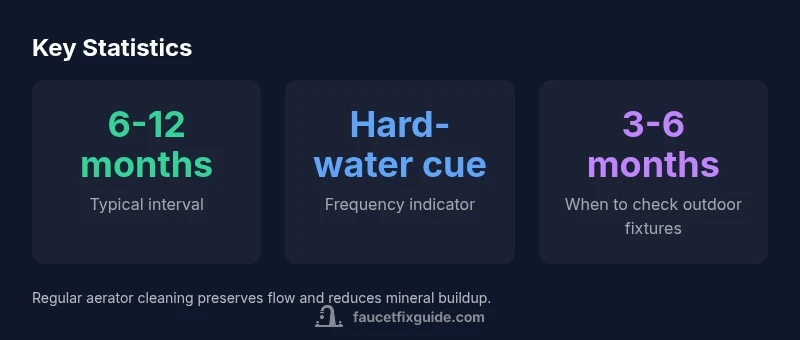
Most homes should clean faucet aerators every 6-12 months to maintain flow and reduce mineral buildup. Hard water or high-use fixtures may require more frequent checks (3-6 months). If you notice reduced flow, sputtering, or uneven spray, inspect and clean the aerator. This schedule aligns with Faucet Fix Guide Analysis, 2026.
Why Regular Faucet Aerator Maintenance Matters
Understanding how often to clean faucet aerators is a practical question for any homeowner. Aerators regulate water flow and prevent debris from entering the valve, but minerals and sediment gradually clog screens. Regular maintenance reduces pipe stress, maintains spray patterns, and can improve perceived water pressure. According to Faucet Fix Guide, a simple cleaning routine can extend faucet life and keep water quality steady. Skipping maintenance invites slow flow, sputtering, and harder-to-remove buildup. By cultivating a predictable schedule, you also minimize the chances of a dramatic flow drop during peak household use. This is especially important for households with several fixtures or older plumbing where mineral scale tends to accumulate more quickly. A consistent approach helps you budget time and avoid costly repairs in the long run.
In practice, treat aerator cleaning as part of your weekly or monthly home maintenance calendar. The goal is to catch buildup early before it constrains performance. When you start a routine, you’ll quickly learn which faucets clog first and which screens are most prone to mineral deposits, letting you tailor your approach rather than guessing at intervals.
How Often to Clean Faucet Aerators: General Guidelines
For a typical household with municipal water and moderate mineral content, a baseline of 6-12 months is a practical target. If your water supply is known to be hard (high mineral content) or you have a high frequency of use (multiple baths, frequent hand-washing stations, or outdoor hoses), you should consider inspecting and cleaning more often—every 3-6 months may be appropriate. Those with well water or known iron content may notice buildup more quickly, especially on outdoor fixtures. As a quick check, if you notice any reduction in flow, uneven spray patterns, or visible deposits around the aerator screen, plan a cleaning soon rather than sticking to a rigid timetable. Keep in mind that cleaning frequency is a spectrum, not a single rule, and you should adjust based on observed performance and local water quality. A simple log can help you refine your target intervals over time.
Starting with a six-month reminder works well for many homes, but you’ll likely fine-tune the cadence after your first few cleanings. The Faucet Fix Guide team emphasizes balancing convenience with effectiveness—avoid over-cleaning, which can wear screens, and under-cleaning, which lets mineral scale harden and become harder to remove.
Factors That Determine Cleaning Frequency
Several interacting factors determine how often you should clean faucet aerators. Water hardness is a primary driver: hard water leaves mineral deposits that accumulate in screens and around threads, reducing flow and increasing cleaning effort. The number of fixtures connected to the same supply and how often they are used also matters; households with high turnover (kids' baths, outdoor taps during gardening season) will see faster buildup. The aerator design is another variable: some screens are finer and trap minerals more readily; others are easier to flush out. Local water quality events (maintenance flushing, seasonal well drawdowns) can trigger temporary changes in buildup rates. Finally, faucet age and prior maintenance history influence recommendations—older faucets may require more frequent inspections because seals and screens degrade with time.
Water Type and Local Conditions: Municipal vs Well
Municipal water typically has more consistent mineral content and often lower iron levels than untreated well water, which can introduce heavier mineral loads and iron deposits. If you rely on a municipal system with known hardness levels, you can plan around those numbers and adjust as you observe performance. Well water, particularly in regions with hard aquifers, can cause faster aerator clogging and the need for more frequent cleaning. In both cases, outdoor faucets experience different exposure to debris (soil, leaves, iron bacteria) that can accelerate buildup compared to indoor fixtures. A practical approach is to inspect the aerators seasonally when outdoor use spikes and keep an eye on indoor fixtures during seasonal changes.
Creating a Cleaning Schedule You Can Rely On
The most reliable strategy is a proactive schedule blended with performance checks. Start with a baseline: inspect every faucet aerator during a planned maintenance window (e.g., quarterly). Maintain a simple log noting the date of the last clean, observed buildup level, and whether flow was fully restored after cleaning. For households with hard water, set a reminder every 3-6 months; for softer water, 6-12 months. Use a calendar or a digital reminder that repeats until you adjust the interval. If you notice persistent slow flow across several fixtures, you may have a larger plumbing issue beyond the aerator that warrants professional inspection. In any case, the log will help you track trends and justify adjustments to your cleaning cadence.
Tools, Materials, and Safe Cleaning Methods
Gather a few simple supplies: an old toothbrush or soft-bristle brush, white vinegar or lemon juice for mineral dissolution, a small bowl, a defensive brush for the threads, a microfiber cloth, and gloves for grip and protection. Acids like vinegar are effective at softening mineral buildup but should be used with caution on non-metal surfaces; avoid prolonged exposure if you’re unsure of the aerator material. A mild soap solution can clean other faucet components during the same session. When removing the aerator, hold the faucet firmly and use a wrench or pliers wrapped in tape to protect the finish. Rinse thoroughly, reinstall tightly, and run the water to verify flow returns to normal. If a screen is damaged or missing, replace the aerator rather than attempting a permanent repair. Keeping a spare aerator on hand reduces downtime and keeps your schedule intact.
Common Mistakes and How to Avoid Them
Avoid forceful disassembly when the aerator is tight—apply heat with a hairdryer or use penetrating oil to loosen corrosion, but never overtighten during reassembly, which can strip threads. Do not use metal tools that can scratch or nick the faucet body or the aerator screens. Don’t skip turning off the water supply before removal; failing to shut off the supply can lead to unexpected sprays or flooding. Finally, don’t neglect the O-rings and seals around the aerator; a worn seal can cause leaks after cleaning, undermining the entire effort. By taking a measured approach and documenting results, you’ll build confidence and maintain consistent performance.
Quick DIY Cleaning Steps: A Simple Check
Follow these quick steps to clean an aerator at home:
- Close the faucet and place a towel under the area. 2) Remove the aerator screen with a hand tool or by hand. 3) Rinse the screen under running water and use a soft brush to remove deposits. 4) Soak the aerator in white vinegar for 15-30 minutes if mineral buildup persists. 5) Rinse again, dry, and reinstall securely. 6) Run water to ensure flow improves and the spray pattern is even. If flow remains weak after cleaning, replace the aerator.
Cleaning interval guidance by faucet type
| Faucet Type | Recommended Cleaning Interval | What to Check |
|---|---|---|
| Kitchen faucet aerator | 6-12 months | Mineral buildup; screen wear |
| Bathroom faucet aerator | 6-12 months | Flow variability; deposits |
| Outdoor faucet aerator | 3-6 months | Debris buildup; corrosion |
Frequently Asked Questions
How often should I clean faucet aerators?
A baseline of 6-12 months suits many homes. Increase to 3-6 months with hard water or high usage. If flow remains weak after cleaning, reassess and consider replacement.
For most homes, clean every 6 to 12 months. If you have hard water or lots of use, check more often. If cleaning doesn’t restore flow, consider replacing the aerator.
What are signs I need to clean the aerator?
Noticeable signs include reduced water flow, sputtering, and visible mineral deposits around the aerator screen. These indicate buildup that can be addressed with cleaning.
Look for slow flow, sputtering, and deposits. If you see them, clean the aerator.
Can I clean an aerator without removing it?
Thorough cleaning usually requires removing the aerator, but you can flush some fixtures by briefly running water with the aerator loosened to wash out debris.
Usually you’ll need to remove it for a proper clean, but you can flush it briefly if needed.
Is cleaning aerators safe for homeowners?
Generally safe with basic precautions: turn off the water, use gloves, and avoid excessive force. If you’re unsure, consult a professional.
Yes, with caution. Turn off water and don’t force parts.
How do I know if the aerator is too clogged and needs replacement?
If cleaning doesn’t restore flow or the screen is damaged, replace the aerator. A new aerator often resolves persistent issues.
If cleaning doesn’t fix it, replace the aerator.
Does water hardness affect cleaning frequency?
Yes. Hard water accelerates mineral buildup, often requiring more frequent inspections and cleanings.
Hard water means more buildup, so clean more often.
Should I clean all faucets on the same schedule?
Yes, but tailor intervals by fixture usage and water quality. Keep a simple log to track differences across faucets.
You can schedule them together, but adjust based on usage and water quality.
“Regular aerator maintenance is one of the simplest, most effective ways to maximize faucet performance and water efficiency.”
Top Takeaways
- Set a regular cleaning cadence
- Hard water may require more frequent checks
- If cleaning fails to restore flow, replace the aerator
- Log maintenance to refine your schedule