How to Clean Faucet Tip: Simple Aerator Maintenance
Learn how to clean faucet tip and aerator to restore water flow, remove mineral buildup, and prevent leaks. This practical guide covers tools, safe methods, and maintenance habits for kitchen and bathroom faucets.


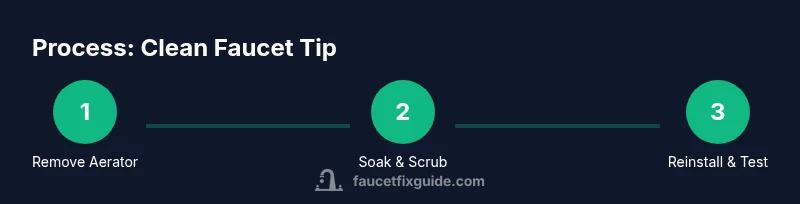
You can restore faucet flow by cleaning the faucet tip and aerator. Start by turning off water, removing the aerator, then soak and scrub to remove mineral buildup. Reassemble, test flow, and repeat maintenance as needed.
What is the faucet tip and why it clogs
The faucet tip is the end of the aerator assembly that regulates water flow and mixes air for a smooth stream. Over time, mineral deposits from hard water—primarily calcium and magnesium—settle on the aerator’s screen and in tiny channels. This buildup narrows passages, reduces flow, and can cause splashing or uneven spray. Regular cleaning helps restore the intended water pattern and improves efficiency, which saves water and reduces wear on the faucet.
How mineral deposits form in your water supply
Water hardness varies by location and can carry dissolved minerals. When water sits in the aerator, minerals precipitate and form scale on the screen and inside the tiny inlet holes. Hot water can speed up mineral deposition, while cold water may leave mineral films on the screen. Knowing that deposits come from your water helps you choose the right cleaning method—gentle scrubbing and mild descalers are usually sufficient for most homes.
Identify the right components to clean
Most faucet tips comprise an aerator with a threaded housing, a screen or mesh, and sometimes a flow restrictor. If your faucet drips, leaks, or has a noticeably reduced flow, the aerator or screen is often the culprit. Start by inspecting the aerator assembly for rust, torn screens, or cross-threading. If you see damage, replacement parts are inexpensive and can save you from wasting time on ineffective cleaning.
Safety first: turning off water and preventing splashes
Before you begin, shut off the water supply valves under the sink or at the wall. Turn on the faucet to relieve residual pressure and prevent a spray when you loosen the aerator. Place a cloth or small tray beneath the work area to catch any drips. If you’re cleaning a bathroom faucet, you can typically cover the sink with a towel to prevent chips or splashback.
Mechanical cleaning vs chemical cleaning: when to use vinegar
There are two broad approaches. Mechanical cleaning uses a brush and mild scrubbing to remove mineral films. Chemical cleaning uses white vinegar or a descaling solution to dissolve deposits. Vinegar is generally safe for metal aerators and most finishes, but always test on a small area first and avoid prolonged exposure on sensitive finishes. Do not mix vinegar with bleach or other cleaners.
Cleaning methods for different faucet types
Different faucet styles may have removable aerators or integrated screens. For threaded aerators, unscrew counterclockwise with hand pressure or a soft wrench. For non-removable screens, you may still access the tip by removing the escutcheon or handle cover if necessary. In all cases, avoid forcing parts; gentle movement and proper alignment matter for a clean, leak-free reassembly.
Accessing the aerator: types of faucet spouts
Some spouts hide the aerator behind decorative collars or spouts that twist away. Others have screwtops that protect the aerator inside the faucet body. If you can’t locate a removable aerator, check your faucet model’s manual or manufacturer site for guidance. Knowing the type helps you choose the right tools and technique without damaging finishes.
Vinegar soak and alternative descalers
Soak the aerator components in a 1:1 white vinegar solution for 30 minutes to an hour to dissolve mineral buildup. If deposits are stubborn, you can lengthen the soak or use a mild lemon juice solution as a supplement. Rinse thoroughly with clean water after soaking to remove any vinegar residue and debris before reassembly.
Reassembly and testing: ensure a smooth return to service
After cleaning, reassemble the aerator components in the correct order and thread them snugly without overtightening. Reattach the aerator to the faucet, restore water flow, and run the tap for 15–30 seconds to flush out loosened debris. Check for leaks around the threads and seals; if leaks persist, reseat or replace the worn parts.
When to replace the aerator or cartridge
If cleaning doesn’t restore flow or if you notice persistent leaks, the aerator or cartridge may be worn or damaged. Replacing the aerator is often inexpensive and quick, while a worn cartridge might require more extensive maintenance or professional service. Replacing components promptly prevents ongoing inefficiency and further damage.
Maintenance routine to prevent buildup
Create a simple schedule that fits your water hardness and usage. A light wipe-down after use, periodic vinegar soaks, and rechecking the aerator during routine faucet maintenance reduces mineral buildup. Keeping a small parts tray with spare screens or aerators simplifies quick replacements, preserving water flow and faucet life.
Common mistakes and quick checks
Avoid using abrasive tools that can scratch finishes. Do not mix cleaners with incompatible finishes. Always confirm you’re cleaning only the aerator or screen parts to prevent damage to the faucet body. Quick checks: ensure threads aren’t cross-threaded, verify a tight but not over-tightened fit, and confirm the water flow returns to normal after reassembly.
Tools & Materials
- Adjustable wrench or channel-lock pliers(Use gentle pressure to avoid scratching finishes)
- Non-slip cloth or rag(Protect surfaces and catch drips)
- Old toothbrush or soft bristle brush(Gentle scrubbing for screens)
- White vinegar(Used for descaling (1:1 with water for soak))
- Small bowl or cup(Soak components comfortably)
- Replacement aerator screen or aerator(Optional if deposits damaged the screen)
- Toothpicks or fishing line(Useful for dislodging stubborn debris)
- Masking tape or towels(Reduce mess and protect surfaces)
Steps
Estimated time: 25-40 minutes
- 1
Turn off water and prep
Shut off the supply valves and open the faucet to release pressure. Place a rag under the sink or in the basin to catch drips. This prevents splashing and protects your counter from mineral dust.
Tip: Keep small parts in a labeled container to avoid losing them. - 2
Loosen and remove the aerator
Grip the aerator assembly and turn counterclockwise to unscrew. If it’s tight, use a wrench with protective cloth to avoid scratching. Note the order of components for easy reassembly.
Tip: Do not force; apply steady pressure to avoid thread damage. - 3
Inspect and separate parts
Check the screen for tears and the mesh for holes. Remove any debris using a toothpick or brush. If parts are corroded or broken, plan a replacement.
Tip: Place removed parts on a light-colored surface to spot debris easily. - 4
Soak in vinegar
Dip the aerator parts in a 1:1 white vinegar solution for 30–60 minutes. This dissolves mineral buildup. Avoid soaking plastic parts if the manufacturer warns against it.
Tip: Use warm (not hot) vinegar for faster results. - 5
Scrub and rinse
Gently scrub all surfaces with a soft brush, then rinse under running water until fully clean. Inspect again for any remaining deposits.
Tip: Rinse inside the tiny passages with a quick, pointed spray to dislodge stubborn particles. - 6
Reassemble and reinstall
Place components back in their original order and thread onto the faucet. Tighten firmly but avoid overtightening, which can damage seals.
Tip: Wipe threads clean before reassembly to ensure a good seal. - 7
Test the flow
Turn the water on and let it run for 20–30 seconds to flush debris. Check for leaks around the aerator and adjust if necessary.
Tip: If flow is uneven, recheck the aerator orientation and seating. - 8
Decide on replacement
If cleaning doesn’t restore flow or if seals are degraded, replace the aerator or cartridge as needed. This is often faster and more reliable than continuous cleaning.
Tip: Keep spare screens handy for quick fixes.
Frequently Asked Questions
Do I need to turn off the water supply before starting?
Yes. Shut off the water valves under the sink and relieve pressure by running the faucet briefly. This prevents splashes and possible injury.
Yes. Turn off the water and relieve pressure by opening the faucet briefly.
How can I tell if the faucet tip is clogged or the cartridge is faulty?
If the flow improves after cleaning the aerator but remains low, the cartridge may be worn. If the surface shows mineral buildup that disappears after cleaning, the aerator was the main issue.
If cleaning the aerator helps flow, the issue was the aerator; if not, the cartridge might be worn.
Can I clean without removing the aerator?
Some models allow in-place cleaning by flushing with a vinegar solution, but removing the aerator generally yields the best results for stubborn buildup.
You can try flushing, but removing the aerator usually gives the best clean.
How often should I clean faucet tips?
There’s no fixed schedule. Inspect during routine maintenance and clean when you notice reduced flow or visible mineral buildup.
There isn’t a fixed schedule; clean as needed based on flow and buildup.
What should I do if cleaning doesn’t fix the problem?
If cleaning fails, replace the aerator or cartridge. If leaks persist after replacement, consider inspecting the faucet for worn seals or calling a professional.
If cleaning doesn’t fix it, replace parts or seek professional help for leaks.
Watch Video
Top Takeaways
- Inspect the aerator and tip regularly to prevent buildup.
- Vinegar soaking dissolves mineral deposits safely on most metal parts.
- Reassemble carefully and test flow to confirm a leak-free seal.
- Replace worn parts when cleaning no longer restores performance.
- Establish a simple maintenance cadence based on water hardness.