How Often Should Faucets Be Replaced: A Practical Guide
Discover how often faucets should be replaced, factoring in wear, leaks, and water quality. This Faucet Fix Guide analysis covers lifespans, maintenance, and practical replacement strategies for DIY homeowners.


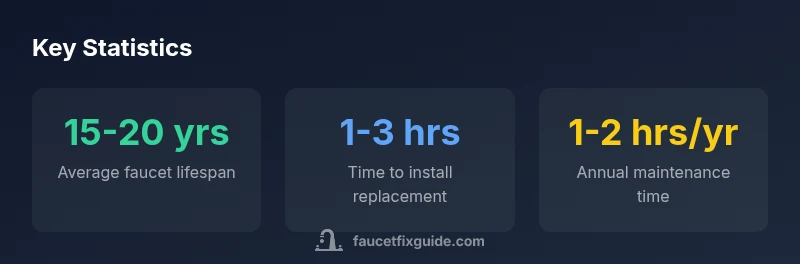
Most residential faucets last about 15-20 years with normal use. Replace a faucet when leaks persist after repair attempts, corrosion is visible, or ceramic cartridges begin to fail. Regular maintenance; however, proactive replacement before a major breakdown can save water, reduce damage, and maintain flow.
How Often Should Faucets Be Replaced? A Baseline
Determining how often faucets should be replaced starts with a practical baseline: most residential fixtures are expected to last roughly 15-20 years under typical usage and with reasonable maintenance. This guideline, supported by homeowner data and industry experience, provides a starting point for planning. In practice, the actual replacement timing depends on how the faucet is used, the water quality, and how well you care for seals and cartridges. The Faucet Fix Guide Team notes that proactive replacement before a dramatic failure can reduce water waste and prevent water damage, especially in areas with hard water or aggressive mineral buildup. For homeowners, framing replacement around major wear indicators rather than calendar years helps avoid unnecessary work and costs.
The key takeaway is that lifespan is a range, not a fixed date. If you want a concrete target, plan for inspection after 12-15 years of operation and re-evaluate based on performance, leaks, and maintenance history. This approach aligns with common DIY plumbing practices and minimizes the risk of a sudden faucet failure.
Factors That Influence Replacement Frequency
A faucet’s replacement timing is not one-size-fits-all. Several variables push the need for earlier replacement, while others extend life. Water quality is a major driver: hard water, high mineral content, and corrosive elements accelerate seal wear and cartridge degradation. Usage patterns matter too: heavily used kitchen faucets, multi-bath households, and frequent splash zones will wear faster than occasional guest bathrooms. Installation quality and prior repairs also influence longevity. A poorly seated cartridge or a degraded washer can lead to leaks that cascade into larger issues if left unaddressed. Finally, manufacturer design and materials (ceramic disks vs. brass, for example) affect resilience. In short, the most reliable predictor is a combination of maintenance history, leak frequency, and observed performance.
How to Assess Replacement Urgency at Home
Evaluating whether a faucet should be replaced begins with a simple diagnostic flow. First, quantify ongoing leaks: is water dripping after shutoff? If yes, estimate the repair cost versus replacement. Second, inspect the exterior for corrosion, pitting, or rust around the valve stems and handles. Third, test handle stiffness or erratic temperature response—these can signal cartridge wear. Fourth, check if parts are readily available; if sourcing becomes difficult or expensive, replacement may be more cost-effective in the long run. Finally, review warranty terms: many modern faucets carry warranties that can influence whether replacement is warranted or if a repair is preferable. The Faucet Fix Guide Team emphasizes documenting these checks to support a confident decision.
Repair vs Replacement: A Practical Framework
To decide between repair and replacement, use a simple framework: estimate cumulative repair costs over the next year or two and compare to the replacement cost. If multiple repairs accumulate within a short period or the faucet continues to leak after several fixes, replacement typically offers better long-term value. Consider the installation complexity: some fixtures require specialized tools or professional expertise, which shifts the cost balance toward replacement. When choosing, weigh not only price but reliability, water efficiency, and compatibility with your plumbing. In many homes, replacing with a modern, water-efficient model can reduce maintenance headaches and provide a smoother daily experience.
Choosing the Right Replacement Faucet: Key Considerations
After deciding to replace, focus on compatibility, efficiency, and style. Cartridge and ceramic-disk faucets offer strong durability, but installation quality still matters. Check the mounting hardware, supply line connections, and the faucet’s aerator design to ensure performance remains steady. For bathrooms, a single-handle model can simplify operation, while kitchens may benefit from pull-down designs for convenience. Consider finishes that resist fingerprints and corrosion in your environment, and verify that the new faucet is compatible with existing shutoff valves. The Faucet Fix Guide Team highlights that selecting a reputable model and following proper installation steps minimizes future maintenance.
Maintenance Practices That Extend Faucet Life
A well-maintained faucet lasts longer and performs more reliably. Routine tasks include cleaning aerators and screens to prevent mineral buildup, checking seals for wear, and tightening connections to stop slow drips. Use mild cleaners and a soft cloth to avoid scratching chrome or brushed finishes. If you have hard water, consider a pre-filter or regular professional scale control to protect cartridges and valve seats. Document maintenance dates and parts replaced to inform future replacements and warranty claims. Small, consistent care sustains performance over two decades, especially when combined with thoughtful replacement planning.
Special-Case Scenarios: Kitchen vs. Bathroom Faucets
Kitchens face heavier use and more frequent temperature fluctuations, which can accelerate wear on cartridges and gaskets. In contrast, bathroom faucets often experience fewer cycles but must endure constant moisture in a compact space, affecting seal longevity. When replacing, kitchen fixtures should prioritize reliability and ease of cleaning, while bathroom models emphasize smooth operation and aesthetics. Both spaces benefit from water-efficient designs and interchangeable parts to simplify future maintenance. The Faucet Fix Guide Team recommends considering your personal routines and maintenance capacity when selecting replacements.
Budgeting for Replacement: Cost Considerations
Budgeting for faucet replacement involves estimating both parts and labor, recognizing variation by faucet type and installation complexity. A straightforward replacement with a standard single-handle unit might be simpler and cheaper than a multi-handle or high-end model with advanced features. Labor costs depend on accessibility, wall or cabinet work, and whether shutoff valves require upgrading. Rather than chasing a single price, homeowners should obtain multiple quotes and plan for contingencies, including potential updates to supply lines or under-sink components. This balanced approach reduces surprises and aligns with practical home maintenance strategies.
Faucet type lifespans and warning signs
| Faucet Type | Typical Lifespan | Common Warning Signs |
|---|---|---|
| Ceramic disk faucet | 15-20 years | Persistent leaks, stiff handle, mineral buildup |
| Compression faucet | 10-20 years | Worn washers, o-rings, leaks from spout or handle |
| Cartridge faucet | 12-15 years | Loose handle, erratic flow, leaks around cartridge |
Frequently Asked Questions
How often should faucets be replaced?
There isn't a one-size-fits-all answer; baseline 15-20 years under normal use. If leaks persist after repairs or corrosion is evident, replacement is wise.
Most faucets last 15-20 years, but watch for persistent leaks and corrosion.
What signs indicate replacement rather than repair?
Persistent leaks after repairs, visible corrosion, mineral buildup that impairs performance, or cartridge wear that affects operation indicate replacement may be best.
Leakage after repairs and corrosion are strong signals to replace.
Do high-end faucets last longer than cheaper ones?
Quality materials and proper maintenance improve longevity, but installation quality and water quality matter more for overall life.
Quality helps, but maintenance and water matter most.
Can I extend faucet life with maintenance?
Yes. Regular cleaning, aerator removal, and mineral control can add years to a faucet’s life.
Yes—regular cleaning and maintenance extend life.
What costs are involved in replacement?
Costs vary by faucet type and labor; plan for parts and professional installation. Obtain multiple estimates to avoid surprises.
Costs vary; get estimates for parts and installation.
“Faucet longevity hinges on usage, water quality, and proactive maintenance; replacing a faucet before a major failure protects your wallet and home.”
Top Takeaways
- Track leaks and performance to catch failures early.
- Expect typical lifespans in the 15–20 year range.
- Choose repair when costs remain reasonable.
- Opt for maintenance to extend faucet life.
- Budget for replacement as part of home maintenance.