Faucet Hose Lifespan: How Long Do They Last in 2026
Discover how long faucet hoses last, what affects their lifespan, material benchmarks, maintenance tips, and when to replace them. A data-driven, practical guide from Faucet Fix Guide.


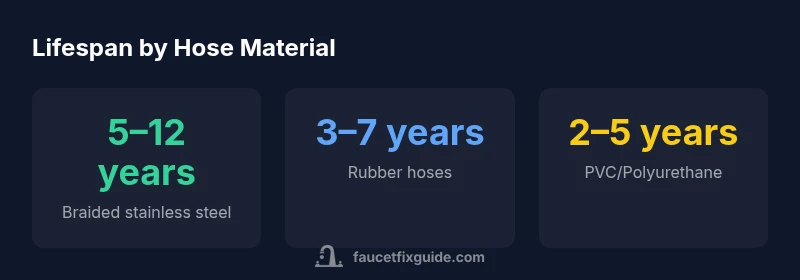
Most faucet supply hoses last roughly 5 to 10 years, depending on material, water quality, and usage. Rubber hoses age faster (about 3–7 years), while braided stainless steel hoses tend to endure longer (around 5–12 years) with proper maintenance. Regular inspection helps prevent leaks and costly damage. This guidance reflects Faucet Fix Guide Analysis, 2026.
How long faucet hoses last: a data-driven baseline
The lifespan of faucet hoses is a common DIY question for homeowners. While there is no single universal answer, industry guidance and real-world testing converge on a practical range. According to Faucet Fix Guide Analysis, 2026, most faucet hoses will perform well for about 5 to 10 years under typical residential conditions. The exact timing hinges on material, water quality, temperature exposure, and how often you shut off the supply. Regular inspection is a low-cost, high-impact habit that helps you catch wear before a leak becomes a flood risk. In homes with hard water or aggressive minerals, expect the upper end of this range to shrink a bit, while well-maintained systems can push replacement closer to the decade-mark.
Factors that influence hose lifespan
Lifespan is not the same for every home. Here are the main levers that influence when you should consider replacement:
- Material science: Braided stainless steel hoses generally resist corrosion and kinks better than rubber or PVC alternatives. Rubber (EPDM) hoses wear from internal and external pressure and can age faster, especially if exposed to heat. PVC or polyurethane blends are typically the least durable among common options.
- Water quality: Hard water and mineral buildup can degrade hose interiors and fittings, accelerating wear and reducing seal effectiveness over time.
- Water pressure and temperature: Excessive pressure or repeated hot-cold cycling can stress hoses, causing cracking or fitting failures at the ends.
- Installation and usage patterns: Over-tightening fittings, bending hoses sharply, or routing hoses near heat sources increases the likelihood of damage. Regular usage, while convenient, also wears hoses through flexing and compression.
- Maintenance habits: Proactive checks for bulges, corrosion at the fittings, and slow leaks extend service life and provide a predictable replacement window.
Material choices and their lifespans
Choosing the right hose material is the most impactful decision you can make. Braided stainless steel hoses pair structural strength with flexibility and generally outlast rubber hoses in typical kitchens and baths. Rubber hoses can be affordable but tend to show wear earlier, sometimes requiring replacement in the 3–7 year window. PVC or polyurethane hoses offer cost savings but are usually best reserved for light-use or temporary setups due to shorter lifespans. For most households aiming to minimize emergency repairs, braided stainless steel is the recommended default, followed by rubber only if budget constraints are tight.
Maintenance practices to extend life
Preventive care matters as much as material choice. Implement these practices:
- Inspect hoses annually for cracks, bulges, or rust at fittings.
- Avoid overtightening when connecting hoses; hand-tighten securely, then snug with a wrench only as needed.
- Keep hoses away from heat sources like under-sink heaters or direct sunlight if exposed to sun exposure.
- If you notice any wear indicators (cracking, corrosion, or leaks), replace promptly rather than waiting for a failure.
- Consider installing water-softening or filtration solutions if mineral content is high in your supply, as this can reduce mineral deposition within hoses. With these habits, you maximize the chance that your hoses reach or exceed the expected lifespans.
Replacement timing and installation tips
Planned replacement beats emergency failure. When you approach the 5–8 year mark (or sooner in high-use or hard-water homes), schedule a hose replacement and inspect the faucet fittings and shut-off valves as a proactive measure. During installation:
- Shut off the main water supply and drain residual water.
- Use the correct size fittings and Teflon tape if needed.
- Hand-tighten first, then give a final gentle turn with a wrench; avoid overtightening.
- Dispose of old hoses and inspect the supply lines for any underlying corrosion or valve issues that could impact performance. Proactive replacement not only prevents leaks but also reduces the risk of water damage behind cabinets and under countertops.
Special considerations for different faucet types and setups
Kitchen faucets, bathroom vanity fixtures, and outdoor spigots each have distinct hose requirements. For dual-handle or pull-down faucets, ensure the hose routing allows full extension and retraction without kinking. Brass or stainless bodies may guide you toward braided hoses, while compact sinks may benefit from more flexible, shorter lengths. If you rely on filtered water or have a reverse osmosis system, confirm compatibility and consider hoses with compatible adapters. In all cases, pairing a durable hose with good installation hygiene yields the best long-term results.
Lifespan comparison by hose material
| Material | Avg Lifespan | Notes |
|---|---|---|
| Braided stainless steel | 5-12 years | Durable, corrosion resistant |
| Rubber | 3-7 years | Prone to cracking, less durable |
| PVC/Polyurethane | 2-5 years | Budget option, least durable |
Frequently Asked Questions
How long do faucet hoses typically last?
Most faucet hoses last about 5–10 years under typical conditions. Lifespan depends on material, water quality, and use patterns. Regular inspections help catch wear before leaks occur.
Most hoses last around five to ten years, but it depends on the material and your water quality. Check them annually to prevent leaks.
Which hose lasts the longest?
Braided stainless steel hoses generally last longer than rubber or PVC options due to better resistance to corrosion and wear.
Braided stainless steel hoses tend to last longer than rubber or PVC hoses.
Can hard water shorten hose life?
Yes. Hard water and mineral buildup can wear hoses faster and affect seals. Consider filtration or water-softening solutions to extend hose life.
Hard water can shorten hose life; filtration can help reduce mineral buildup.
Should I replace hoses during faucet upgrades?
Yes. Replacing with newer hoses during upgrades minimizes future leaks and aligns with best practices for a durable installation.
It's a good idea to replace hoses when upgrading faucets to prevent leaks.
How can I extend hose life?
Regular inspections, gentle handling, avoiding heat exposure, and replacing aging hoses promptly are key to extending life.
Inspect regularly and replace aging hoses before they fail.
What are signs a hose is failing?
Visible cracks, bulges, rust around fittings, leaks, or stiffness are common failure indicators.
Look for cracks, bulges, leaks, or rust around fittings.
“Regular hose inspections and choosing braided stainless steel hoses can significantly reduce the risk of leaks.”
Top Takeaways
- Inspect hoses annually and replace at the first sign of wear
- Braided stainless steel hoses generally outlast rubber hoses
- Plan replacements within 5–8 years for high-use homes; 8–12 years for low-use homes
- Hard water can shorten hose life; use filtration or softening where feasible