Cost to Replace Bathroom Faucet: A Practical 2026 Guide
Understand the true cost to replace bathroom faucet, including parts, labor, and hidden fees. Learn how faucet type, regional rates, and installation choices affect price with practical guidance from Faucet Fix Guide.


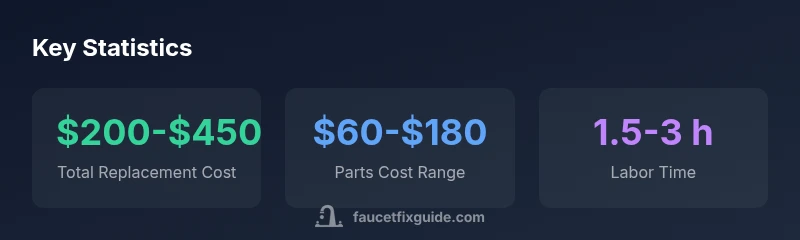
Typical total cost to replace a bathroom faucet ranges from $200-$450, including parts and labor. Parts commonly run $60-$180, while professional labor adds $120-$300. Costs may rise if you relocate supply lines or upgrade to premium finishes or features. Budget for unexpected fittings or disposal fees, and compare multiple quotes to lock in a fair price.
What drives the cost to replace bathroom faucet?
The cost to replace bathroom faucet is influenced by several factors that combine to determine the final price. The most impactful are faucet type, finish, cartridge technology, mounting style, and whether plumbing work must be moved. According to Faucet Fix Guide, setting a realistic budget starts with identifying the faucet type you want and whether your existing plumbing supports it without relocations. Labor rates vary by region and by the plumber’s experience, which can swing total costs by a wide margin. Other considerations include incidental repairs, new shutoff valves, and disposal of the old fixture. A clear scope helps you avoid sticker shock and makes it easier to compare quotes from multiple installers.
Cost components: parts and labor explained
Two broad categories make up most of the cost: parts and labor. The faucet itself is the largest upfront cost, especially for premium finishes or specialty designs. In addition to the faucet, you may need new supply hoses, mounting hardware, gaskets, and adapters. Labor covers removing the old faucet, preparing the sink area, installing the new unit, sealing connections, and testing for leaks. When you ask for quotes, separate line items for parts and labor help you see where the money goes and where you can save.
Faucet types and price ranges
Faucet type strongly affects price. A basic single-handle compression faucet may sit in the lower end of the range, while premium finishes and bridge or widespread models push toward the higher end. Pricing also depends on cartridge type and how easy it is to access the mounting hardware. If the faucet includes extra features such as water-saving aerators or ceramic disc cartridges, expect additional modest costs. For a quick reference, standard ranges generally fall within a few hundred dollars overall, with big-ticket combinations climbing higher.
Labor considerations: installing vs relocating supply lines
Installing a new faucet on an existing sink is usually the fastest path to a predictable price. If your new faucet requires relocating supply lines, or repositioning the faucet holes, labor time and complexity rise quickly. That extra labor can add a significant portion to the total, sometimes matching or exceeding the faucet price itself. In contrast, if the new faucet matches the current valve configuration, you can expect smoother installation and lower rates. Always confirm with your plumber whether relocation is necessary before committing.
Regional price variations and permit considerations
Prices vary by region based on labor markets, travel time, and local demand. In urban areas, hourly rates tend to be higher, while rural areas may offer more affordable options. Most bathroom faucet replacements do not require permits, but if a relocation involves plumbing code changes or water shutoffs, a permit or inspection could add time and cost. Discuss these potential extras with your installer to avoid surprises.
DIY vs pro installation: when it makes sense
If you have basic plumbing experience, replacing a straightforward faucet is often feasible as a DIY project, especially for standard fixtures. DIY can cut labor costs substantially, but mistakes can lead to leaks and higher repair bills. For complex tasks such as relocating lines, working behind walls, or aligning a premium fixture, hiring a licensed professional is usually wiser. Weigh your confidence against the risk of water damage and warranty terms before deciding.
Hidden costs that catch homeowners off guard
Don’t forget incidental expenses that quietly increase the bottom line. Disposal fees for the old faucet, new shutoff valves, additional fittings, sealants, and shipping costs can add up. If the sink area requires extra cleaning or minor repairs to ensure a leak-free seal, budgeting for a small contingency (5–10%) is prudent. Ask for a detailed written estimate that itemizes each cost and a project timeline.
Getting the best price: estimation, quotes, and negotiation
To secure a fair price, request written estimates from at least three reputable installers and review them side by side. Look for line items that reflect parts, labor, and any relocation or contingency charges. Ask about warranties on parts and workmanship and verify whether the price includes disposal of the old faucet. Negotiation tip: if you’re replacing multiple fixtures, request a bundled rate.
Quick-start checklist for your replacement project
- Identify faucet type and finish preference
- Check existing valve configuration and hole alignment
- Decide if supply lines require relocation
- Gather three quotes with itemized costs
- Confirm warranty terms and disposal policy
- Schedule a date with access to shut-off valves and water supply
Typical cost ranges by faucet type
| Faucet Type | Typical Cost Range | Notes |
|---|---|---|
| Standard compression faucet | $130-$250 | Simple install, no relocation |
| Single-handle faucet | $150-$300 | Common, easy install, minor plumbing |
| Bridge/Widespread faucet | $250-$500 | More complex alignment and valves |
| Premium designer faucet | $300-$700 | Premium finishes and cartridges |
Frequently Asked Questions
What affects the cost to replace a bathroom faucet?
Factor like faucet type, finish, cartridge technology, mounting style, and whether plumbing relocation is needed drive cost. Labor rates vary by region and contractor experience. Always obtain itemized quotes to see where money goes.
Faucet type, finish, and whether plumbing must be moved drive the price. Get itemized quotes to understand costs.
Is it cheaper to repair or replace a leaky faucet?
In many cases a simple cartridge replacement or seal can fix a leak cheaply. If parts are worn or multiple components fail, replacement often saves time and future leaks. Compare the cost of parts and labor for repair versus a full replacement.
Sometimes a repair is cheaper; other times replacement prevents ongoing leaks and costs. Compare parts and labor for both options.
Do I need to buy new supply lines or shut-off valves?
If existing lines are in good condition and match the new faucet, you may reuse them. Relocation or upgrading to shut-off valves can add cost. Ask your installer for a parts list and any expected upgrades.
Reuse existing lines if possible; upgrades add cost. Get a clear parts list.
How long does installation take?
A straightforward replacement typically takes 1 to 3 hours, depending on faucet type and accessibility. If lines must be moved or the sink area needs extra work, it can take longer.
Most replacements take 1 to 3 hours; longer if relocation is needed.
Can I install a faucet myself?
If you’re comfortable with basic plumbing and shut-off valves, a standard faucet replacement is feasible as a DIY project. Premium models or relocations benefit from a pro to protect your warranty and prevent leaks.
Yes, for simple installs you can DIY, but premium or relocated jobs should be left to a pro.
What if I want to relocate the faucet to a different location?
Relocating a faucet increases both parts and labor costs. It may require wall access, new shut-offs, or reconfiguring supply lines. Get a detailed plan and a revised estimate before proceeding.
Relocation adds cost and complexity. Get a full plan before you proceed.
“Replacing a bathroom faucet is usually straightforward, but costs can rise quickly if old plumbing must be relocated or you upgrade to premium finishes. Planning ahead with a clear scope helps you avoid surprise charges.”
Top Takeaways
- Estimate faucet type to bound costs.
- Budget for labor and parts separately.
- Expect higher costs if relocation is required.
- Compare quotes from multiple installers.
- Consider DIY for simple replacements.