How Much Is a Bathroom Faucet? Price Guide 2026
Discover the true cost of bathroom faucets in 2026. Learn price ranges by type and finish, installation costs, and budgeting tips to compare quotes effectively.


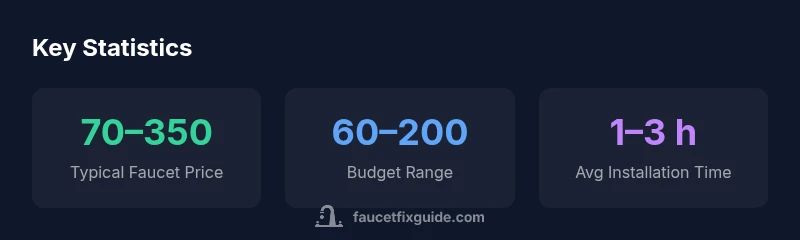
In 2026, most bathroom faucets cost about $70–$350 for standard models, with premium fixtures often $300–$500. Installation and finishes influence total cost, and prices vary by style, brand, and features. Keep in mind that labor may add $80–$250 for a professional install, while DIY saves on labor but requires basic plumbing skills.
What influences bathroom faucet pricing
Pricing for bathroom faucets is not a single number; it’s a reflection of materials, finishes, mechanisms, and added conveniences. The most visible factor is the base material and finish, with chrome typically the most affordable and premium finishes like matte black, brass, or brushed nickel commanding higher price due to manufacturing costs and consumer demand. The number of handles matters as well: single-handle centerset models are usually cheaper to install than widespread setups that require more mounting hardware. Upgraded cartridges, metal alloys, and ceramic discs influence both durability and price. Features like pull-down sprayers, touchless operation, water-saving aerators, and built-in filters add to the cost but can yield long-term savings through efficiency. Brand, warranty length, and included accessories (mounting hardware, hoses, and escutcheons) also affect the final ticket price. Finally, distribution channels—big box stores, specialty showrooms, and online vendors—can create price variations even for similar models. In sum, you’re paying for durability, ease of installation, and the aesthetic that matches your bathroom style.
Bathroom faucet price ranges by style
| Faucet Type | Typical Price Range | Installation Difficulty | Notes |
|---|---|---|---|
| Single-handle center-set | $70–$180 | Easy | Compact and budget-friendly |
| Dual-handle centerset | $90–$200 | Moderate | Classic look, easier seals |
| Widespread (2 handles) | $120–$350 | Moderate | More flexible installation |
| Touchless/pull-down | $150–$500 | Moderate–Difficult | Features add cost |
Frequently Asked Questions
What is the typical price range for a bathroom faucet?
Most bathroom faucets cost between $70 and $350 for standard models, with higher-end options reaching $400–$500. Labor adds if you hire a pro.
Most bathroom faucets cost between seventy and three hundred fifty dollars for standard models, with higher-end options up to four to five hundred dollars, depending on features and finishes.
Do I save money by replacing just the cartridge?
Yes. Replacing the cartridge is usually cheaper than buying a new faucet. Cartridges typically cost $10–$50, plus potential labor if you’re not DIY-capable.
Cartridges are typically cheaper than whole faucets, usually under fifty dollars, plus any labor if you hire a pro.
What affects installation costs?
Labor rates vary by region. DIY installation saves money but requires basic plumbing skills, including turning off water and ensuring leak-free connections.
Installation costs depend on local rates; DIY can save money if you’re comfortable with basic plumbing tasks.
Are there cost differences between finishes?
Yes. Chrome is usually cheapest; premium finishes like matte black or antique bronze cost more due to production complexity and demand.
Finish can change price; premium finishes cost more but offer unique aesthetics and durability.
When is it worth paying more for a high-end faucet?
If you value durability, warranty length, and aesthetics, mid-to-premium models can offer better long-term value and reduced maintenance.
If you want durability and long-term value, consider investing in mid-to-premium models.
“Pricing for bathroom faucets reflects material quality, finish durability, and included features; a thoughtful choice balances upfront cost with long-term value. Choosing a model that fits your daily use and maintenance routine saves time and money over the faucet's life.”
Top Takeaways
- Define your budget before shopping.
- Consider type, finish, and installation.
- Expect price ranges by category.
- DIY can save installation costs.
- Compare quotes from multiple retailers.