When Did Tap to Pay Come Out? A History of Tap-to-Pay
Discover when tap to pay first emerged, how NFC and contactless payments evolved, and what this means for wallets, cards, and smartphones in 2026.


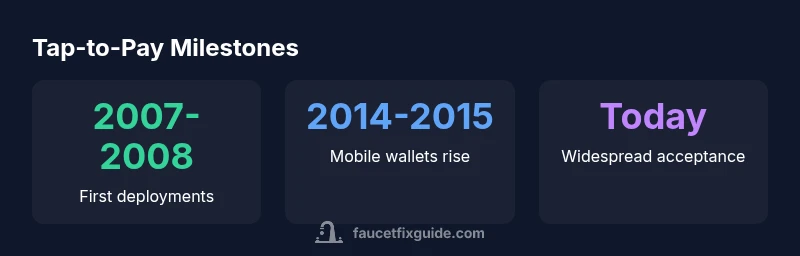
Tap to pay, powered by NFC contactless technology, first appeared in the mid-2000s with early deployments around 2007 to 2008. The technology gained traction as banks rolled out contactless cards (payWave, PayPass) and later expanded to digital wallets like Apple Pay (2014) and Android Pay, driving broader adoption through 2010s.
The origins of tap to pay
When did tap to pay come out? The concise answer is that NFC-based contactless payments emerged in the mid-2000s, with early pilots around 2006–2007 and initial card issuances following in 2007–2008. Visa payWave and MasterCard PayPass led the way, enabling customers to complete purchases by simply tapping a card at a supported terminal. This innovation promised speed and reduced physical contact during transactions, which helped it gain traction in high-traffic environments like grocery stores and transit systems. The late 2000s saw standards coalesce, merchants upgrade point-of-sale (POS) terminals, and banks begin issuing more cards with built‑in contactless capabilities. By the end of the decade, the groundwork was laid for broader consumer adoption that would accelerate with smartphones.
Milestones that shaped the technology
The journey from early pilots to mainstream adoption involved several critical milestones. First, the industry standardized around NFC technology and secure tokenization, allowing card numbers to be replaced with dynamic tokens at payment terminals. Second, large networks deployed their own contactless brands (e.g., Visa payWave, MasterCard PayPass), which gave retailers clear integration paths and consumer familiarity. Third, major card issuers started embedding NFC into physical cards in large volumes, pushing the capability into everyday wallets. Finally, mobile wallets began to appear, with Apple Pay and later Google/Android Pay providing a new on‑device method that leveraged the same underlying contactless infrastructure. Taken together, these steps transformed tap to pay from a pilot feature into a widely accepted payment option.
How tap to pay works for everyday use
At a high level, tap to pay relies on near-field communication (NFC) and secure element/tokenization. When you present a compatible card or device to a reader, the terminal requests a payment token rather than the actual card number. The token is authenticated and authorized in a matter of seconds, delivering a quick checkout experience. Modern implementations often use host card emulation (HCE) or a secure element on devices, along with dynamic cryptograms that protect transaction data. For homeowners, this means a simple tap can replace swiping or inserting a chip card in many cases, provided the retailer supports contactless payments. As adoption expanded, limits on contactless transactions grew, and more merchants began enabling tap to pay for low-value purchases.
Security and privacy considerations
Security has remained a core focus of tap to pay. Tokenization ensures the actual card number is never transmitted. In many cases, per-transaction cryptograms and dynamic tokens reduce the risk of interception. Consumer devices also employ platform security features—biometrics, device locks, and secure enclaves—to prevent unauthorized use. However, users should be mindful of potential risks, such as unauthorized use of a lost device if it isn’t protected by a PIN or fingerprint. Overall, the combination of encryption, tokenization, and device-level protections makes tap to pay a robust option for everyday transactions when used with trusted terminals.
Global adoption patterns and regional differences
Adoption has varied by region, driven by merchant readiness, regulatory environments, and consumer device penetration. In the early years, urban centers and transit networks often led the way, while rural areas followed as POS infrastructure expanded. Regions with mature card networks and strong mobile ecosystems quickly embraced digital wallets, making tap to pay a common checkout method in many storefronts and transit systems. In 2020s, the expansion accelerated as more merchants, banks, and fintechs offered compatible solutions and as consumers became accustomed to paying with a phone or wearable. For homeowners, this translates into broader acceptance at everyday stores and increasingly intuitive ways to pay for services and groceries without fumbling for cards.
The future of tap to pay and smart wallets
Looking ahead, tap to pay is likely to become even more ubiquitous as the ecosystem grows. New form factors—wearables, smartwatches, and in‑car payment modules—will integrate with existing NFC infrastructure. Tokenization and multi‑brand interoperability will simplify consumer choices while maintaining security. From a consumer perspective, the journey is moving toward seamless, context-aware payments that feel like part of everyday life. For homeowners and DIY enthusiasts, this evolution means more opportunities to adopt contactless payments in home projects, repairs, and shopping while benefiting from standardized experiences across retailers.
Key milestones in tap-to-pay history
| Milestone | Year/Range | Impact |
|---|---|---|
| First commercial NFC tap-to-pay deployment | 2007-2008 | Pioneered contactless payments |
| Mainstream card issuances with NFC | 2009-2012 | Expanded merchant adoption |
| Mobile wallets launches (Apple Pay, Android Pay) | 2014-2015 | Shift to device-based payments |
Frequently Asked Questions
What is tap to pay, and how does it work?
Tap to pay uses NFC to communicate a payment token between your card or device and the merchant reader. A token replaces your actual card number and is authorized in real time, letting you complete a transaction with a quick tap.
Tap to pay uses NFC near-field communication and a token to securely complete a payment with a quick tap.
When did tap to pay first come out?
Tap to pay emerged in the mid-2000s, with pilots around 2006–2007 and broader deployment by 2007–2008. Market adoption accelerated through the 2010s with wallets like Apple Pay.
It started in the mid-2000s, with broader use by the late 2000s and faster growth in the 2010s.
Is tap to pay secure for everyday use?
Yes. Tokenization and dynamic cryptograms protect card data, and mobile platforms add device-level security like biometrics. Still, keep your devices secured and watch for lost-device risks.
Yes—tokenization and device security keep tap to pay secure, but protect your device like you would a credit card.
What devices support tap to pay?
Most modern smartphones, wearables, and NFC-enabled cards support tap to pay. Availability varies by region and by issuer, so check with your bank or card provider.
Most newer phones and cards support it, but confirm with your bank.
Will tap to pay work at all retailers?
Acceptance has grown rapidly, especially in urban areas and major retailers. Some small merchants still rely on traditional card readers, but coverage is widespread in many places by 2026.
Most places accept it now, but some small shops may still use traditional methods.
How do I enable tap to pay on my iPhone or Android device?
On iPhone, add a card to Apple Wallet and enable Express Transit if needed. On Android devices, set up Google Wallet or your chosen wallet and add payment cards there.
Add your card to Apple Wallet or Google Wallet and set it as your default payment method.
“Tap to pay transformed everyday transactions by turning a simple tap into a fast, secure payment moment.”
Top Takeaways
- Tap to pay began in the mid-2000s with 2007–2008 deployments
- Card networks and tokenization enabled secure, fast checkout
- Smartphone wallets accelerated consumer adoption after 2014
- Merchant infrastructure upgrades were essential for widespread use
- Security features like tokenization and biometrics bolster trust