How to Remove a Bathroom Faucet: Step-by-Step Guide
Learn how to remove a bathroom faucet safely with our step-by-step guide. Get practical tools, safety tips, and post-removal cleanup to prep for reinstallation.


In this guide, you’ll learn how to safely remove a bathroom faucet. You’ll shut off water, relieve pressure, and disconnect supply lines, then unseat the faucet using standard tools. This process suits most widespread faucet types (compression and cartridge). Gather a basin wrench, adjustable wrench, bucket, towels, and plumber’s tape. Expect about 30-60 minutes.
Why removing a bathroom faucet is a common DIY task
Remodels, leaks, and worn seals all lead homeowners to ask how to remove a bathroom faucet. Whether you’re replacing an older two-handle model or upgrading to a modern single-handle unit, the removal process follows the same basic principles: control the water supply, free the mounting hardware, and lift the fixture away without damaging countertop or sink surfaces. By understanding the underlying steps, you can avoid common mistakes like twisting supply lines or prying the faucet from an awkward angle.
According to Faucet Fix Guide, the best outcomes come from planning your move, gathering the right tools, and working in a clean, dry workspace. Start by identifying your faucet type (compression, cartridge, ball, or ceramic disk) as this informs the exact disconnection method and any special considerations for handles or escutcheons. With a calm, methodical approach, most bathroom faucets come free without marring countertops or cabinetry.
Tools and safety precautions you should know before you remove a bathroom faucet
Before you begin, assemble the necessary tools and set safety boundaries. A well-lit workspace reduces mistakes and protects sensitive finishes. Wear eye protection if there’s any chance of springing water or loose hardware. Lay towels or a small drop cloth to catch drips and protect the cabinet.
The list below focuses on the essentials for most removal tasks. You’ll likely have to adapt if your faucet has an unusual configuration or integrated shutoff valves. If you’re ever unsure, consult the manufacturer’s instructions or pause the job to verify you have the correct wrench sizes and fittings.
Understanding faucet types and how removal varies by style
Most residential bathrooms use one of several common faucet styles. Compression faucets rely on a pair of threaded stems; cartridge faucets use a single cartridge with stems that control flow and temperature; ball and ceramic disk designs use more complex internal parts. The removal method changes with each style because the parts that secure the faucet to the sink and the supply lines you disconnect from differ.
In practice, you typically remove the handles first, then loosen mounting nuts under the sink, disconnect the supply lines, and lift the faucet away. If you’re dealing with a single-hole installation, ensure you have a removal tool that can maneuver around the large mounting nut. Always check for a decorative escutcheon that might require prying or retreatment to release the fixture.
Common challenges and how to handle them
Several issues commonly arise during faucet removal. Stubborn mounting nuts may be seized by mineral buildup; apply penetrating oil and wait a few minutes before attempting again. Rust and corrosion on supply lines can complicate disconnects, so use two wrenches to avoid twisting the valve stems. If a handle kit hides fasteners, remove the decorative cap with a small screwdriver or your fingernail. Water supply lines may still hold a little pressure even after valves are closed, so be prepared for a short spray—have towels nearby.
Aftercare: cleaning, gasket inspection, and planning for reinstallation
Once the faucet is free, inspect the mounting surface and surrounding hardware for damage. Remove old putty or plaster and wipe the sink surface clean. Inspect the gasket or O-ring and set aside if replacing. If you’re replacing the faucet, take careful notes or photos of the connections to ensure you reinstall in the same configuration. When you’re ready to reinstall, reapply plumber’s tape to threaded connections and snug fittings—don’t over-tighten, which can strip threads or crack the sink.
This is a good moment to decide on new supply lines and matching seals. If you’re reusing the old lines, examine their flexibility and ensure the fittings are in good condition. If leaks appear after reinstallation, you may need to re-seal the mounting nut or apply a new gasket or escutcheon. A dry test of the new fixture before fully tightening helps avoid last-minute drips.
When to call a professional and what to expect if you encounter trouble
If the faucet is heavily corroded, the shutoff valves won’t turn, or the sink deck is damaged during removal, professional assistance is the safer route. A licensed plumber can secure hidden valves, replace corroded hardware, and ensure the fixture is sealed correctly to prevent leaks. The Faucet Fix Guide Team notes that professional help is a prudent option when your soldering, gas lines, or water supply routing may require reconfiguration or specialized tools beyond standard hand tools. Timelines vary, but most tasks take a few hours for a thorough removal and clean-up.
Tools & Materials
- basin wrench(to reach mounting nuts under the sink)
- adjustable wrench(for fittings and nuts)
- bucket(to catch water drips)
- towels or rags(absorb drips and protect surfaces)
- screwdriver (flathead)(to remove decorative caps/handles if present)
- pliers(for stubborn fittings)
- plumber’s tape (Teflon tape)(for reinstallation on threaded connections)
- replacement supply lines(optional if lines show wear)
- flashlight/headlamp(improves visibility under sink)
Steps
Estimated time: 30-60 minutes
- 1
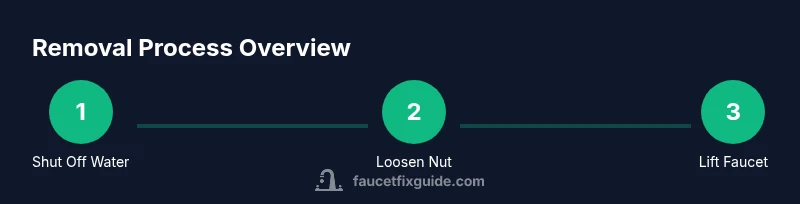
Shut off water and relieve pressure
Turn off both hot and cold supply valves under the sink. Open the faucet to relieve residual pressure and drain water into a bucket. If your home has separate stop valves, verify they are fully closed before proceeding.
Tip: Have a towel ready and a bucket nearby to catch drips. - 2
Remove handles and escutcheon caps
Use a screwdriver to remove any decorative caps on the handles, then unscrew the handles themselves. If your model uses screws behind the handles, keep track of them in a small container.
Tip: Gently pry off caps to avoid scratching the finish; set screws aside where you can find them. - 3
Loosen mounting nuts with basin wrench
From under the sink, position the basin wrench on the mounting nuts and turn counterclockwise to loosen. Hold the faucet body steady with the other hand or a second wrench to prevent rotation.
Tip: Angle the tool for the best bite; if the nut is stubborn, apply a small amount of penetrating oil and wait a minute. - 4
Disconnect supply lines
Carefully detach the hot and cold supply lines from the faucet tailpieces. Have the bucket in place to catch any remaining water and avoid spills on the cabinet.
Tip: Loosen fittings gradually and avoid twisting the valve stems; a second wrench can help prevent turning the valve instead of the nut. - 5
Lift faucet from the sink
With mounting hardware removed and lines detached, carefully lift the faucet straight up and away from the sink. If it’s tight, angle it slightly to clear the edge of the sink or any decorative escutcheon.
Tip: Support the faucet with one hand as you lift to prevent droppage and potential damage. - 6
Inspect gasket and prep for reinstallation
Check the gasket or O‑ring for wear and replace if necessary. Clean the sink surface and note the configuration of lines and seals for future installation. If you’re reinstalling the same unit, reapply plumber’s tape to threaded connections and tighten evenly.
Tip: Take photos of the original setup before disassembly to guide reinstallation.
Frequently Asked Questions
Do I need to shut off both hot and cold water valves before removing a bathroom faucet?
Yes. Turning off both hot and cold supply valves stops water flow completely. Open the faucet to drain any remaining water and relieve pressure before starting removal.
Yes—always shut off both supply valves and drain the lines before starting.
What should I do if the mounting nut is seized and won’t loosen?
Apply penetrating oil and wait a few minutes. Use a basin wrench and a second wrench to hold the faucet body while you attempt to loosen the nut. If it stays stuck, consider professional help.
Try penetrating oil, wait a moment, then use the basin wrench. If it’s still stuck, call a pro.
Can I remove a bathroom faucet without turning off the water?
It’s not recommended. Leftover water can spray unexpectedly and cause damage. Always shut off both supply valves first.
No—always shut off the water first to avoid splashing or leaks.
What should I inspect after removing the faucet?
Check the sink deck for damage, inspect the gasket or O‑ring and escutcheon, and remove old putty. Take photos to aid reinstallation.
Inspect the sink surface and gasket, and take photos for reinstallation.
What tools are essential for removing most bathroom faucets?
A basin wrench, adjustable wrench, bucket, towels, and a flashlight. Depending on your model, you may need a screwdriver or pliers. Keep spare parts ready.
You’ll typically need a basin wrench, adjustable wrench, bucket, towels, and a flashlight.
Is it safe to reinstall the faucet myself after removal?
Yes, if you follow the manufacturer’s instructions and use proper sealing. Ensure threads are clean, apply plumber’s tape as needed, and tighten evenly. For complex valve work, consider professional help.
Yes, but follow the instructions and don’t hesitate to get help for complex jobs.
Watch Video
Top Takeaways
- Turn off both hot and cold valves before touching the faucet.
- Have a bucket and towels ready to manage water spills.
- Identify faucet type to guide disassembly.
- Document the setup with photos for reinstallation.
- Don’t rush; careful handling prevents damage and leaks.