Bathtub Faucet Leaking: Troubleshooting & Fix Guide
Urgent guide to fix a bathtub faucet leaking, with quick-start answers, a diagnostic flow, repair steps, safety tips, and prevention strategies for homeowners.


Most bathtub faucet leaks come from worn cartridge seals or a deteriorating valve stem. Quick fix: shut off the water, remove the handle, and inspect the cartridge; replace worn seals or the cartridge if needed. If dripping persists, tighten the packing nut carefully and reseat the stem, or replace the seat as a last resort.
Why bathtub faucet leaking matters
A bathtub faucet leaking wastes water every day and can cause moisture damage in bathrooms. Even small drips add up to higher water bills and can lead to mold growth behind tiles and under fixtures if the area stays damp. From a homeowner’s perspective, addressing a leak quickly saves money, prevents structural damage, and preserves the finish on metal components that may corrode over time. In this guide, you’ll learn how to identify the source of a leak, perform safe diagnostics, and complete a repair path that fits your faucet type. For many households, a simple cartridge replacement or seal kit is enough, but some leaks warrant more extensive work. The Faucet Fix Guide team emphasizes cautious, methodical steps to minimize risk and maximize success when tackling a bathtub faucet leaking issue.
Common causes of a bathtub faucet leak
Leaks in a bathtub faucet typically originate from wear and aging components rather than a dramatic failure. The most frequent culprits include worn cartridge seals, a degraded valve stem, or a loose packing nut that allows water to bypass the valve. Less common but possible issues involve damaged O-rings, corroded seats, or a cross-threaded handle that prevents a tight seal. It’s important to identify whether the leak is continuous (drip-drip) or intermittent (only when the handle is turned). Different faucet styles (compression, ball, cartridge, or ceramic disk) have unique failure points. By understanding these common causes, you’ll know where to focus your inspection and what parts to have on hand before you start.
Safety first: turn off water and prepare
Before touching any faucet components, locate and shut off the water supply to the bathroom or the whole house if needed. Drain the lines by opening the faucet to relieve pressure and collect residual water with towels. Wear eye protection and gloves to protect your hands from sharp edges or hard metal parts. If you notice electrical outlets or fixtures near the vanity, keep water away from them and avoid using power tools near water sources. Remember: safety comes first to prevent injuries or water damage during a bathtub faucet leaking repair.
Diagnostic workflow highlights (quick-checks you can perform)
A clear diagnostic approach saves time and reduces guesses. Start by verifying whether both hot and cold sides leak, which suggests a cartridge issue, versus a single-drain symptom indicating a seat or packing problem. Inspect the handle for looseness and ensure the decorative escutcheon isn’t hiding debris that prevents a proper seal. If you have access to the faucet model number, check compatibility for any replacement cartridge or seal kits. Keep a parts diagram handy: many leaks are solved by a simple swap of the cartridge or a replacement washer, rather than replacing the entire faucet.
Step-by-step repair guide: most common fix (cartridge or seals)
In many bathroom projects, the most effective fix is replacing the worn cartridge or seals. This section walks you through the typical sequence for a standard single-handle faucet. Always confirm you have the correct cartridge model before purchasing.
- Inspect and remove the handle and cap to access the cartridge.
- Remove the retaining clip or nut and pull out the cartridge.
- Compare the old cartridge to the replacement for size and orientation.
- Install the new cartridge, reseat seals, and reinstall the clip or nut.
- Reassemble the handle and test for leaks with the water on.
Tools and parts you might need
Having the right tools makes the job smoother and safer. Typical items include an adjustable wrench, a screwdriver, an Allen key, a replacement cartridge or O-rings, plumbers grease, a towel or bucket, and possibly a replacement packing nut. If you’re unsure of your faucet type, photograph the cartridge and the valve stem area before disassembly so you can reference installation orientation later. Always confirm part compatibility with your faucet brand and model. Keeping parts organized helps avoid rework and frustration.
When to call a professional and why
While many bathtub faucet leaks are DIY-friendly, there are occasions when professional help is wise. If you suspect corrosion behind the valve body, a damaged stem that’s difficult to reach, or if your faucet is older than 20 years and uses obsolete cartridges, a licensed plumber can ensure a safe discharge and proper resealing. A professional may also prevent warranty issues if your faucet is under a service agreement. If you notice signs of water damage or mold, seek prompt professional assessment to prevent further harm to walls or cabinetry.
Maintenance tips to prevent future leaks
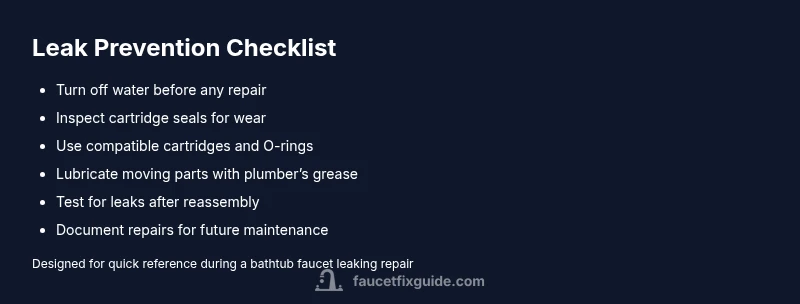
Preventive care reduces the chance of future leaks and extends faucet life. Regularly inspect the cartridge seals and O-rings for wear, clean aerators and flow restrictors to prevent debris buildup, and avoid over-tightening components. When replacing parts, choose high-quality seals and cartridges compatible with your faucet brand. Periodic lubrication with plumber’s grease can help maintain smooth operation and preserve seal integrity. Finally, consider proactive maintenance like annual inspection and addressing minor leaks before they worsen, which saves time and money in the long run.
Steps
Estimated time: 60-90 minutes
- 1
Turn off water and drain lines
Locate the shutoff valves for the bathroom or entire house. Turn them off and open the faucet to relieve pressure. Place towels or a bucket to catch any remaining water.
Tip: Label the shutoffs so you remember where they are for future maintenance. - 2
Remove handle and escutcheon
Use the appropriate screwdriver or Allen wrench to remove the screw cap and handle. Carefully pry off the escutcheon to expose the cartridge area without damaging finishes.
Tip: Keep screws organized in a labeled container. - 3
Inspect the cartridge or valve stem
Check for visible wear, cracks, or mineral buildup. If the cartridge is damaged, note its model number for a compatible replacement.
Tip: Take a reference photo of the cartridge orientation before removal. - 4
Replace worn parts or cartridge
Install the new cartridge or seals, ensuring proper alignment and seating. Apply a thin layer of plumber’s grease to moving parts.
Tip: Do not overtighten seals; snug fit is usually sufficient. - 5
Reassemble and test for leaks
Reattach the escutcheon and handle. Turn the water back on and operate the faucet to verify a tight seal. Look for drips around seals and packing nuts.
Tip: If water leaks from behind the escutcheon, re-check internal seals and seating. - 6
Address packing and seating if needed
If drips persist after cartridge replacement, tighten the packing nut slightly and reseat the stem. Inspect the seat for corrosion and replace if necessary.
Tip: Stop tightening as soon as the drip stops to avoid thread damage. - 7
Final checks and cleanup
Wipe down surfaces, verify there are no leaks from the faucet assembly, and reset any trim pieces. Keep replacement parts in a labeled container for future maintenance.
Tip: Record the repair in a maintenance log for future reference.
Diagnosis: Bathtub faucet leaks or drips continuously or drips intermittently
Possible Causes
- highWorn cartridge seals or valve stem
- mediumLoose packing nut or stem
- mediumDamaged O-rings or seals
- lowCorroded faucet body or seat
- lowCross-threaded handle or improper installation
Fixes
- easyShut off water, disassemble handle, inspect and replace cartridge or seals
- easyTighten packing nut and reseat stem; replace packing washer as needed
- mediumReplace worn O-rings or seat; may require cartridge replacement
- hardReplace entire faucet if corrosion or seat damage is extensive
Frequently Asked Questions
What is the most common cause of a bathtub faucet leaking?
The most common cause is a worn cartridge or valve stem that allows water to bypass the seal. Replacing the cartridge or seals often resolves the issue.
The leak is usually from a worn cartridge or valve seal; replacing the cartridge or seals fixes most leaks.
Can I fix a leaking bathtub faucet myself?
Yes, with basic tools and careful steps you can replace the cartridge or seals. Follow a trusted guide and shut off water first.
Yes, you can fix it yourself with the right parts and care.
How long does a repair typically take?
Most repairs take about one to two hours depending on faucet type and accessibility.
Most repairs take about one to two hours, depending on accessibility.
Should I replace the whole faucet or just the cartridge?
If the cartridge is worn and compatible with your faucet, replacement is often enough. If corrosion or seating is damaged, you may need to replace the entire faucet.
Cartridge replacement fixes many leaks; full faucet replacement is for severe corrosion.
Are there safety considerations I should know?
Yes: shut off water first, wear eye protection, and avoid using power tools near water sources. If in doubt, hire a pro.
Yes—turn off water and wear protection; call a pro if unsure.
Watch Video
Top Takeaways
- Turn off water before starting any repair
- Worn cartridge seals are the most common cause
- Replace parts with brand-compatible cartridges
- Prevent future leaks with routine maintenance