Why Is My Faucet Leaking at the Base? A DIY Troubleshooting Guide
Learn to diagnose and fix a base faucet leak quickly with step-by-step checks, safe shutoffs, and repair options for common faucet types. Save water and prevent damage today.


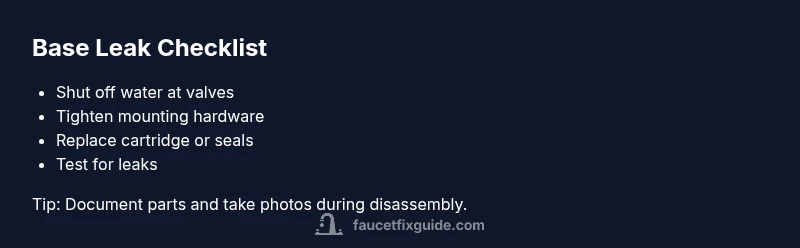
According to Faucet Fix Guide, a base faucet leak is usually caused by a worn cartridge seal or loose mounting hardware. Start by shutting off the water under the sink and tightening the mounting nuts with a basin wrench. If drips persist after those steps, the cartridge or valve seat may need replacement—often a straightforward fix for DIYers.
Understanding base leaks: what you’re seeing and why
Base leaks appear where the faucet meets the sink or escape around the escutcheon, not from the spout. They can be a sign of wear on internal seals, a loose mounting nut, or a damaged valve seat. In many homes, mineral buildup from hard water accelerates wear on gaskets, making leaks more likely over time. If you see moisture around the base when the faucet is off, you’re likely dealing with a base leak rather than a drip from the nozzle.
According to Faucet Fix Guide, base leaks are most often caused by a worn cartridge seal or loose mounting hardware. An honest check can save you money by avoiding a premature faucet replacement. Start by observing the leak with the handle in both positions and note whether the drip happens constantly or only after you close the handle. If the leak remains after turning the handle, the problem is likely the base seal or hardware beneath the countertop. This section outlines how to identify the root cause and choose the right repair path.
Safety first: shut off water and prepare tools
Safety first ensures you avoid floods and burns. Shut off both hot and cold supply valves under the sink and open the faucet to depressurize the line. Gather tools: basin wrench, adjustable wrench, screwdriver, replacement cartridges or seals, plumber’s tape, clean towels, and a bucket. If you have a single-handle faucet, you’ll likely need a compatible cartridge. Wear eye protection and keep the cabinet doors open for air and visibility. If the supply lines or shut-off valves look corroded, do not force components; address those issues before proceeding. Following these steps lowers risk and keeps water damage to a minimum.
Quick checks you can do without disassembly
Before taking things apart, perform a few checks that can often resolve a base leak. Inspect for loose mounting nuts under the escutcheon and tighten them evenly with a basin wrench. Look for worn washers, O-rings, or gasket material around the base and escutcheon, and replace them if you have the correct parts on hand. Check the condition of the supply lines for kinks or leaks at the compression fittings and replace any worn ferrules or olives. If you notice mineral buildup around the base, soak removable components in vinegar or a safe cleaner and scrub with a soft brush. These quick checks can pin down whether the leak is from the base hardware or a worn seal elsewhere in the faucet.
In-depth diagnosis: when to suspect cartridge, seat, or mounting hardware
A persistent base drip after turning the handle is a strong indicator that the cartridge seal or valve seat has worn out. If tightening the mounting nuts does not stop the drip, the problem may be the escutcheon seal or the base’s valve assembly. For compression faucets, inspect the stem packing and replace O-rings or gaskets. Ceramic-disk or cartridge faucets often require cartridge replacement to restore a proper seal. Corrosion or pitting around the base can also point to mounting hardware wear or a damaged base plate that needs replacement.
Repair paths by faucet type: cartridge-based vs compression vs ceramic disk
Cartridge-based faucets usually fix base leaks by replacing the cartridge that seals the valve. Compression faucets may require replacing the seat and compression ring, plus tightening the mounting hardware. Ceramic-disk faucets often use a durable cartridge replacement to restore a tight seal. In all cases, disassembly should be done carefully with the water off, and you should reassemble using plumber’s tape on threaded connections and align o-rings correctly. If the faucet model is older or if you see heavy corrosion, replacing the faucet may be the most cost-effective long-term solution.
Prevention and maintenance to stop future base leaks
Regular inspection of under-sink connections helps catch leaks before they worsen. Periodically tighten mounting nuts—do not over-tighten—inspect O-rings and gaskets for cracking or hardening, and replace worn components promptly. Use manufacturer-recommended parts and avoid chemical cleaners that can degrade seals. Consider installing a water-softening solution if mineral buildup is a frequent issue. A small upfront maintenance routine can prevent major base leaks and extend faucet life.
Steps
Estimated time: 60-90 minutes
- 1
Turn off water and prep workspace
Shut off both hot and cold supply valves under the sink and open the faucet to release residual pressure. Place a towel and bucket nearby to catch any drips. Gather tools and replacement parts before starting.
Tip: Label or photograph each connection to simplify reassembly. - 2
Remove handle and escutcheon
Use the appropriate screwdriver or Allen key to detach the handle, then remove the escutcheon ring. Keep track of small screws and decorative pieces. Inspect the cartridge or stem for wear as you proceed.
Tip: Do not force stuck screws; apply a penetrating oil and gently work them free. - 3
Inspect base and connections
Check the base seals, O-rings, and mounting nuts for looseness or cracking. Look for visible wear on the cartridge seal or valve seat. Clean mineral buildup from accessible surfaces gently.
Tip: Document wear with a quick photo set to guide part replacement. - 4
Identify replacement parts
Match your faucet model to the correct cartridge, seats, and gaskets. If you’re unsure, take the old parts to a hardware store for comparison. Verify compatibility before purchasing.
Tip: When in doubt, choose OEM parts or manufacturer-approved equivalents. - 5
Install replacements and reassemble
Install the new cartridge or seals, reassemble the handle and escutcheon, and apply plumber’s tape to threaded connections as needed. Hand-tighten first, then snug with a wrench without over-tightening.
Tip: Always test the function before sealing the cabinet: turn on water and check for leaks. - 6
Test for leaks and final checks
Restore water supply and run hot and cold. Observe for drips at the base and around connections for several minutes. If no leaks appear, wipe excess water and reinstall any cabinet panels.
Tip: If a drip returns after a short test, re-tighten cautiously and recheck the seals.
Diagnosis: Base of faucet leaks or drips at the escutcheon when water is on/off
Possible Causes
- highWorn cartridge seal or valve seat
- highLoose mounting nut or hardware
- lowDamaged escutcheon seal or base plate
Fixes
- easyTighten mounting nuts and check escutcheon seal
- mediumReplace cartridge or valve seat as needed
- hardReplace faucet or base hardware if cracked
Frequently Asked Questions
Why is my faucet leaking at the base after turning off the water?
A base leak after shutoff often points to a worn cartridge seal or valve seat, or to loose mounting hardware. Tightening hardware and replacing worn seals can typically resolve it. If the leak persists, consider cartridge replacement or a full faucet upgrade.
Base leaks after turning off the water usually mean a worn seal or loose hardware. Tighten the nuts or replace the cartridge to fix it.
Can I fix a base leak without replacing the faucet?
Yes, many base leaks are resolved by replacing seals or cartridges and tightening mounting hardware. If you notice corrosion or worn seats, replacement parts specific to your model are the best long-term fix.
Yes, you can often fix it by replacing seals or the cartridge and tightening the base hardware.
Is it safe to DIY base leak repair?
DIY repairs are safe when you shut off water supply and work in a well-ventilated space. If you encounter difficult corrosion, unseen water damage, or gas lines nearby, call a licensed plumber.
DIY is safe if you shut off water and follow steps carefully; otherwise call a pro.
What tools do I need for a base leak repair?
Common tools include a basin wrench, adjustable wrench, screwdriver, replacement cartridges or seals, plumber’s tape, and a bucket. Gather parts compatible with your faucet model before starting.
You’ll need a basin wrench, adjustable wrench, screwdriver, replacement seals or cartridges, and plumber’s tape.
When should I replace the whole faucet?
If the base leak recurs after a full repair, or the faucet shows significant corrosion or wear, replacing the faucet may be more cost-effective in the long run. Compare replacement cost vs. repeated part repairs.
If leaks keep returning or the faucet is very old, replacement might be the best option.
Watch Video
Top Takeaways
- Shut off water before inspecting leaks.
- Base leaks usually stem from seals or loose mounting nuts.
- Cartridge or valve seat replacement fixes most leaks.
- Test leaks after repair and perform simple maintenance to prevent recurrence.