Why Is My Faucet Dripping? A Practical Troubleshooting Guide
A concise, urgent guide to diagnosing and stopping a dripping faucet fast. Learn common causes, step-by-step fixes, and safety tips for homeowners and DIY enthusiasts.


Why is my faucet dripping? The quick answer is that most drips come from worn cartridge seals or valve seats. If you’re asking why is my faucet dripping, start by shutting off the water, inspecting or replacing worn parts, and cleaning the aerator. If the drip persists after basic checks, replace the cartridge or seals to stop the leak.
Why is my faucet dripping and what it signals
If you’ve ever asked, why is my faucet dripping, you’re not alone. A dripping faucet wastes water, can damage sinks, and signals worn parts inside the faucet. In most homes the drip comes from a worn cartridge seal or an old valve seat that no longer seals fully. Mineral deposits from hard water can also erode seals, creating a path for water even when you think the faucet is off. Understanding the mechanics helps you choose the right fix rather than guessing. This knowledge keeps your water bill down and your sink clean. The goal is to identify the exact part that’s failing and replace it with a compatible part rather than replacing the entire faucet.
According to Faucet Fix Guide, most drips respond to targeted component replacement rather than a full faucet swap.
Common causes of a dripping faucet at a glance
There are several frequent culprits, and identifying the right one speeds up the fix. The first category is cartridge-based leaks: the cartridge or O-rings degrade over time, especially in high-use kitchens or homes with hard water. A second common source is a worn valve seat in compression faucets; even a tiny nick can let water seep past when the faucet is off. A loose packing nut or damaged stem packing can also be responsible, letting seepage escape around the handle. In some fixtures mineral buildup creates a gap that looks like a leak but is really sediment preventing a seal from seating fully. Finally, the aerator at the tip can become clogged or cross-threaded, causing a drip not from the main seal but from reduced flow control. By understanding these categories, you can run through a quick diagnostic checklist that prioritizes the easiest tests first: aerator removal, then handle inspection, then cartridge replacement if needed.
Quick checks you can do right now
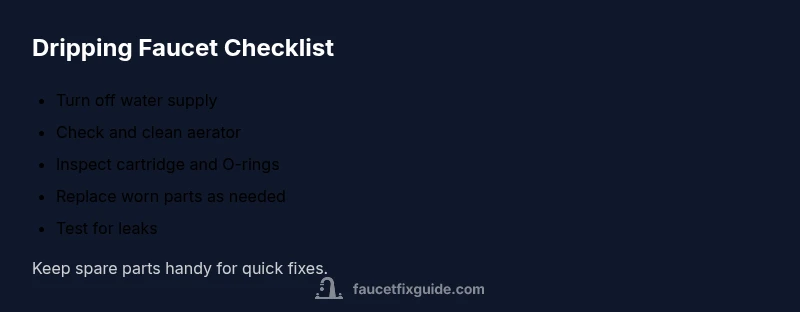
Before diving into parts, run a few safe, simple checks that often solve the problem. Remove and clean the aerator first: unscrew the tip, inspect the mesh for buildup, rinse, and reassemble. Next, inspect the handle and packing: remove the cap and screw, gently tighten the packing nut if it’s loose, and check for fluid around the stem. If the drip continues, partially disassemble to inspect the cartridge or valve stem for cracked O-rings or worn seats. Clean mineral deposits with a mild vinegar solution if you see white crust. Finally, retighten connections and test with the water on and off to confirm whether the leak persists. If you’re uncomfortable near shut-off valves, skip to professional help.
Diagnostic flow: Symptom to solution
Symptom: water drips continuously after turning off the faucet. Diagnosis: perform three focused checks: (1) Does the drip occur with the water supply off to the faucet? If yes, the issue is likely a bad seat or valve inside the faucet. If not, the leak could be from the cartridge or aerator. (2) Check the handle packing and nut for looseness. (3) Inspect the cartridge and O-rings for wear. Solutions: replace cartridge or valve seat (easy to medium depending on faucet), replace seals, or clean/replace aerator.
Tools you might need and safety first
Gather: adjustable wrench, small screwdriver set, an Allen key if needed, replacement cartridges or O-rings, plumber’s grease, cleaning vinegar, soft cloth, and a bucket. Safety: turn off both the hot and cold water supply at the shut-off valves, and avoid forcing components. Use towels to catch spills and protect the sink surface. If you encounter corrosion or a stiff valve stem, pause and consider professional help.
Preventive care to stop future drips
After you fix the drip, take preventive steps: replace stale O-rings on a schedule, consider cartridge replacement every several years, and check the aerator periodically for buildup. If your home has hard water, install a filtration or softening strategy to reduce mineral deposits that wear seals. Regularly inspect under-sink shut-offs for leaks and keep a basic plumbing toolbox ready.
When to call a professional
If you’re unsure about shutting off water, if tools aren’t accessible, or if the faucet is 20+ years old and you’re not sure about compatibility, call a licensed plumber. A pro can perform a cartridge replacement, verify supply-line integrity, and ensure no hidden leaks exist behind the wall.
Steps
Estimated time: 60-90 minutes
- 1
Shut off the water supply
Locate the under-sink shut-off valves for hot and cold lines and turn them to the off position. Open the faucet to relieve any remaining pressure and drain residual water from the lines.
Tip: If the valves are hard to turn, use penetrating oil or ensure you have a wrench handy, but don’t force jammed parts. - 2
Identify faucet type and remove handle
Observe the faucet design (compression, cartridge, ball, or ceramic-disc). Remove the handle by loosening the set screw and cap, then access the inner cartridge or stem.
Tip: Take a quick photo before disassembly to guide reassembly. - 3
Inspect cartridge and seals
Remove the cartridge or stem, inspect O-rings and seals for cracks or wear. If you see damage, prepare a replacement part of the same model.
Tip: If the cartridge is stubborn, apply a small amount of silicone-based lubricant around the seal to ease removal. - 4
Replace worn parts
Install a new cartridge or O-rings, ensuring correct orientation. Re-seat the valve seat if you notice pitting or grooves.
Tip: Use manufacturer-specific parts to ensure compatibility. - 5
Reassemble and test the faucet
Reconnect the handle, tighten screws, and turn the water back on. Check for drips at multiple handle positions and tighten as needed.
Tip: Avoid overtightening connections to prevent cracking or stripping threads. - 6
Check aerator and final adjustments
Inspect the aerator for debris and clean or replace it. Re-test for drips with the faucet fully on and off to confirm the fix.
Tip: Keep a small towel handy to catch drips during testing. - 7
Document and maintain
Record the parts you replaced and set a reminder to inspect seals and aerator every 6–12 months.
Tip: A quick maintenance routine saves future headaches.
Diagnosis: Dripping faucet after shut-off
Possible Causes
- highWorn cartridge or valve seat
- mediumLoose packing nut or stem packing
- lowDamaged O-rings in older valves
Fixes
- easyReplace cartridge or valve seat; reseat seals as needed
- easyTighten packing nut or replace stem packing
- easyReplace O-rings and lubricate the stem
Frequently Asked Questions
What is the most common cause of a dripping faucet?
Most drips come from worn cartridge seals or valve seats. Mineral buildup can contribute, too. Inspect the cartridge and O-rings first.
The most common cause is worn seals or cartridges.
Can I fix a dripping faucet myself?
Yes. Many drips are solvable with basic tools and replacement parts. Follow manufacturer instructions and shut off water first.
Yes, many drips are DIY-friendly.
Do I need to replace the cartridge or the whole faucet?
If the faucet uses a cartridge, replacing it often stops the drip. Older faucets may need seat and washer replacements or a full replacement.
Cartridge replacement is common, but some fixtures need seats or a whole faucet swap.
How can I tell if water pressure causes the drip?
High water pressure can worsen leaks. Test with a pressure gauge and ensure the pressure is within the manufacturer’s recommended range.
Check your home's water pressure; high pressure can worsen drips.
When should I replace the faucet entirely?
If the faucet is old, corroded, or has multiple failing parts, replacement may be more cost-effective.
Sometimes replacement beats repairing multiple worn parts.
What if the drip comes back after replacement?
Double-check seating and alignment. If the leak persists, there may be hidden plumbing issues or incorrect parts; consult a pro.
If it returns after replacement, double-check assembly or call a pro.
Watch Video
Top Takeaways
- Identify the leak type and replace worn parts
- Always shut off water before starting
- Clean aerator to rule out tipsy leaks
- Call a pro if shut-off valves are difficult or water issues persist
- Regular maintenance prevents future drips