Why Faucet Water Flow Slows: A Practical Troubleshooting Guide
Discover why faucet water flow slows and how to fix it quickly with safe, DIY steps. Includes aerator cleaning, cartridge checks, valve checks, and when to call a plumber.


Most often, a slow faucet flow is caused by a clogged aerator or mineral buildup. Quick fix: remove the aerator, soak in vinegar, and rinse. If flow remains slow, inspect the cartridge and valves, then clean or replace as needed. According to Faucet Fix Guide, start with the aerator to fix most single-faucet slow-flow cases.
Why slow faucet flow happens
When you turn on a faucet and water trickles instead of blasting out, you need a diagnosis quick enough to restore comfort and prevent wasted water. The keyword why faucet water flow slow describes a common plumbing annoyance with several overlapping causes. In most homes, the culprit is mineral buildup and debris inside the faucet assembly—most often the aerator at the tip. Over months, calcium and iron can accumulate, reducing the effective opening and throttling flow. A second frequent factor is a partially closed shut-off valve under the sink or a valve that hasn’t fully reopened after maintenance. Municipal pressure drops or a failing pressure regulator can also lower flow to a single fixture or the entire house. Finally, older faucet cartridges, worn gaskets, or corroded supply lines may become sluggish, especially in hard water zones. Identifying the true cause is essential because it determines whether you clean, replace, or adjust components. This article, aligned with Faucet Fix Guide guidance, provides a practical, step-by-step approach you can perform safely as a homeowner or renter.
Quick checks you can do before disassembly
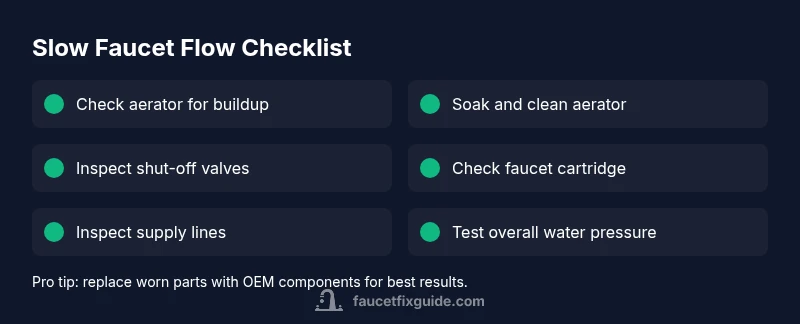
Before diving into the faucet, run through a few quick checks to avoid unnecessary disassembly. First, test another faucet or two in the same room or on the same line; if they’re also slow, the issue may be house-wide, not just one fixture. Next, inspect the shut-off valves under the sink—the handles should turn smoothly and be fully open. If you notice any leaks, moisture, or stiffness, stop and address those issues first. Remove the aerator from the faucet and inspect the screen for sediment or mineral deposits. If visible buildup exists, set the aerator aside for cleaning. While you’re at it, check whether you’re dealing with hot and cold flow differently; a mismatch can indicate cartridge problems. For renters, note that you may need landlord permission for valve adjustments or fixture disassembly. If the aerator is clean and all valves are open but flow remains slow, you’re likely facing cartridge or supply-line issues. The Faucet Fix Guide approach emphasizes starting with small, reversible steps to avoid creating new leaks.
Diagnostic flow for slow faucet flow
Follow a simple diagnostic flow to pinpoint the cause:
- Symptom: Flow is slow from one faucet; other fixtures are normal. Diagnosis: Likely aerator or cartridge issue in that fixture.
- Symptom: Multiple fixtures are slow. Diagnosis: Possible main water pressure problem or regulator limit.
- Symptom: No flow after opening the valve. Diagnosis: Valve may be off, partially closed, or frozen pipes.
- Symptom: Hot and cold flow differ. Diagnosis: Cartridge wearing or temperature-compensated mixing valve. For each diagnosis, apply the corresponding fix: aerator cleaning, cartridge replacement, valve adjustment, or pressure-check. If the symptom hints at a main supply issue or a pressure regulator fault, contact your water utility or a licensed plumber. Always verify after each step by turning the water back on gradually and testing flow. This flowchart keeps you from guessing and reduces the risk of accidental damage. The Faucet Fix Guide team recommends documenting symptoms to track recurring patterns and prevent future clogging.
STEP-BY-STEP: Fix the most common cause (aerator cleaning)
- Turn off the water supply and place a bucket beneath the sink. Remove the faucet handle if needed and locate the aerator at the faucet tip.
- Use an aerator wrench or pliers to unscrew the aerator. If it’s stuck, apply a gentle penetrating oil and wait a few minutes before retrying.
- Inspect the screen and screen mesh for sediment. Rinse under running water; soak the aerator in white vinegar for 15–30 minutes to dissolve mineral buildup.
- Gently scrub with a soft brush, rinse again, and reassemble. Wipe the area clean and dry before testing.
- Turn the water back on and run the faucet to test flow. If flow improves, you’re done; if not, proceed to cartridge or valve checks.
- If flow remains slow after aerator cleaning, consider cartridge replacement or inspect supply lines for blockages. Always follow manufacturer recommendations for compatible parts. The Faucet Fix Guide approach emphasizes safety and reversible steps.
TIPS & WARNINGS
- Safety first: Always shut off under-sink valves before disassembling. Wear eye protection and use towels to catch drips.
- Don’t mix cleaners with bleach; for mineral buildup, white vinegar is effective for aerators but avoid prolonged contact with brass finishes.
- Keep a labeled bin for screws and small parts so you don’t lose components during disassembly.
- If you feel unsure at any point, stop and consult a professional. Rechecking the shut-off valves after any fix is essential to prevent leaks.
Prevention and maintenance to keep flow steady
Regular maintenance helps prevent slow flow from returning. Clean aerators every 6–12 months in areas with hard water. Install a basic water-softening system if you notice mineral buildup across multiple fixtures. Check supply lines for visible wear and replace worn hoses or flex lines every 3–5 years. Periodically inspect the cartridge and seals, especially in older faucets, and replace worn parts before leaks develop. A quick monthly rinse of all aerators and a slow, controlled test of each faucet’s hot and cold flow can catch issues early and save costly repairs later. The Faucet Fix Guide team emphasizes documenting maintenance cues to establish a predictable care routine.
When to call a professional
If you encounter persistent slow flow after aerator and cartridge checks, or if you see leaks, corroded fittings, or damaged supply lines, it is time to call a licensed plumber. Signs that require professional help include sudden pressure drops, loud banging pipes, or inconsistent flow across fixtures. A plumber can diagnose hidden problems such as damaged valves, compromised lines, or regulator faults that DIY fixes cannot safely resolve. For renters, involve your landlord if major shut-off valve work or under-sink access is required. The Faucet Fix Guide framework supports professional input when the problem extends beyond simple clogging or when safety concerns arise.
Quick maintenance checklist to prevent slow flow
- Clean aerators annually and after hard-water season; replace worn screens.
- Inspect shut-off valves for smooth operation and full opening.
- Test flow at multiple fixtures to distinguish single-faucet issues from house-wide pressure problems.
- Consider equipment like water-softening or sediment filtration in hard-water zones.
- Document symptoms and fixes to identify recurring patterns and plan replacements before failures occur.
Steps
Estimated time: 20-40 minutes
- 1
Shut off water and prep
Turn off the cold and hot water valves under the sink, place towels, and gather tools. This prevents drips and keeps parts organized.
Tip: Label parts and take photos before disassembly. - 2
Remove the aerator
Use a wrench or fingers to unscrew the aerator from the faucet tip. If stuck, apply gentle heat or WD-40-free solvent and retry.
Tip: Keep the aerator in a labeled container to avoid losing small screens. - 3
Clean the aerator
Inspect the aerator screen for mineral buildup. Soak in white vinegar 15–30 minutes, then scrub with a soft brush and rinse thoroughly.
Tip: Rinse inside the faucet with water to remove loosened debris. - 4
Reinstall and test
Reassemble the aerator and turn the water back on slowly. Run the faucet at full flow to gauge improvement.
Tip: If flow returns, you’re done for this faucet. - 5
Assess the cartridge
If flow remains slow, remove the handle and inspect or replace the cartridge according to the faucet model's instructions.
Tip: Use OEM parts when possible to ensure proper fit. - 6
Check supply lines
Inspect supply hoses for kinks or damage and replace if necessary. Ensure fittings are snug but not overtightened.
Tip: Replace older hoses to prevent future leaks.
Diagnosis: Faucet water flow is slow
Possible Causes
- highClogged aerator or mineral buildup
- highPartially closed shut-off valve
- mediumWorn cartridge or seals
- lowLow house water pressure or faulty regulator
Fixes
- easyRemove and clean the aerator; soak in vinegar if needed
- easyFully open under-sink shut-off valves; reseat any misaligned fittings
- mediumInspect and replace the faucet cartridge or seals
- mediumTest water pressure at multiple fixtures; adjust regulator or contact utility
- hardIf unresolved, call a licensed plumber for advanced repairs
Frequently Asked Questions
What is the most common cause of a slow faucet flow?
The most common cause is a clogged aerator or mineral buildup. Cleaning or replacing the aerator often restores normal flow.
The most common cause is a clogged aerator or mineral buildup. Cleaning it usually fixes slow flow.
Can low water pressure affect a single faucet?
Yes. If multiple fixtures are slow, the issue may be the main supply or regulator. Test other fixtures to confirm.
Yes. If several fixtures are slow, the issue is likely main pressure. Check other fixtures to confirm.
Should I replace the faucet cartridge?
If cleaning the aerator doesn’t fix the issue, the cartridge may be worn. Replacement can restore flow.
If cleaning doesn’t fix it, you may need to replace the cartridge.
Is vinegar safe to use for mineral buildup?
Yes, white vinegar is generally safe for aerators and mineral buildup. Rinse thoroughly afterward and avoid mixing with bleach.
Yes, vinegar is safe for most aerators; rinse well and avoid bleach.
When should I call a plumber?
If there are persistent leaks, damaged valves, or no improvement after steps, a professional should assess the system.
Call a plumber if leaks appear or fixes don’t resolve the issue.
Will installing a new aerator help?
A new aerator can restore flow if buildup is severe or if the old one is worn. Match the size and thread type to the faucet.
A new aerator can help if the old one is worn or clogged.
Watch Video
Top Takeaways
- Act on aerator buildup first to restore flow quickly
- Check shut-off valves before disassembly
- Test flow after each fix to isolate the cause
- Call a pro if leaks appear or basic fixes fail