Why Does Faucet Make Loud Noise? A Practical Troubleshooting Guide
Learn quick fixes and a clear diagnostic flow to stop faucet noises. Our home troubleshooting guide covers common causes, safety tips, and when to call a pro for loud faucet issues.


The most common culprit behind a loud faucet is water hammer or trapped air in the supply lines. Start with the simplest fixes: shut off the water, relieve pressure, clean the aerator, and tighten loose fittings. If the noise persists, install a water hammer arrestor and consider replacing worn cartridges or washers. When in doubt, consult a licensed plumber.
Understanding Faucet Noise: What You're Hearing
If you’ve ever asked, “why does faucet make loud noise?”, you’re not alone. The sound can range from a sharp hammer-like bang to a high-pitched squeal, and it often signals issues in how water travels from the main supply to the head. By decoding the sound, you can narrow down the cause: is the noise a sudden bang when you shut off the tap, or a whistling when water flows? Identifying the pattern helps you choose the right fix and avoid unnecessary disassembly. In this guide, we’ll walk you through the practical steps homeowners take to diagnose and fix common faucet noises with minimal tools and downtime.
Understanding Faucet Noise: What You're Hearing
Steps
Estimated time: 30-60 minutes
- 1
Identify noise type and timing
Listen carefully to when the noise occurs: during shut-off, start-up, or continuous flow. Note whether it’s a single bang, a series of taps, or a shriek. This helps distinguish water hammer from aerator issues or loose fittings.
Tip: Use a notepad to log the pattern as you test different positions. - 2
Shut off water and relieve pressure
Close the main valve and open the affected faucet to drain residual water. Relieve any pressure in the line before handling parts to prevent splashes and injury.
Tip: Keep a towel handy to catch spills. - 3
Inspect aerator and cartridge
Remove the faucet aerator and clean any mineral buildup. If you have a cartridge faucet, inspect seals and the cartridge for wear or debris. Clean or replace as needed.
Tip: Take a quick photo of the assembly before disassembly to reassemble correctly. - 4
Bleed air from hot and cold lines
With the water off, briefly re-open the hot and cold lines to flush any air. Then slowly reopen the main supply. Run water for 30–60 seconds to clear air pockets.
Tip: Do this one faucet at a time to monitor changes. - 5
Check mounting and supply lines
Tighten mounting nuts and ensure supply lines are snug without overtightening. Loose lines can vibrate and amplify noise, especially at higher flow.
Tip: If you hear metal-on-metal creaks, use thread sealant where appropriate. - 6
Test and decide on replacement parts
Turn the water back on and test the faucet. If noise persists after cleaning and tightening, consider replacing the cartridge or installing a water hammer arrestor. For persistent issues, consult a professional.
Tip: Keep track of part numbers and symptoms to aid diagnosis.
Diagnosis: Loud banging or hammering when turning faucet on/off or when water flow is interrupted
Possible Causes
- highWater hammer due to high water pressure or sudden valve closure
- mediumAir trapped in supply lines after maintenance or expansion
- lowLoosened pipes or fittings producing vibration
- lowWorn cartridge or seat that vibrates with flow
Fixes
- easyShut off the main water supply and bleed air by opening hot and cold taps fully for a minute
- easySecure loose pipes and add foam cushions or clamps to reduce vibration
- mediumInstall or adjust a water hammer arrestor near the affected faucet
- mediumReplace worn faucet cartridge or washers to eliminate vibration
- hardIf noise persists, consult a licensed plumber for high-pressure assessment or layout fixes
Frequently Asked Questions
What is the most common cause of loud faucet noises?
Water hammer and trapped air in supply lines are the typical culprits. Start by bleeding air and tightening fittings, then test for improvements.
Water hammer and air in the lines are usually to blame. Bleed the lines and tighten fittings first, then test again.
Can air in my pipes cause noise even when the faucet is not in use?
Yes. Air pockets can cause popping or banging as you turn the faucet on. Bleeding the lines typically helps.
Air pockets can cause noises when you turn the faucet on. Bleed the lines to clear them.
Is it safe to take apart a faucet myself?
Yes, if you shut off the water first and follow proper steps. If you’re unsure, stop and call a professional.
Yes, but shut off the water first and proceed carefully. If you're unsure, it’s safer to call a pro.
When should I replace faucet cartridges or aerators to fix noise?
If noise persists after cleaning and tightening, worn cartridges or gaskets are likely the cause and should be replaced.
If cleaning doesn’t fix it, worn parts may be the cause; replace cartridges or aerators.
What if water hammer remains after installing an arrestor?
Check for other vibration sources and verify proper arrestor installation. If unresolved, a licensed plumber may be needed.
If it’s still loud, there may be another issue—getting a pro to assess is wise.
Do high water pressure issues contribute to faucet noise?
Yes. High pressure can worsen noise. Use a pressure gauge and adjust regulator or consult a plumber for a safe fix.
High water pressure can make noises worse. Check pressure and adjust or consult a pro.
Watch Video
Top Takeaways
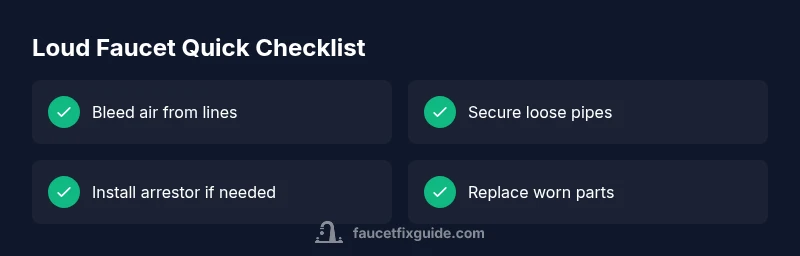
- Bleed air and secure loose pipes first.
- Inspect aerator and cartridge for wear or buildup.
- Install a water hammer arrestor if needed.
- Consult a licensed plumber for high-pressure or complex layouts.