Noise When Faucet Is Turned On Troubleshooting Guide
Learn fast checks and step-by-step fixes for noise when faucet is turned on. Diagnose causes, prevent future issues, and know when to call a pro with tips from Faucet Fix Guide.


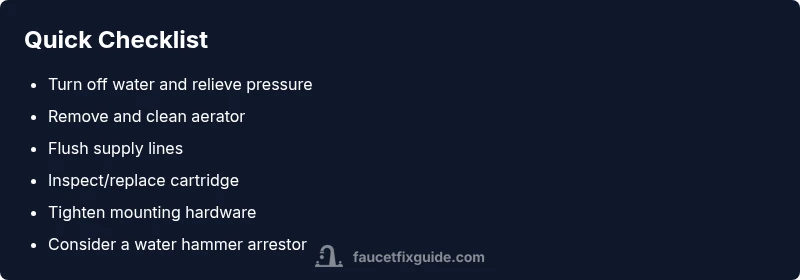
Most often, noise when faucet is turned on comes from air in the lines, sediment in the aerator, or a worn cartridge. Start with a quick fix: remove and clean the aerator, flush the supply lines, and briefly run water to clear debris. If noise continues, inspect the faucet cartridge and mounting hardware, and consider installing an arrestor for water hammer.
Understanding the symptom
When you notice a sound that wasn’t there before—whether it’s a squeal, rattle, or grinding—the phrase you should remember is the routine one: noise when faucet is turned on. This symptom is surprisingly common across kitchen and bathroom faucets, and it rarely signals a catastrophic failure. Instead, it points to a few repeatable culprits that most homeowners can address in under an hour with basic tools. By recognizing the typical patterns—air in the line, sediment in the aerator, or a worn cartridge—you can quickly narrow down the cause and avoid unnecessary plumbing calls. Faucet Fix Guide recommends treating this as a diagnostic puzzle rather than a guess. Start with the simplest fix and work toward more involved repairs if needed.
In many homes, the noise shows up only at certain times of the day or after a water surge. That timing can help you separate issues like a high-pressure problem from sediment buildup. Remember that even a small amount of air introduced into the system can produce a loud thud or whistle, especially when the faucet is first opened. If you notice the noise only with hot water, that also narrows the range of possible causes. Keeping notes of when the sound occurs will save time when you consult guides or a pro.
The advice below is written for homeowners, renters, and DIY enthusiasts tackling faucet issues and upgrades. It adheres to safe, practical steps you can perform with basic hand tools. Throughout, we’ll reference common models and parts by function (aerator, cartridge, mounting hardware) rather than brand specifics, so you can adapt the steps to your setup. This guidance aims to get you back to a quiet faucet quickly while preserving water quality and hardware longevity.
Common culprits
Steps
Estimated time: 30-60 minutes
- 1
Shut off water supply
Turn off the main water supply or the faucet shutoff valves to stop water flow. Open the faucet to relieve any remaining pressure and check that water is fully drained from the line before you begin.
Tip: Have towels or a bucket ready for any residual drips. - 2
Remove and inspect aerator
Unscrew the aerator from the faucet head and inspect for mineral buildup or debris. Rinse it under warm running water; use a small brush if needed. Reassemble loosely to test fit, then run water to observe changes.
Tip: If the aerator is clogged, soak in vinegar briefly to dissolve mineral deposits. - 3
Flush the supply lines
With the aerator removed, briefly turn on the water supply to flush out any loose debris from the lines. Collect the flow in a container to prevent splashing. Reinstall the aerator and run the faucet to see if the noise persists.
Tip: Do not run hot water through a cold line while testing for debris. - 4
Inspect or replace the cartridge
If flushing the aerator didn’t fix the noise, disassemble the faucet to examine the cartridge. Look for wear, scoring, or mineral buildup. Replace with a compatible cartridge if signs of wear are evident.
Tip: Keep track of small parts; lay them out in order to reunite them correctly. - 5
Check mounting hardware
Tighten any loose mounting nuts or screws under the sink. Loose components can vibrate and amplify noise when water flows. Reassemble and run the faucet to check for vibration.
Tip: Avoid over-tightening to prevent damage to the faucet body. - 6
Consider water hammer arrestors
If banging or thumping occurs when you turn the faucet on, install or upgrade a water hammer arrestor on the hot or cold line to absorb shock. This helps prevent future noise from sudden pressure changes.
Tip: If you’re uncomfortable with installing an arrestor, consult a plumber.
Diagnosis: Noise when faucet is turned on (any faucet)
Possible Causes
- highAir in water lines or aerator sediment
- highWorn or clogged faucet cartridge
- mediumLoose supply lines or mounting hardware causing vibration
- lowWater hammer from sudden water flow or lack of arrestor
- lowRestricted flow due to aerator design or mineral buildup
Fixes
- easyRemove aerator, rinse with warm water, and reinstall; flush lines to clear debris
- mediumDisassemble faucet and replace cartridge if cleaning doesn’t fix noise
- easyTighten mounting hardware and install a water hammer arrestor if needed
- easyInspect supply lines for kinks or damage and replace if necessary
- easyReplace aerator if damaged or restricted by mineral buildup
Frequently Asked Questions
What causes noise when turning on a faucet?
Common causes include air in lines, sediment in the aerator, and a worn cartridge. A loose mounting or water hammer can also contribute. Start with cleaning the aerator and flushing lines, then inspect the cartridge.
Noise often comes from air, sediment, or a worn cartridge. Begin by cleaning the aerator and flushing the lines, then check the cartridge.
Can air in pipes cause a banging sound?
Yes. Air pockets can cause banging or thudding sounds as water forces air through the lines. Bleeding the lines and flushing the aerator often resolves this.
Air can cause banging sounds; flushing the lines and bleeding the air usually helps.
Do I need to replace the faucet cartridge to stop noise?
If cleaning the aerator and flushing lines don’t fix the noise, the cartridge may be worn or damaged. Replacing it typically restores quiet operation.
If cleaning doesn’t work, you may need to replace the cartridge.
Can high water pressure cause faucet noise?
High pressure can amplify noise. Check that pressure is within normal range and install a pressure-reducing valve if needed.
High water pressure can make noise worse; adjust pressure if possible.
When should I call a plumber?
If noise persists after basic fixes or water leaks appear, it’s wise to consult a professional to avoid damage and ensure proper part replacement.
If the noise remains after attempts, call a plumber for a proper diagnosis.
Watch Video
Top Takeaways
- Shut off water and test in steps before major repairs.
- Start with aerator cleaning and line flushing for quick relief.
- Cartridge wear is a common cause; replace if cleaning doesn’t fix it.
- Tighten hardware and consider an arrestor for ongoing noise prevention.
- If you’re unsure, seek professional help to avoid water damage.