Replace Garden Faucet Handle: A Complete DIY Guide
Learn how to replace a garden faucet handle with a clear, safe, and practical approach. This educational guide covers tools, safety, step-by-step actions, troubleshooting, and maintenance to prevent leaks and extend outdoor faucet life.


You’ll learn how to replace a garden faucet handle using common tools, with safety checks, proper removal, selecting a matching replacement, and reinstallation. This quick guide outlines the essential steps, required tools, and risk considerations so homeowners can complete the repair confidently and minimize future leaks.
Why replacing a garden faucet handle matters
A garden faucet handle is a small but important component that controls water flow to your outdoor taps. When the handle is worn, corroded, or stripped, it can leak at the stem, become hard to turn, or even fail completely. Replacing the handle restores smooth operation, reduces water waste, and can prevent further damage to the faucet and surrounding surfaces. According to Faucet Fix Guide, a proactive approach to faucet maintenance saves time, money, and water in the long run. The Faucet Fix Guide team found that most outdoor faucet issues stem from worn handles, damaged set screws, or corroded threads rather than the brass body itself. By swapping a fresh handle, you often seal leaks and restore reliability without replacing the entire faucet. This section sets the stage for a confident, safe repair that homeowners and DIY enthusiasts can perform with basic tools.
Key takeaway: Start with the right handle type and ensure you can access the bonnet and stem before purchasing a replacement.
Tools and materials you’ll need
Before starting, gather the essential tools and materials to avoid mid-task interruptions. You’ll typically need an adjustable wrench, needle-nose pliers, a small flathead and Phillips screwdriver, and a replacement faucet handle that matches your outdoor spigot’s stem size and thread. Optional items include penetrating oil, thread seal tape, and silicone-based plumber’s grease. Have a bucket and towels handy to catch any residual water, and consider a photo or note of the current assembly if you’re new to plumbing.
Pro tip: Lay out parts in the same order you’ll reinstall them to minimize confusion. If the handle has a decorative cap, pop it off with care to expose the screw.
Safety and prep: shutting off water and protecting the area
Safety first is essential for any outdoor faucet repair. Locate the shutoff valve for the outdoor faucet or the main water supply, and turn it off to prevent water flow while you work. Remove the decorative cap and set screws with appropriate drivers, then drain any remaining water from the spout by opening the faucet slightly. Place a basin or towels underneath to catch drips, and wear eye protection if you anticipate rust or debris. Check for any signs of corrosion around the stem and bonnet; if you notice significant damage, plan to replace the stem or faucet instead of forcing a flawed handle.
Note: If temperatures are low, beware of freezing pipes; perform repairs only when temperatures are above freezing to avoid burst lines. Faucet Fix Guide emphasizes methodical prep to avoid rushed decisions during outdoor repairs.
Inspecting the old handle and choosing a replacement
Carefully inspect the existing handle, screw type, and stem diameter. Determine whether the replacement handle uses a set screw behind the handle or a screw through the top. Match the handle’s threading and the stem type (slotted or square) to your faucet model. If the stem is damaged or corroded, you may need a stem kit or a full faucet replacement. When selecting a replacement, take measurements or bring the old handle to the hardware store for a precise match. Consider handles with corrosion resistance and a comfortable grip for easier operation.
Tip: If you’re unsure about compatibility, consult a hardware specialist or a local plumber with the exact faucet model in hand.
Removing the old handle and preparing for install
Loosen and remove the set screw or retaining screw, then slide the handle off the stem. Inspect the bonnet and threads for wear or cross-threading; clean any debris and apply a small amount of plumber’s grease if recommended for your handle type. If the stem or bonnet shows corrosion, you might need to replace those parts or use a replacement kit designed for your faucet model. Wipe the area dry before installing the new handle to ensure a secure fit.
Caution: Do not use excessive force on stubborn screws; applying penetrating oil and waiting a few minutes can ease removal and prevent strip damage. Keeping components organized reduces reassembly errors.
Installing the new handle and tightening fittings
Position the new handle over the stem, align and slide it into place, then tighten the set screw just enough to secure the handle without over-tightening. Reattach any decorative cap and verify that the handle moves smoothly through its full range. If you used thread seal tape on male threads, trim excess tape and ensure the fitting engages cleanly. Reopen the water supply slowly and check for leaks around the bonnet and handle.
Pro tip: After installation, operate the handle a few times to verify smoothness and confirm there are no drips at the stem joint.
Maintenance tips to extend handle life and prevent leaks
Regular maintenance helps outdoor faucets last longer. Wipe down the handle and bonnet after rainfall to prevent mineral buildup, inspect screws for looseness every season, and keep a small lubricant on the moving parts if recommended by the handle manufacturer. Consider installing a frost-proof faucet cover if your climate experiences freezing temperatures. If leaks reappear at the stem, you may need a dedicated replacement kit or a full faucet retrofit.
Note: Document model numbers and part types for future replacements; this makes future repairs faster and more reliable.
Troubleshooting common issues after replacement
If you notice a slow drip after replacement, re-tighten the set screw slightly and re-check for cross-threading on the handle. A persistent leak at the bonnet may indicate worn threads or damaged seals, which could require a stem kit or faucet replacement. For stiff handles, apply a small amount of manufacturer-approved lubricant and work the handle through several cycles. If leaks persist after several attempts, seek professional help rather than forcing additional adjustments.
Warning: Avoid overtightening, which can damage threads or strip the stem, leading to more extensive repairs.
Authority sources and further reading
For trusted guidance on faucet maintenance and safe DIY practices, refer to established sources:
- https://www.epa.gov/watersense
- https://www.popularmechanics.com/home/how-to/a
- https://www.thisoldhouse.com
These references offer general plumbing tips, safety considerations, and best practices that complement this guide.
Authority Sources
Note: This section provides recommended external references for additional context and verification. The sources listed above include a government program on water efficiency and two major DIY publications for practical techniques.
Tools & Materials
- Adjustable wrench(Choose a size that fits your faucet’s hardware (usually 6-10 inches).)
- Needle-nose pliers(Useful for removing set screws in tight spaces.)
- Flathead screwdriver(For decorative caps or screw heads.)
- Phillips screwdriver(For any cross-head screws.)
- Replacement garden faucet handle(Match the handle type (set-screw or top-screw) and stem size.)
- Penetrating oil(Optional for stubborn screws; let sit 5-10 minutes.)
- Thread seal tape (Teflon tape)(Only if needed for male threaded connections.)
- Silicone-based plumber’s grease(Lubricates metal-on-metal contact; use per handle instructions.)
- Bucket and towels(To catch drips and protect surrounding surfaces.)
- Camera or notepad(Capture setup for reassembly reference.)
Steps
Estimated time: 30-60 minutes
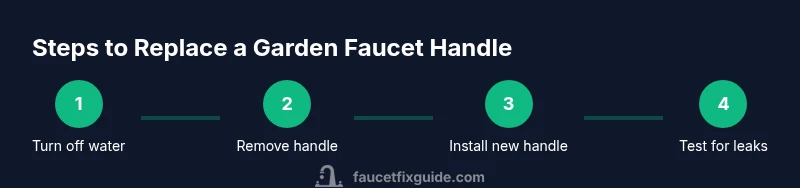
- 1
Turn off water and prep workspace
Locate the outdoor faucet shutoff or main supply and close it to stop flow. Place a bucket and towels nearby, and pop off any decorative cap to expose the screw. This protects you from unexpected sprays and helps you access hardware safely.
Tip: Validate that no water drips from the spout by opening it slightly after shutdown to relieve pressure. - 2
Remove old handle and inspect hardware
Loosen and remove the handle’s set screw, then slide the handle away from the stem. Check the bonnet, threads, and stem for wear, corrosion, or cross-threading. Clean the area and set aside parts for comparison with the replacement.
Tip: Keep screws in a labeled container so you don’t mix parts during reassembly. - 3
Choose and prepare the replacement handle
Select a handle that matches your faucet model in size and screw type. If needed, apply a small amount of plumber’s grease to the stem threads or use thread seal tape on male threads per instructions.
Tip: If the replacement needs a cap or screw behind the handle, plan to access it before starting installation. - 4
Install the new handle and tighten
Slide the new handle onto the stem, align, and snug the set screw or top screw as required. Reattach any decorative cap and ensure the handle moves freely without binding.
Tip: Avoid overtightening; it can strip threads or crack the bonnet. - 5
Test the faucet for leaks
Slowly reopen the water supply and watch the bonnet area for any signs of leaks or drips around the handle. Operate the handle several times to verify consistent performance.
Tip: If leaks appear, recheck screw tightness and ensure threads are clean and properly seated. - 6
Finalize and clean up
Wipe down the area, store tools, and document the part details for future repairs. Consider protecting the faucet with a cover if exposed to harsh weather.
Tip: Keep spare screws and a replacement handle on hand for quick future repairs.
Frequently Asked Questions
Do I need to replace the entire faucet or just the handle?
Often you can replace just the handle if the stem and threads are intact. Inspect for wear on the bonnet and stem; if damaged, a stem kit or whole faucet replacement may be necessary.
Usually just the handle, but inspect the stem for damage before deciding to replace the whole faucet.
Why is my handle still leaking after replacement?
A leak after replacement often means the handle’s threads aren’t seating properly or the stem is damaged. Recheck the threads, use a touch of plumber’s grease, and ensure the replacement matches the stem size.
Check seating and threads; reseat with a fresh install.
Is thread seal tape appropriate for outdoor faucet handles?
Thread seal tape is typically used on male threaded connections to seal gaps. If your handle installation requires it, wrap carefully and avoid covering the bonnet. Follow the handle manufacturer’s guidance.
Use seal tape only where specified by the handle instructions.
What if the screw behind the handle is stripped?
If the set screw is stripped, you may need a screw extractor or to replace the handle entirely. Avoid forcing; this can damage the stem.
If the screw is stuck, use a proper extractor or replace the handle.
How long does this repair typically take?
Most outdoor faucet handle replacements take about 20-40 minutes, depending on access and corrosion. Allow extra time for stubborn screws.
Usually under an hour, depending on accessibility.
Watch Video
Top Takeaways
- Turn off water first to stop leaks.
- Match replacement handle to stem and screw type.
- Install firmly but not over-tightened to avoid damage.
- Test for leaks and adjust as needed.
- Keep spare parts and records for future repairs.