When to Tap Maple Trees in Ohio: A Practical Guide
Learn the optimal timing to tap maple trees in Ohio, with regional timing, weather indicators, equipment tips, and sustainable practices for homeowners and DIY enthusiasts.


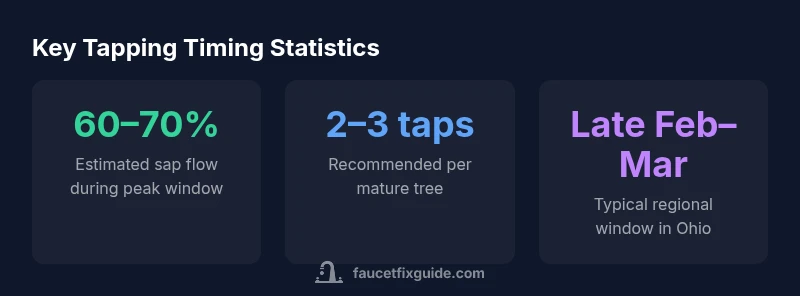
## Quick answer Tapping maples in Ohio is best timed to align with freeze-thaw cycles when nights stay below freezing and days rise above. In most parts of Ohio, the practical window runs from late February through March, but exact timing depends on local temps. Start with generous sanitation of your taps, then monitor sap flow for a few days before committing full production. Steps: 1) confirm tree readiness, 2) install clean taps, 3) collect sap daily during peak flow.
Why timing matters when tapping maples in Ohio
According to Faucet Fix Guide, timing is as critical as technique when tapping maples in Ohio. If you wait too long, the sap can slow or stop; tapping too early can lead to poor sap quality and unnecessary labor. The key is to synchronize tapping with the natural freeze-thaw rhythm that drives sap flow. When to tap maple trees in Ohio is not a single date but a window shaped by local weather, tree health, and collection goals. Homeowners should start with the premise that late winter into early spring usually provides the best sap flow, then verify daily by checking for a steady trickle when temperatures swing above freezing during the day and dip below at night.
- Weather guidance matters: sap flows best when daytime highs reach roughly 40–45°F and nighttime lows stay near or below freezing. This alternation drives pressure changes inside the tree, pushing sap toward the collection point.
- Seasonal variability: shifts in temperature, rainfall, or sudden thaws can compress or extend the tapping window. In Ohio, regional differences (Northeast, Central, Southwest) mean your precise window may move a few days earlier or later.
- Preparation reduces risk: sanitation, correct tap spacing, and proper storage help maintain sap quality and tree health across the season.
Focus on a sustainable approach that respects tree vigor while maximizing sap collection during peak flow.
Understanding sap flow dynamics and what it means for timing
Sap flow is primarily driven by the tree’s physiology and external temperatures. Each freezing night followed by a warm day creates pressure that pushes sap from the roots toward the taps. The timing nuance is whether the tree has sufficient stored energy and whether cambial activity is active. In practical terms, when you see daily fluctuations that align with the freeze-thaw cycle, you’re in the right zone for tapping. Waiting for a prolonged warm spell can lead to sap quality changes and reduced gravity flow, while prolonged cold snaps may stall flow altogether. For homeowners, a simple watch-and-test approach works: place a test tap and observe sap yield over 24–48 hours while tracking daily temperature ranges.
- Cambial activity is seasonally variable: sugar content in sap can change with the tree’s metabolic state.
- Sap clarity and sweetness signal readiness: clearer sap with a sweet taste usually indicates better processing potential.
- Weather pattern awareness: keep a simple log of daytime highs and overnight lows to map your local tapping window over several years.
Smart timing is a blend of science and observation, not a single calendar date.
Regional timing in Ohio: Northeast, Central, and Southwest differences
Ohio’s broad climate means the tapping window isn’t identical across the state. The Northeast typically experiences later frost events and a slightly longer window into March, while Central Ohio often aligns with earlier February into March timing. In the Southwest, warmer microclimates can push the window forward further, sometimes into late February. For homeowners, the practical takeaway is to observe local conditions: track daily highs around 40°F and nights around freezing; use a small test tap to confirm sap flow before expanding collection. Local extension services often publish county-level alerts that reflect current conditions and expected sap runs. Remember, even within a single county, microclimates can create earlier or later starts, so tailor your plan to your specific maple stand and weather history.
- Regional microclimates matter: a few miles can shift the timeline.
- Use local weather signals: temperature thresholds and forecast trends are more reliable than a fixed date.
- Start small, scale up: begin with 1–2 taps per tree to gauge flow before committing to larger harvests.
Indicators to watch in the field: temperature cues, sap quality, and tree readiness
Successful tapping hinges on reliable indicators you can observe without specialized equipment. Start by monitoring day-night temperature patterns: a sequence of freezing nights followed by warm days is your friend. Check sap flow at dawn and dusk to see if it increases with daytime warming. Sap quality matters; ideal sap is clear, slightly sweet, and low in color. If sap is cloudy or has off flavors, pause tapping to prevent tainting the batch. Tree readiness is also essential: once a maple shows healthy buds developing, some DIY practitioners pause tapping to avoid depleting reserves. Use a few test taps on healthy trees to verify flow rates and check for signs of infection or damage.
- Temperature signals guide timing more than a calendar date.
- Sap quality is a practical indicator of harvest readiness.
- Tree health should guide the depth and duration of tapping.
Equipment readiness and tapping methods: buckets, taps, and tubing setups
Before the season begins, ensure your equipment is clean and functional. Traditional bucket systems work well for beginners or small setups; tubing systems are suitable for larger stands and require careful soffit planning and sanitation. For optimal results, install high-quality spouts and taps with proper pitch to encourage gravity flow. Seal all connections to prevent contamination and evaporation losses. In Ohio, many hobbyists use a hybrid approach: a basic bucket collection in the early season, then tubing for the peak run if you have access to a small-scale pipeline. Always sanitize your collection containers and storage vessels, and keep sap cold to minimize microbial growth. A clean system reduces the risk of off-flavors and spoilage.
- Start with sanitation and clean equipment to protect sap quality.
- Match system scale to your tree count and landscape.
- Maintain clean storage and cold handling to preserve sugar content.
Tip: Label each tree and keeping a simple log of sap yield per tree helps identify high performers and adjust tapping density accordingly.
Sustainability, safety, and best practices for home sugar bushes
Tapping maple trees is a respectful practice when done with care for the trees’ health. Use a conservative tapping density—no more than 1 tap per trunk for maples under 12 inches in diameter and adjust accordingly for larger trees. Avoid over-tapping or removing bark to minimize injury. After the season, remove taps carefully, seal holes if needed, and monitor for signs of infection. Ensure you have proper safety equipment during collection, especially when working with ladders or elevated positions. Proper hygiene, timely sap collection, and safe handling prevent spoilage and ensure the season remains sustainable for years to come. Finally, consider your environmental impact: minimize plastic waste by using reusable components and encouraging local processing of sap into syrup.
- Respect tree health with conservative tapping densities.
- Remove taps after season and monitor for damage.
- Use reusable equipment to reduce waste and environmental impact.
Seasonal calendar and actionable steps: planning, execution, and optimization
A practical approach is to build a simple seasonal calendar. Start with planning in January: inventory gear, inspect trees for diameter and health, and set up sap storage containers. As February approaches, begin monitoring daily temperatures and forecast trends. When you observe the freeze-thaw pattern consolidating into a reliable window, install taps on healthy maples and begin collection. During peak flow, check sap daily and process it promptly to preserve quality. At the close of the season, remove taps, store equipment, and evaluate yield per tree to refine your approach next year. A simple field log with date, temperature, and yield can reveal patterns over multiple seasons.
- Plan early, then adapt to observed weather patterns.
- Maintain daily sap checks during peak flow for best results.
- Review annual performance to improve next year’s plan.
Regional tapping windows in Ohio
| Region | Typical Tap Window | Notes |
|---|---|---|
| Northeast Ohio | Late Feb – early Mar | Cool nights and warm days drive flow; expect a longer window |
| Central Ohio | Late Feb – mid Mar | Mid-winter warmth can shift start; monitor local temps |
| Southwest Ohio | Mid Feb – late Mar | Warmer microclimates; watch for late thaws |
Frequently Asked Questions
When is the best time to start tapping maples in Ohio?
The best time varies by location, but in Ohio a window from late February through March typically offers reliable sap flow as nights stay near freezing and days warm up. Start with one test tap to gauge flow before expanding.
In Ohio, you’ll usually start tapping from late February to March. Begin with one test tap to see how sap flows, then decide how many trees to tap.
How many taps should a maple tree have?
A common guideline is one tap per trunk inch of diameter, up to a maximum of 2–3 taps for healthy mature maples. Avoid over-tapping to protect tree health.
Typically one tap per inch of trunk diameter, up to two or three taps on a large tree, to protect its health.
What equipment do I need for a small syrup project?
Basic equipment includes clean taps and spouts, collection buckets or tubing, lids to prevent debris, a collection or boiling setup, and a clean storage container. Start small and scale up as needed.
Get clean taps, buckets or tubing, lids, a way to collect sap, and a safe place to store it.
How can I tell sap flow is good?
Good flow shows clear sap, steady dripping, and higher yield during warm–sunny days following freezing nights. If flow drops, reassess weather or tree health.
Look for clear sap that drips steadily, especially after sunny, warm days following freezing nights.
Is there a risk to the tree from tapping?
Tapping is generally safe when done properly and not overly aggressive. Use proper spacing, avoid damage to bark, and remove taps after the season to minimize stress.
If you tap correctly and don’t overdo it, there’s little risk to the tree—remove taps after the season.
“Timing, equipment, and tree health all work together to produce quality sap. Small adjustments in when you tap can yield bigger gains in sap flow and syrup quality.”
Top Takeaways
- Plan your tapping window around freeze-thaw cycles.
- Monitor local temperatures daily and adjust timing.
- Start small with a test tap to confirm sap flow.
- Choose equipment that matches your scale and cleanliness needs.
- Keep sap cold and process promptly to maintain quality.